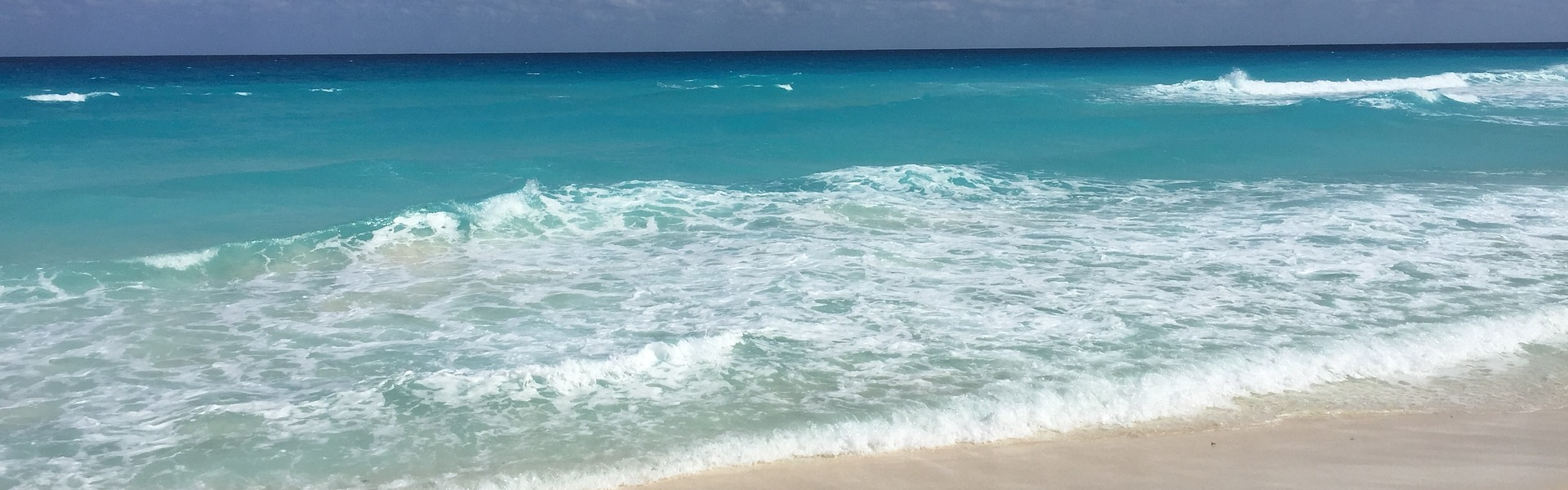
Playa Mujeres lies north of Cancún, past Puerto Juárez, on a stretch of coast that did not appear on tourist maps twenty years ago. It is a planned development: a dozen recent resorts, a golf course, a marina, and nothing else. No shopping street, no nightlife, no village. That emptiness is precisely the argument.
The essentials in four lines
- Twenty-five to thirty minutes by road from Cancún airport, the shortest transfer in the region.
- The coast faces northwest into the bay of Isla Mujeres: calm water and markedly less exposure to sargassum than Cancún.
- Nothing within walking distance. A taxi is required to go out, about thirty minutes to the Cancún hotel zone.
- December to April is the dry season. Hurricane season runs June to November.
Why the sea is different here
Cancún beach, from kilometre 9 to kilometre 20, faces the open sea: steep slope, real swell, flags to watch. Playa Mujeres opens instead onto the bay sheltered by Isla Mujeres and by the reef. The result is flatter water, a gradual entry, and far less sargassum even during the months of heavy drift.
It is not an absolute guarantee, since currents shift from year to year, but the orientation of the shoreline works in your favour. It is one of the few sectors in Quintana Roo where you can book for spring without thinking about it every day.
Who it suits
Playa Mujeres draws three profiles. Couples who want a quiet week in a recent resort, often adults-only, with swim-up rooms. Families looking for a good-category hotel without the Riviera Maya transfer distance. And golfers, the lagoon-side course being part of several packages.
Conversely, if you like going out in the evening, walking to a local restaurant or changing scene daily, the Cancún hotel zone or Playa del Carmen will serve you better. Here you stay at the resort, and that is the point.
What lies around
Isla Mujeres is twenty minutes by boat from the marina, or thirty minutes by taxi and ferry from Puerto Juárez. Playa Norte, at the island’s tip, offers waist-deep water for tens of metres and ranks among the finest beaches in the country. Rent a golf cart and circle it in half a day.
From June to September, boats leave the marina to watch whale sharks off the northern tip of the peninsula. The rest of the year the classic excursions remain available: Chichén Itzá, Tulum, the cenotes, with an extra hour on the road compared with the Riviera Maya.
El Centro, the real Cancún, is twenty minutes by taxi. That is where you eat tacos for the price of a hotel coffee and see a Mexican city rather than a tourist zone.
The resorts
The entire hotel stock was built after 2010, and it shows: large rooms, recent bathrooms, varied restaurants, well-kept beaches. Several properties are adults-only; the others target families with water parks and children’s clubs.
The counterpart to that quality is price: Playa Mujeres sits above the Cancún average at comparable category. Our criteria for choosing an all-inclusive hotel help compare what each plan actually covers, and our file on all-inclusive value for money puts those gaps in context.
When to go
From December to April the air holds around 28 °C with little rain and moderate humidity. May and the first half of June remain excellent and cost less. From July to October, heat and humidity climb sharply.
Quintana Roo stays on Eastern time all year: the same hour as Montreal in winter, one hour behind in summer. Our guide on when to travel south from Montreal sets out the pricing windows.
To plan this trip, see also our Mexique page, Guadalajara, Huatulco and Mexico or the Dominican Republic.


