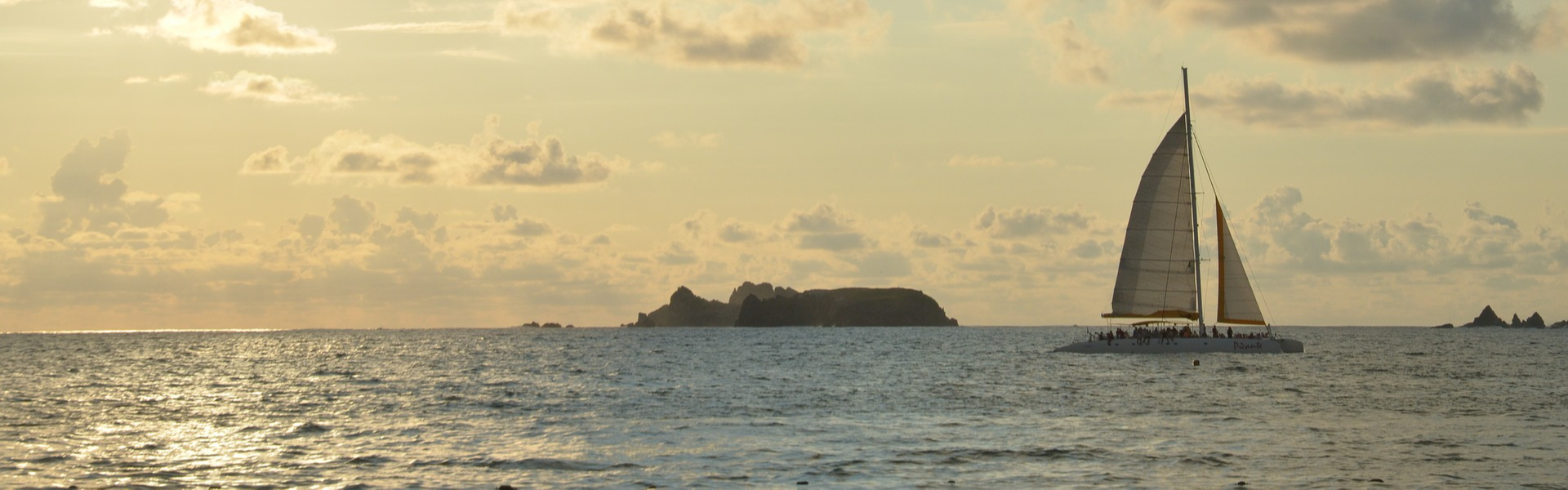
Seven kilometres separate two places with nothing in common. Ixtapa was drawn on a plan in the early 1970s: one avenue, a row of hotels, a long beach open to the Pacific. Zihuatanejo is a fishing village tucked at the head of an enclosed bay, with sloping lanes, a fish market and boats hauled onto the sand. You sleep in one, you eat in the other, and the combination is the destination.
The essentials in four lines
- About six hours from Montreal, with seasonal non-stop service to Zihuatanejo (ZIH), twenty-five minutes from the hotels.
- Guerrero runs one hour behind Montreal in winter and two in summer.
- No sargassum: the coast faces the Pacific.
- November to May is the dry season. Rain and cyclones from June to October.
Ixtapa
El Palmar beach stretches three kilometres in front of the hotel row, lined with coconut palms. It is wide, golden and beautiful, but it faces the open sea: the swell is real and rip currents exist. The flag system is posted every morning and deserves to be trusted.
Further north, Playa Linda has calmer water and serves as the departure point for Isla Ixtapa, five minutes away by boat. The island has four small beaches, one reserved for snorkelling, and a row of fish restaurants under the palms. It is the simplest half-day outing in the region.
Between the two, a lagoon shelters crocodiles viewed from a walkway. The sector also has a golf course and a marina.
Zihuatanejo
The bay and the village
The bay is nearly enclosed, which keeps it calm year-round. The fisherman’s walk runs a kilometre along the waterfront, between the boats, the stalls and the restaurants. The municipal market, at the top of the main street, is best visited in the morning.
Playa La Ropa
The finest beach in the region and the safest: a kilometre and a half of sand inside the bay, flat water, restaurants with their feet in the sand and a handful of small hotels. This is where you spend the day when the sea is up at Ixtapa.
Playa Las Gatas
Reached by boat from the pier, or by a twenty-minute path along the cliff. A stone breakwater, traditionally attributed to a Purépecha ruler before the Spanish arrived, closes the cove and keeps the water still. Excellent for snorkelling and for small children.
Around
From December to March, humpback whales pass offshore and trips leave from the marina. The rest of the year, sailfish and marlin fishing draws enthusiasts; most tournaments now release their catch.
Thirty minutes south, the Barra de Potosí lagoon, ringed with mangrove, is crossed by skiff at first light: herons, ibis, roseate spoonbills. Thirty minutes north, the village of Troncones lines up consistent waves and a few surf lodges.
Zihuatanejo has also carried an unexpected fame since 1994: it is the town two characters in a film that became a classic name as their meeting point, on the edge of the Pacific. Many American visitors arrive with that image in mind.
All-inclusive in Ixtapa
The format is concentrated entirely in Ixtapa, on El Palmar beach, with a handful of large family resorts and one or two adults-only properties. Rates remain among the most affordable on the Mexican Pacific at comparable category.
Zihuatanejo works the other way, with small hotels and inns sold without meals, on La Ropa and Playa Madera. Many travellers take all-inclusive at Ixtapa and a taxi to dine in Zihuatanejo two or three evenings: ten minutes on the road and another atmosphere. Our criteria for choosing an all-inclusive hotel help judge what the plan actually covers.
When to go
From November to May the sky stays clear, the air holds around 30 °C by day and the water near 27. That is the dry season, the best period and the Quebec high season.
From June to October, heat and humidity climb sharply, late-day storms become daily and the hills turn green. The Pacific cyclone season runs June to November. Our guide on when to travel south from Montreal sets out the pricing calendar.
To plan this trip, see also our Mexique page, Riviera Nayarit, Acapulco and Punta Cana or Cancun.


