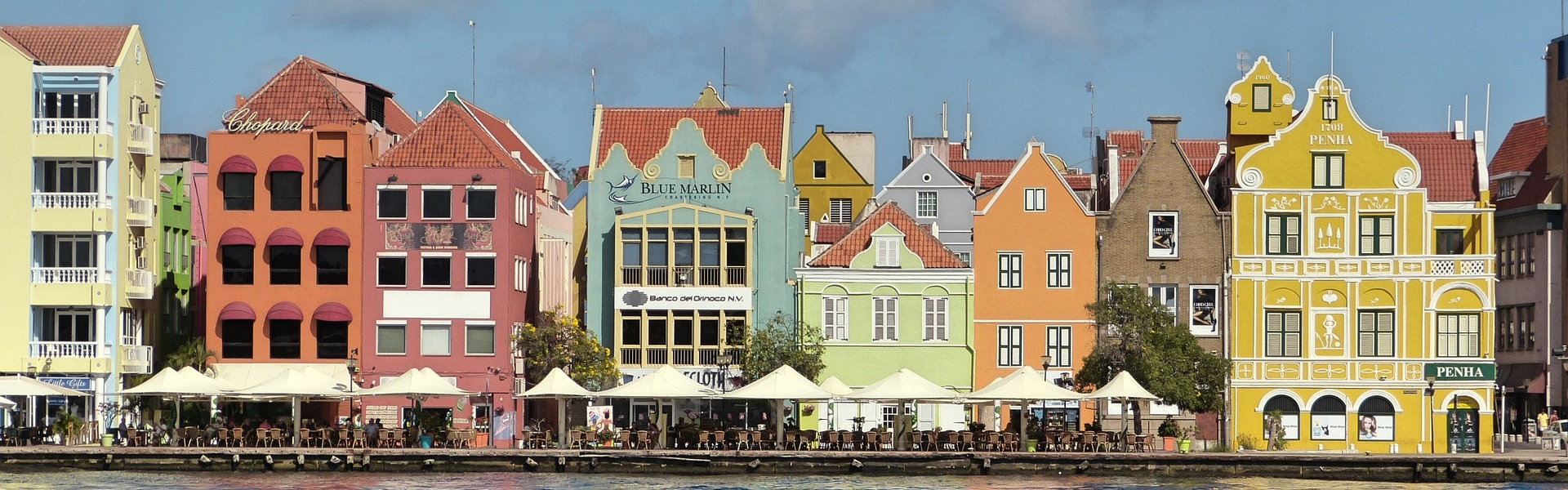
Curacao looks like no other Caribbean island, and you see it on landing. Willemstad lines up Dutch facades painted ochre, turquoise and pink, a floating bridge that swings open for ships, and a World Heritage historic centre. The rest of the island is a cactus desert punched through with dozens of small coves.
The essentials in four lines
Where to swim: the southwest coast, in short sheltered coves such as Cas Abao, Grote Knip and Playa Porto Mari.
Best time to go: any time. The island gets little rain and lies at the southern edge of the hurricane zone, so it is rarely hit.
Entry: Canadian passport valid at least six months beyond your planned departure, no visa up to ninety days, digital immigration card to complete before arrival.
Languages: Dutch and Papiamento are official; English and Spanish are spoken everywhere.
What to understand before booking
These are not long beaches
Curacao has no equivalent of Playa Bavaro. The southwest coast is cut into coves of one to three hundred metres, wedged between cliffs, often with a bar and chairs for rent. Some charge admission. It is charming, but if your image of the south is a beach you walk for an hour, this is not it.
The diving starts at the shore
The reef sits close in and drops away as a wall a few dozen metres out. You dive and snorkel straight off the beach, without a boat. The Tugboat, a wreck lying in five metres of water, is reachable on a breath. That is what built the island’s reputation.
Willemstad
Two districts joined by the Queen Emma pontoon bridge: Punda and Otrobanda. The Venezuelan floating market, the coloured streets, the synagogues and the forts fill a full day. It is the only urban centre of this quality in the Dutch Antilles.
When to go
Curacao gets about five hundred millimetres of rain a year, which makes it one of the driest islands in the Caribbean. The wettest months, October to December, stay modest.
Hurricane season runs from early June to late November across the region. The island sits at the southern limit of the zone and is rarely hit directly, which places it, with Aruba and Bonaire, among the safest autumn bets.
What you need in hand
A Canadian passport valid at least six months beyond your planned departure from Curacao.
No visa is required for a tourist stay of up to ninety days in any one hundred and eighty day period.
The digital immigration card must be completed and signed online before arrival, up to seven days before departure. Customs may ask for proof of valid health insurance and proof of sufficient funds.
For the current official advice, see the country page on travel.gc.ca.
On the ground
Money
The currency is the Caribbean guilder. US dollars are widely accepted and cards work everywhere in tourist areas.
Getting around
A rental car is close to essential if you want to see more than one cove. Distances are short, roads are good, and driving is on the right. Without a car you will see Willemstad and your hotel beach.
The wind
As in Aruba, the trade wind blows hard and steadily. It makes the heat pleasant and it should remind you to use sunscreen, because you do not feel the sun the same way.
Who Curacao suits
Divers and snorkellers first. Travellers who want an island with a real city, architecture and history. Anyone looking for a weather-reliable destination in September and October.
Less so families wanting a vast sand beach and an all-inclusive with continuous entertainment. Curacao is built on exploring and diving, not on volume all-inclusive.
To plan this trip, see also Curaçao, resorts that suit families and the All-inclusive vacations section.


