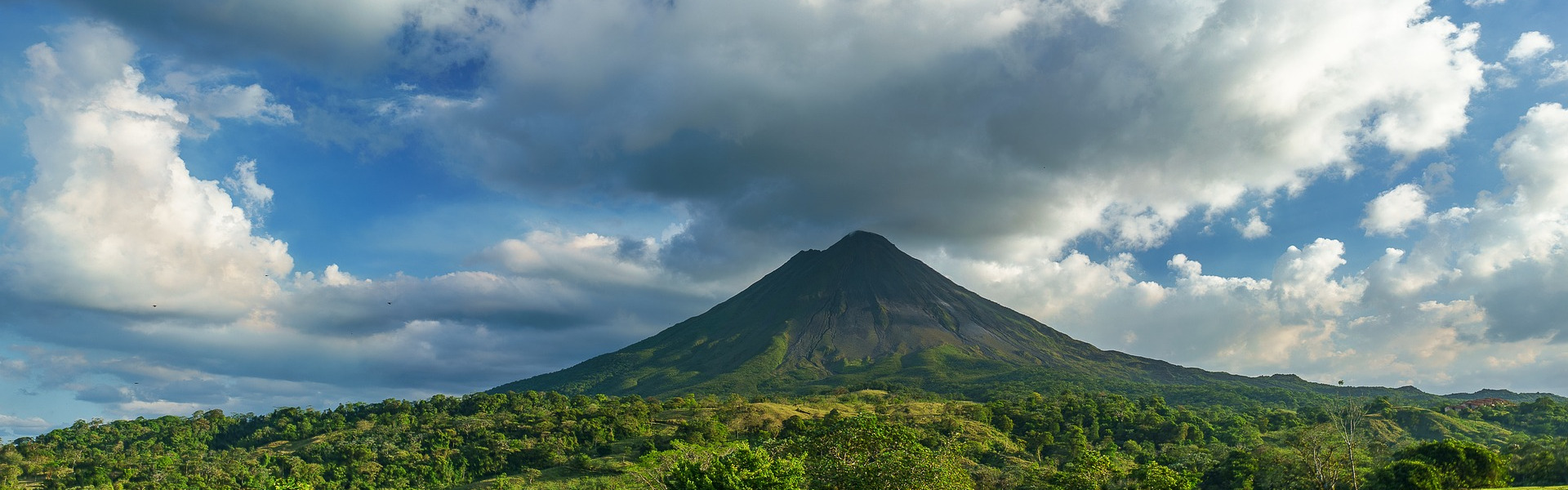
Liberia is the gateway to Guanacaste, Costa Rica’s northwest province. Its international airport takes most of the direct flights from Canada, and the town serves as a departure point for the northern Pacific beaches and the inland volcanoes. It is also a genuine provincial town, with lime-washed colonial streets and a market, which most travellers pass through without stopping.
The essentials in four lines
- About five and a half hours non-stop from Montreal to Daniel Oduber airport (LIR), on the edge of town.
- Costa Rica runs one hour behind Montreal in winter and two in summer.
- No sargassum: the coast faces the Pacific.
- Guanacaste is the driest region in the country: December to April with almost no rain.
A starting point more than a destination
Liberia sits thirty kilometres from the coast. The Guanacaste beaches are thirty to forty-five minutes away: Playa Hermosa, Playa del Coco, Playa Panamá and Papagayo to the northwest, Tamarindo and Conchal an hour south.
The town itself deserves an hour on foot. Its old quarter, around the Ermita de la Agonía church built in 1854, keeps colonial houses with corner doors, a local architectural particularity. The municipal market and the sodas, small neighbourhood restaurants, give a good sense of everyday Costa Rican cooking.
The volcanoes
Rincón de la Vieja
An hour northeast, the national park protects an active volcano of nineteen hundred metres and a set of geothermal features: bubbling mud pools, fumaroles, hot springs. Two main trails, one short and easy through the fumaroles, the other longer to a waterfall. Howler monkeys and coatis are regularly seen.
Several developed estates at the foot of the volcano offer ziplines, thermal springs and volcanic mud baths by the day.
Santa Rosa park
To the northwest, this park protects the last large tropical dry forest in Central America, an ecosystem now rarer than rainforest. It also holds a historic hacienda and an isolated beach known for surfing, reachable only by four-wheel drive.
What makes Guanacaste distinctive
The region is the driest in Costa Rica: from December to April the forest sheds its leaves, the grass turns yellow and the sky stays clear for weeks. It is the opposite of the rest of the country, greener and wetter, and it is what makes this the only Costa Rican region genuinely suited to a conventional beach holiday.
It is also cattle country, with a culture of sabaneros, the local herdsmen, and village festivals in which painted ox carts, listed as UNESCO intangible heritage, take the leading role.
All-inclusive around Liberia
The format has taken hold in Guanacaste more than elsewhere in Costa Rica, with several large resorts along the Papagayo coast and toward Playa Hermosa. It remains a minority model in a country whose tourism rests on small hotels, nature lodges and touring itineraries.
The question to ask is about the programme: Costa Rica rewards those who move, and a stationary resort stay shows only a small part of the country. Many of our clients combine a few nights in an inland lodge with a beach week. Our criteria for choosing an all-inclusive hotel help judge what the format actually adds here.
When to go
From December to April the dry season is emphatic: constant sun, air around 32 °C by day, very little rain. That is high season, the time of Quebec departures.
From May to November, the green season brings late-day showers, transformed vegetation and markedly lower prices. September and October are the wettest months. Our guide on when to travel south from Montreal sets out the pricing calendar.
To plan this trip, see also our Costa Rica page, Islita, Jaco beach and judging value for money.


