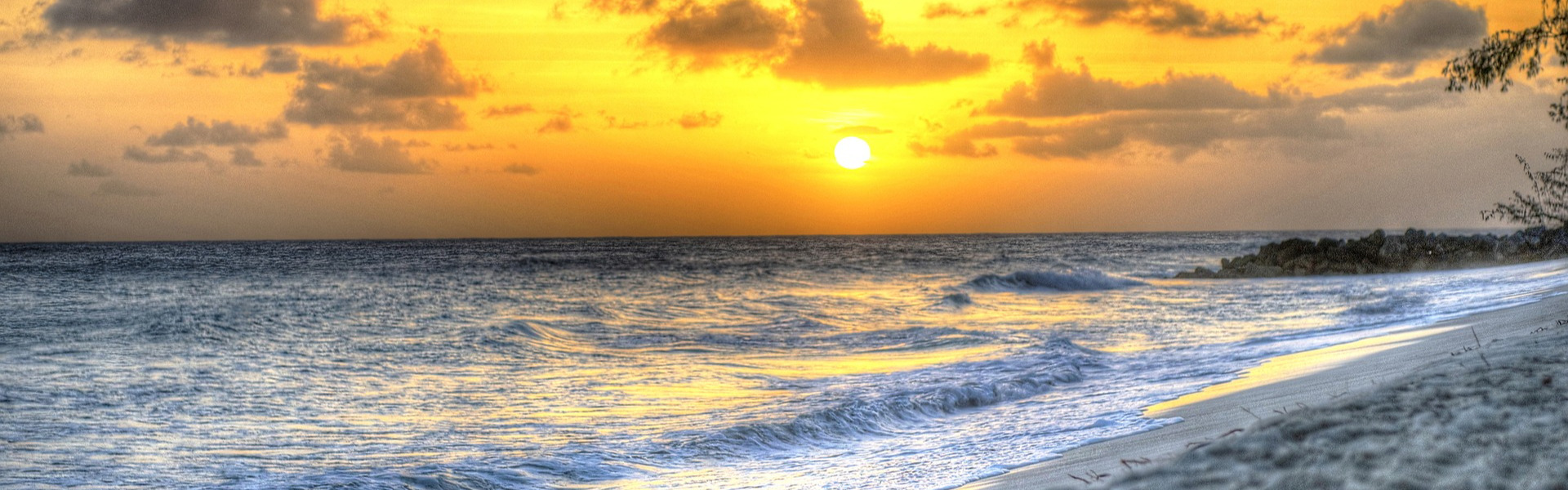
Dover sits on the south coast of Barbados, in Christ Church parish, fifteen minutes from the airport and twenty from Bridgetown. It is the liveliest and most affordable part of the island: a beach in front, a street of restaurants and bars behind, and everything within walking distance. The west coast, smarter and quieter, plays a different tune.
The essentials in four lines
- About five hours on a seasonal non-stop from Montreal to Grantley Adams (BGI), fifteen minutes away by road.
- Barbados is one hour ahead of Montreal in winter and on the same time in summer. Driving is on the left.
- The south coast is windier and livelier than the west, with a small swell nearly every day.
- December to May is the dry season. Hurricane season runs June to November, statistically mild here.
The area
Dover Beach and St Lawrence Gap
The beach is wide, pale sand, with a small wave that suits children and bodyboarders. Directly behind, the street everyone calls the Gap lines up a kilometre of restaurants, bars, mid-size hotels and live music at weekends. It is the only part of the island where you go out in the evening without a taxi.
Rockley and Accra Beach
Ten minutes west, a longer beach used more by Barbadians, with food kiosks, chairs for hire and water sheltered by a reef.
Worthing and Sandy Beach
Between the two, a shallow lagoon closed by a reef where the water stays calm and waist-deep for tens of metres. It is the best choice in the area with young children.
Miami Beach and Enterprise
A little further east, a small beach in two halves divided by a jetty: flat water on one side, swell on the other. Much used by residents on Sundays, with a fried-fish truck.
Friday night at Oistins
Ten minutes east, the fishing village of Oistins holds a fish fry every Friday evening that has become the island’s weekly event. Some thirty counters grill tuna, marlin, snapper and flying fish, served with macaroni pie and rice and peas. Bands play, Barbadian families come in numbers, and prices stay those of a neighbourhood meal.
It is by far the best night of the week, and it is worth planning your dates around.
Getting out of the area
Harrison’s Cave, in the centre of the island, is visited by electric tram over a kilometre and a half, among stalactites, an underground river and a waterfall. Hunte’s Gardens, in a collapsed sinkhole, is one of the finest tropical gardens in the Caribbean, laid out by a botanist who greets visitors himself.
On the east coast, Bathsheba lines up mushroom rocks carved by the Atlantic and a wave, the Soup Bowl, that draws surfers from around the world. Swimming there is dangerous: you come to walk, to have lunch and to watch.
The west coast, the leeward side, has the flattest water on the island. That is where the catamaran trips with supervised swims alongside hawksbill turtles depart from.
Accommodation
The south holds several mid to upper category all-inclusive resorts, along with many small hotels and apartments sold without meals. It is the part of Barbados with the best value for money.
The question to settle is one of style: the south for activity, walking and price; the west for quiet, flat water and the upper tier. Our criteria for choosing an all-inclusive hotel and our file on value for money help compare.
On sargassum, the south coast is partly exposed, above all from May to September; the west coast stays almost always clear.
When to go
From December to May the air holds around 29 °C, the trade winds blow constantly and rain is rare. From June to November, heat climbs, showers turn daily but short, and prices fall markedly.
Crop Over, the old harvest festival turned island-wide carnival, fills July and peaks in early August. Our guide on when to travel south from Montreal sets out the pricing calendar.
To plan this trip, see also our Barbade page, Bridgetown and how to choose an all-inclusive hotel.


