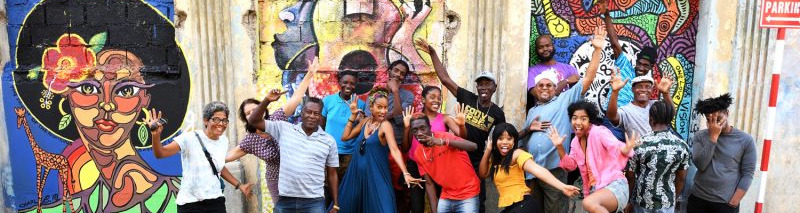
Kingston is not a beach destination, and nobody goes there for that. It is the capital, a city of a million people set beside one of the largest natural harbours in the world, backed by mountains rising to two thousand two hundred metres. It is also where reggae was born, where it is still recorded, and where you understand Jamaica in a way no hotel zone allows.
The essentials in four lines
- Fly into Norman Manley International (KIN), generally with a connection from Montreal.
- Jamaica stays on Eastern time all year: same hour as Montreal in winter, one hour behind in summer.
- No all-inclusive resorts: accommodation means city hotels and guesthouses.
- Drier and hotter than the north coast. Hurricane season runs June to November.
The city of music
UNESCO added Kingston to its list of creative cities of music in 2015, and rightly: ska, rocksteady, reggae and dancehall were all born here within twenty years, inside a few kilometres.
Bob Marley’s house on Hope Road became a museum in 1986. You see the studio, the bedroom, the bullet holes left in the wall after the 1976 assassination attempt, and the kitchen where he cooked his own meals. The visit is guided and takes an hour.
Further south, in Trench Town, a former public housing yard turned cultural centre tells the story of the band’s formative years. It is a community project, run by people from the neighbourhood, and one of the most honest visits available on the island.
In the evening, musical life happens in street sound systems and clubs. Ask locally: the programme changes weekly and is not announced online.
What to see
The National Gallery of Jamaica holds the most important art collection in the English-speaking Caribbean, notably the sculptures of Edna Manley and the work of Jamaica’s intuitive artists.
Devon House, built in 1881 by Jamaica’s first Black millionaire, is visited for its Georgian architecture and for its ice cream parlour, a national institution.
Emancipation Park, the Hope botanical gardens and Coronation Market round out the day depending on the pace you want.
Port Royal
At the end of a sand spit closing the harbour, thirty minutes from the centre, lies what was in the seventeenth century the richest and most notorious town in the Caribbean, base of the English privateers. The earthquake of 7 June 1692 swallowed two-thirds of it in minutes.
What remains fits into a few streets, Fort Charles and a museum. The sunken town lies under a few metres of water and has been excavated since the 1960s: one of the best-preserved underwater sites in the hemisphere. From the dock, boats run to Lime Cay, a white sand islet where Kingstonians spend Sunday.
The Blue Mountains
Behind the city, the range rises to two thousand two hundred and fifty-six metres. The Blue and John Crow Mountains national park is a UNESCO World Heritage site, both for its biodiversity and for the history of the Maroons who took refuge there and held their independence against the English.
The peak is climbed at night, setting out around two in the morning to reach the summit at sunrise: on a clear day you see Cuba. Allow seven to eight hours round trip.
Halfway up, the plantations produce one of the most expensive coffees in the world, protected by an appellation limiting production to altitudes between nine hundred and fifteen hundred metres. Several farms welcome day visitors from Kingston.
Eating and getting out of town
Thirty minutes west, Hellshire beach lines up seaside kitchens where fried fish and festival bread are eaten with your feet in the sand. It is loud, popular and excellent.
For beaches proper, Kingston is not the place: the southeast coast is urban and industrial. To combine city and sea, plan three days in Kingston and then a stay on the north coast.
Practical notes
Accommodation consists of business hotels, guesthouses and a few characterful addresses in the residential districts north of the centre. There is no all-inclusive here.
As in any large city, some areas are best visited with a local guide rather than alone. Consult the Government of Canada page on Jamaica before departure and discuss it with your advisor, who can arrange transfers and guided visits.
To plan this trip, see also our Jamaïque page, Ocho Rios, Runaway Bay and our month-by-month calendar.


