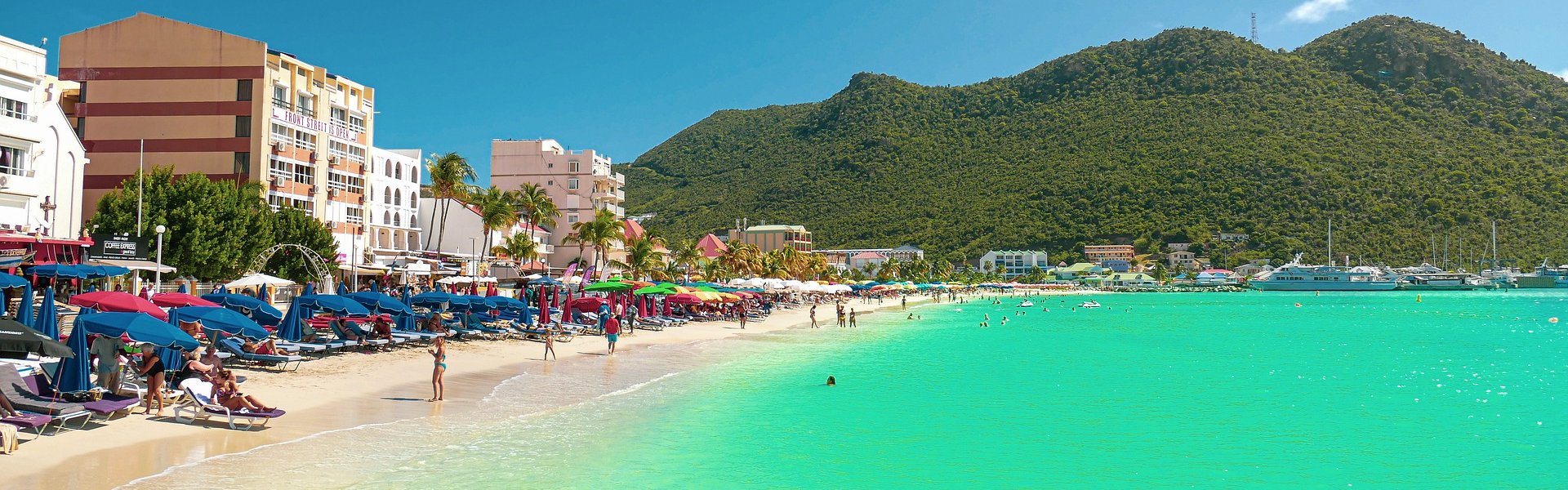
Eighty-eight square kilometres, two countries, no border. Saint Martin is the smallest inhabited landmass on earth shared by two nations: a French overseas collectivity to the north, and Sint Maarten, a constituent country of the Kingdom of the Netherlands, to the south. You cross from one to the other without noticing, except that the language on the signs changes and the price of a coffee shifts from euros to dollars.
The essentials in four lines
- Canadian passport valid six months beyond your planned departure date. No tourist visa for 90 days or less.
- About five hours from Montreal to Princess Juliana (SXM), with non-stop service in winter.
- Euros in the north, US dollars accepted everywhere in the south. French in the north, English and Dutch in the south.
- December to April for the driest weather. Hurricane season runs June to November.
One island, two moods
The French side
Marigot and its marina, Grand-Case and its street of restaurants, less built-up beaches, a slower rhythm. Shops close earlier, terraces come alive in the evening, and the whole side feels more residential than resort.
The Dutch side
Philipsburg and its cruise pier, Simpson Bay and its bars, casinos, duty-free shopping, the international airport and most of the large resorts. This is the lively side, the one that stays up late and where all-inclusive plans are most plentiful.
No checkpoint separates the two: a sign, a change in road surface, and that is it. Both sides drive on the right, which sets Saint Martin apart from most of its Caribbean neighbours and makes a rental car far more comfortable for a North American driver.
The beaches that matter
Orient Bay
The longest and busiest on the French side: two kilometres of pale sand, beach clubs, windsurfing and kiteboarding. Its southern end has kept a naturist tradition since the 1970s. It is also the beach most exposed to sargassum in some years, with the Atlantic arriving head-on.
Mullet Bay and Maho Beach
In the southwest, Mullet Bay is the finest beach on the Dutch side: white sand, turquoise water, a sharp drop-off. Maho, right next door, is famous for an unlikely reason: the airport runway ends a few dozen metres from the sand, and aircraft pass overhead as they land. The show is guaranteed, but stay clear of jet blast on takeoff, which throws sand and gravel at speed.
Pinel Island
A five-minute shuttle from Cul-de-Sac, shallow clear water, two beach restaurants and a trail around the islet. It is the simplest and best-value half-day excursion on the island.
Baie Rouge and Happy Bay
On the west coast, two quiet coves separated by a ten-minute path. Few facilities, few people, and sunsets facing Anguilla.
Eating here is an activity in itself
Grand-Case has built a reputation as the gastronomic capital of the Lesser Antilles. One street, thirty-odd tables, French and Creole kitchens, and at the end of the street the lolos: open-air grills where ribs, jerked chicken, grilled fish and christophine gratin are served on wooden benches for a fraction of what the neighbouring restaurants charge. Both are worth it, often on the same evening.
On the Dutch side the cooking reflects successive waves of migration: Indian, Indonesian, Dominican, Chinese. Chicken patties and johnny cakes are eaten standing up, at the market.
All-inclusive in Saint Martin
The format does not hold the same place here as in the Dominican Republic. A good share of the hotel stock, especially on the French side, sells room-only, because the whole island is a restaurant map and many travellers come precisely to eat their way through it.
That said, all-inclusive exists and has grown: several large beachfront resorts on the Dutch side, including an adults-only property above the ocean, and two or three addresses on the French side at Anse Marcel and Baie Nettlé. The maths is case by case: if you plan to eat out three evenings out of seven, room-only becomes competitive again. Our criteria for choosing an all-inclusive hotel cover exactly that question.
What to do when you leave the beach
Pic Paradis, 424 metres, is an hour’s climb and opens onto the entire island, both lagoons and, on a clear day, Saint Barthélemy, Saba and Anguilla. On the hillside, a former plantation now offers trails, ziplines and a swimming pool under the trees.
Saint Martin also works as a base for three day trips: Anguilla, twenty-five minutes by ferry from Marigot; Saint Barthélemy, forty-five minutes from Oyster Pond or Philipsburg; and the uninhabited islet of Tintamarre by catamaran, with its white clay baths.
When to go, and what it costs
The island is markedly drier than Saint Lucia or Dominica: scrubby hills, little rainforest, roughly 1 000 millimetres of rain a year. From December to April the trade winds blow, the air holds around 28 °C and rain is scarce. From mid-August to October the cyclone season peaks and some restaurants close.
On budget, Saint Martin sits above the Caribbean average, above all at the table. Hotel rates fall sharply from May to mid-June, a period when the weather is still excellent. Our guide on when to travel south from Montreal places those windows in the departure calendar.
Sargassum affects the east and southeast shore: Orient Bay, Le Galion, Oyster Pond. The west and southwest beaches, where most hotels sit, generally stay clear.
Entry requirements, health and safety
A Canadian passport must be valid six months beyond the planned departure date. No tourist visa for a stay of 90 days or less. Officers may ask for a return ticket, proof of accommodation and proof of funds. A departure tax applies at Princess Juliana airport and on ferry links; it is often already included in the airfare.
No vaccine is mandatory, except proof of yellow fever vaccination if arriving from an affected country. Care is provided by a hospital on the French side and a clinic on the Dutch side, with evacuation to Guadeloupe or Florida for serious cases.
For current entry conditions and official recommendations, see the Government of Canada pages on Saint-Martin and Sint Maarten.
To plan this trip, see also St Martin, our month-by-month calendar and the All-inclusive vacations section.


