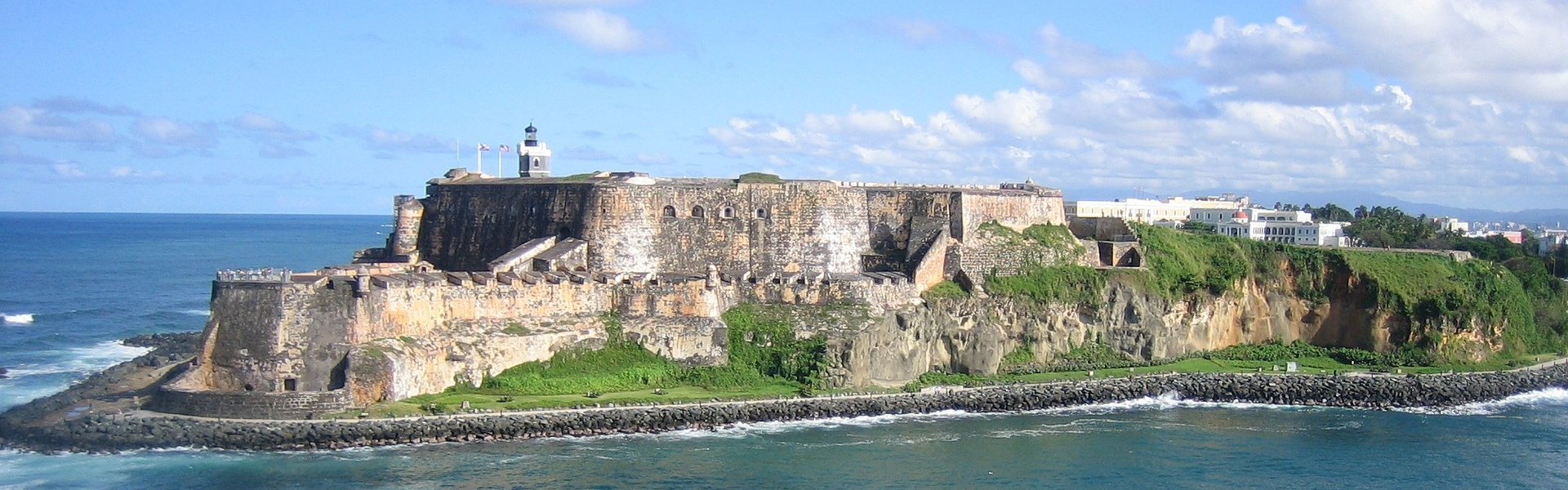
Puerto Rico is a United States territory in the Caribbean, with a five-century-old Spanish colonial capital, a national rainforest and beaches on three sides. For a traveller from Quebec, that double nature changes two concrete things: entry rules are American, and the US dollar is the everyday currency.
The essentials in four lines
Where to go: San Juan for the old town and the beaches of Condado and Isla Verde, the east for El Yunque rainforest, the west for surf, Vieques and Culebra for wild beaches.
Best time to go: December to April. Hurricane season runs from early June to late November.
Entry: United States rules apply. A valid Canadian passport is required for a flight, and registration with US immigration is required beyond thirty days.
Currency: the US dollar, with no exchange to do.
Where to go
San Juan
Old San Juan has streets paved in blue stone, coloured houses and two Spanish forts, El Morro and San Cristobal, both World Heritage sites. It is the most complete historic centre in the Caribbean, and it is walked.
The beach hotels sit in Condado, more urban and more polished, and Isla Verde, closer to the airport and more family-oriented. Both are fifteen minutes from the old town.
El Yunque
The only tropical rainforest in the US national forest system, an hour from San Juan. Trails, waterfalls, pools you can swim in. It is the day trip that separates a week on the beach from an actual trip.
The west and the south
Rincon is the island’s surf capital, with a wave season from November to March. Ponce, on the south coast, has a historic centre and a surprising art museum. These regions are reached by car and are rarely seen by travellers on a beach holiday.
Vieques and Culebra
Two small islands off the east coast, reached by ferry or small plane. Culebra holds Flamenco Beach, regularly ranked among the finest in the Caribbean. Vieques has a bioluminescent bay where the water lights up at the slightest movement on moonless nights.
When to go
From December to April the island is dry and warm, and the trade wind tempers the afternoons. That is high season.
Hurricane season runs from early June to late November, peaking in August and September. Puerto Rico lies on the usual track of Atlantic systems and has been hit hard in the past.
May and the first half of June offer the best balance of price and risk.
What you need in hand
Because Puerto Rico is a United States territory, American rules apply. For a flight, every Canadian traveller needs a valid passport, whatever their age. No visa is required for a tourist stay.
A stay longer than thirty days requires registration with US immigration services, which mainly concerns snowbirds.
For the current official advice, see the United States page on travel.gc.ca.
On the ground
Money and your phone
The US dollar is the currency, with no exchange or conversion. Check your mobile plan: several Canadian plans cover Puerto Rico in their US zone, which is true of no other Caribbean destination.
Language
Spanish is the everyday language, English is official and spoken everywhere in tourism.
Getting around
A rental car is more useful here than elsewhere in the Antilles: the highways are good, the signage is American, and everything worth the detour sits outside San Juan.
Who Puerto Rico suits
Travellers who want an island with history and a city, not only a beach. Those who would rather rent a car and move around than stay in a resort. Families who like keeping their mobile plan and paying in US dollars.
Less so anyone after a classic all-inclusive: the format is rare in Puerto Rico, hotels work on a room-only basis and meals are taken outside. The food budget is not the same as in the Spanish-speaking Antilles.
To plan this trip, see also San Juan, resorts that suit families and the All-inclusive vacations section.


