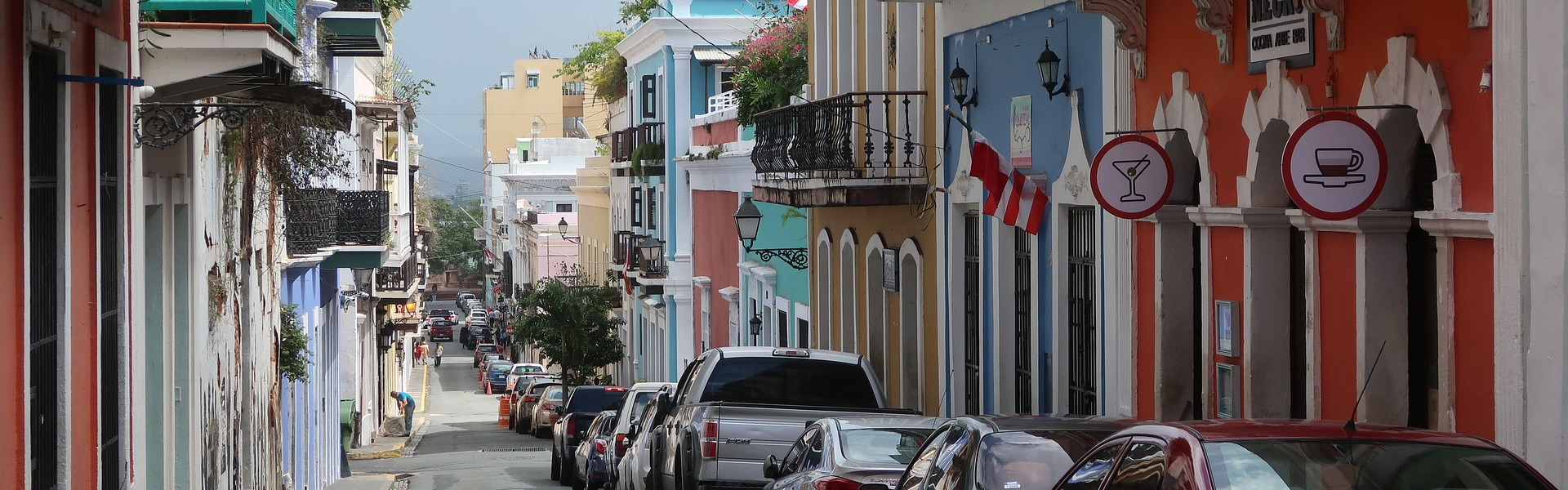
San Juan is the oldest city under United States sovereignty, founded in 1521, nearly a century before Quebec City. Its old town fits onto a peninsula seven blocks across, ringed by walls and guarded by two fortresses. Ten minutes away the beach districts begin, with their seafront hotels. It is the only Caribbean capital where a taxi ride takes you from a sixteenth-century fort to an urban beach.
The essentials in four lines
- About four and a half hours on a seasonal non-stop from Montreal to Luis Muñoz Marín airport (SJU), twenty minutes from the hotels.
- Puerto Rico is a US territory: a Canadian passport is required and US entry rules apply.
- Currency: the US dollar. Spanish and English. One hour ahead of Montreal in winter, same time in summer.
- The north coast is largely spared by sargassum, which mainly affects the east and southeast of the island.
Old San Juan
The quarter is a UNESCO World Heritage site. Its streets are paved with bluish blocks cast from furnace slag and brought as ballast in the holds of Spanish ships in the nineteenth century: it is the only city in the world where you walk on that material.
Two fortresses guard the entrance to the bay. El Morro, begun in 1539 and finished in 1790, raises six levels of masonry forty metres above the Atlantic; its great grassy esplanade has become the Sunday kite field of the city’s families. San Cristóbal, further east, is the largest Spanish fortification in the Americas, with its tunnels and its overhanging sentry boxes.
Between them, La Fortaleza has served as the governor’s residence since 1533, making it the oldest executive mansion still in use on the continent. The Paseo de la Princesa follows the walls down to the sea, and the cathedral holds the tomb of Juan Ponce de León.
The beach districts
Condado
Ten minutes from the old town, a strip of land between ocean and lagoon, with the densest hotel concentration, restaurants and an urban beach. Some stretches have a rocky entry into the water: check in front of your hotel.
Ocean Park
More residential, between Condado and Isla Verde, with a wider and quieter beach and a few small inns.
Isla Verde
Near the airport, the finest urban beach in San Juan: pale sand, coconut palms, generally calm water, and a row of large hotels. Convenient for a first or last night.
Getting out of the city
El Yunque forest, forty-five minutes east, is the only tropical rainforest in the US national forest system. Trails to waterfalls, an observation tower, and a reservation required in advance to use the main road.
The bioluminescent bays are the other striking outing. The one at Fajardo, an hour away, is paddled by kayak on moonless nights, when every stroke lights the water. The one on Vieques is reckoned the brightest in the world and calls for a night on the island.
Culebra, an hour by ferry or twenty minutes by air, holds Flamenco Beach, a kilometre-and-a-half crescent regularly ranked among the finest beaches in the Americas.
Food and music
Mofongo, fried green plantain mashed with garlic and pork crackling and filled with shrimp or pork, is the emblematic dish. The Guavate road, in the mountains an hour south, lines up whole-pig roasteries that families fill on Sundays.
For music, salsa and bomba are danced in the bars of La Placita de Santurce and Calle Loíza on Thursday and Friday evenings. And for anyone wondering, the piña colada claims San Juan as its birthplace, in 1954.
Accommodation
All-inclusive is rare in Puerto Rico: most hotels sell by the room, with restaurants billed separately, and the island has one of the more interesting food scenes in the Caribbean. A few seafront properties offer packages including meals.
The maths depends on your plans: if you intend to sightsee, walk and eat out, room-only is the obvious choice. Our criteria for choosing an all-inclusive hotel help compare.
When to go
From December to April the air holds around 28 °C, humidity stays moderate and rain is brief. That is the Quebec high season.
May, June and the first half of December offer the best balance of weather and price. Hurricane season runs June to November. Our guide on when to travel south from Montreal sets out the calendar.
To plan this trip, see also our Puerto Rico page and judging value for money.


