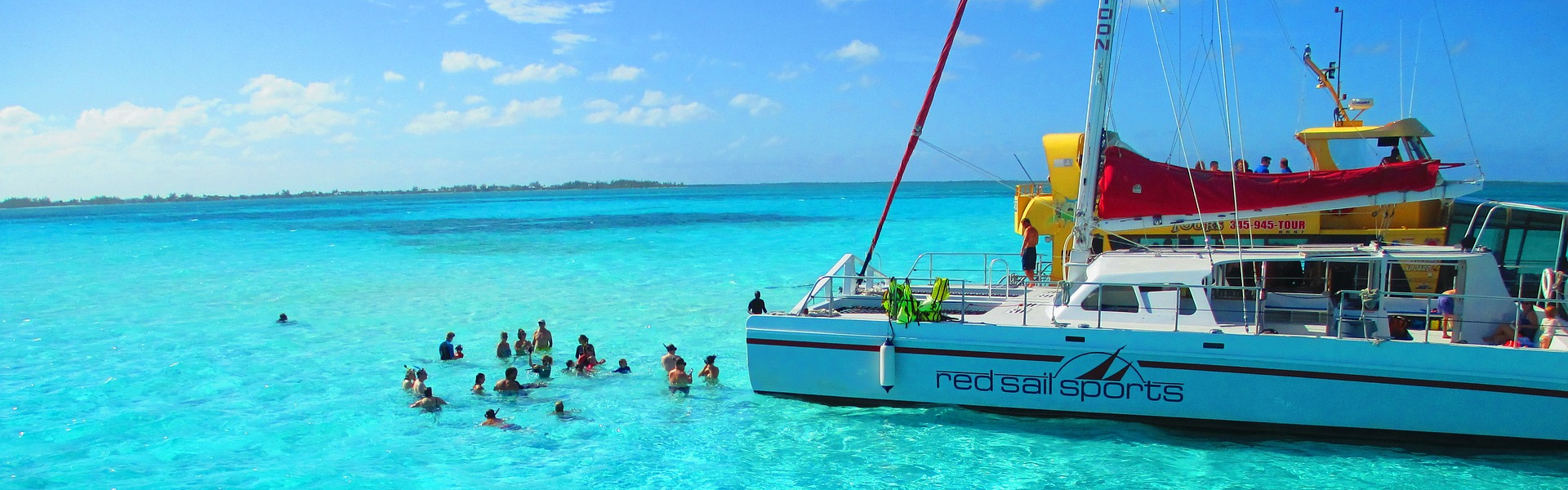
Grand Cayman is thirty-five kilometres long and holds practically everything that exists in the Cayman Islands: the town, the airport, the hotels, the restaurants and nearly all the population. The island is flat, with no rivers and no relief, which explains two things: water of rare clarity, and a shoreline divided into areas very unlike one another.
The essentials in four lines
- Fly into Owen Roberts airport (GCM), with a connection from Montreal via Toronto or Florida.
- One hour ahead of Montreal in winter, same time in summer. The Cayman dollar is worth more than the US dollar, but both circulate.
- Driving is on the left. The airport is ten minutes from Seven Mile Beach.
- Outside the sargassum belt on the west coast. Hurricane season from early June to late November.
The areas, one by one
Seven Mile Beach
Despite the name it runs about ten kilometres. Facing due west, sheltered from the prevailing swell, it offers pale coral sand, a gentle slope and sunsets straight down the beach. This is where nearly all the hotels, shopping centres and restaurants are. For a first stay it is the obvious choice.
George Town
The capital, south of the beach, is primarily a business district and a cruise port. You go for the national museum, the small waterfront church and the duty-free shops; hardly anyone stays there.
West Bay
At the northwest tip, a residential area with a few hotels, a flower garden, a turtle farm and a local curiosity: a miniature village of coral rock built by one resident over twenty years.
Rum Point and North Side
Across the North Sound, a point shaded by casuarinas with waist-deep water for tens of metres. Beside it, a sandbar where cushion sea stars gather. Count forty-five minutes by road from Seven Mile Beach, or twenty minutes by water shuttle.
East End
The windward coast, wilder, with blowholes that fire water through the limestone and a handful of far quieter hotels. It is also where the island’s limited all-inclusive supply is found.
Stingray City
This is the signature excursion. On a North Sound sandbar, fifteen minutes by boat, southern stingrays come right up to visitors standing in just over a metre of water. The habit goes back to generations of fishermen cleaning their catch at that exact spot.
Go early: the cruise boats arrive by mid-morning and the sandbar can hold several hundred people. At eight there are often only two or three boats.
Diving
The shelf drops vertically a few hundred metres from shore, putting the walls within immediate reach. Some sixty sites ring Grand Cayman, several reachable from the beach.
The wreck of the Kittiwake, a former US Navy rescue vessel scuttled in 2011 off Seven Mile Beach, lies between five and twenty metres: its superstructure is visible while snorkelling. Bloody Bay Wall, at Little Cayman, is reached by a thirty-minute domestic flight.
A hyperbaric chamber is based on the island, which is no small matter for a diver.
Getting around and staying
A bus network serves the west coast from George Town, but a rental car remains useful for East End and North Side. Taxis charge high fares.
All-inclusive is rare: the Seven Mile Beach strip belongs to the big international brands, which sell the room. You find all-inclusive at East End and with the dive-specialist operators. Since Cayman ranks among the most expensive Caribbean destinations, the format mostly buys budget predictability: our criteria for choosing an all-inclusive hotel set out what to check.
When to go
From December to April the air holds around 28 °C, humidity stays manageable and the sea is at its calmest. That is high season.
May and early June offer still-excellent conditions at markedly lower rates. From mid-August to mid-October, heat and humidity climb a notch. Our guide on when to travel south from Montreal sets out the pricing calendar.
To plan this trip, see also our Îles Caïmans page and judging value for money.


