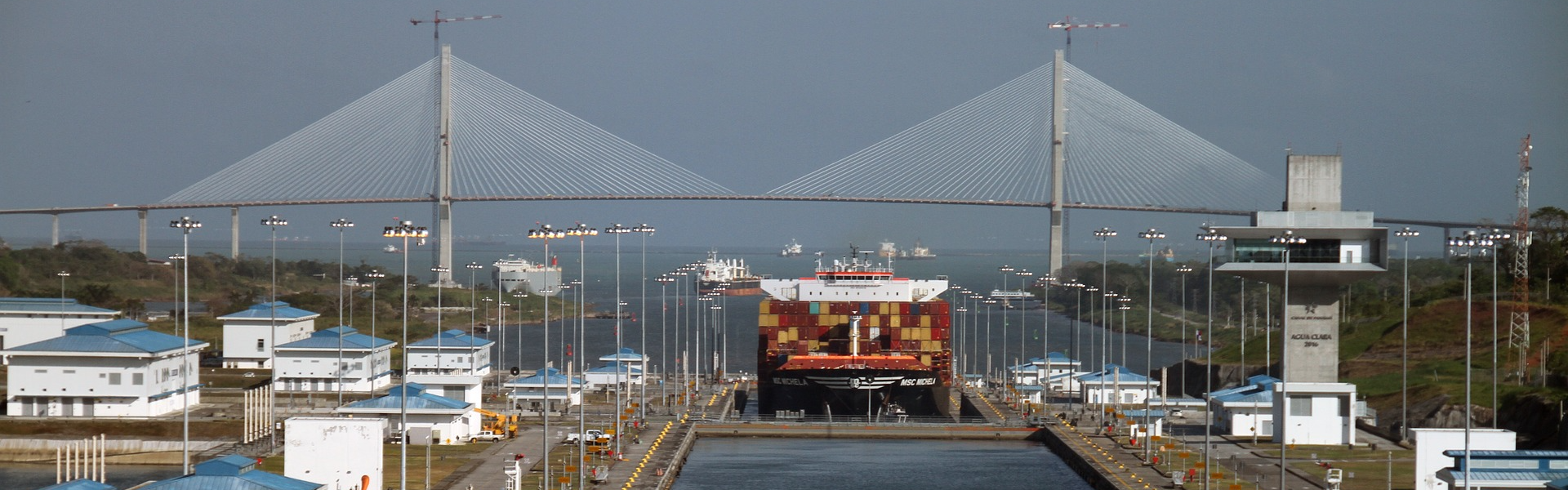
Panama is the only country where you can watch a three-hundred-metre container ship go by in the morning and swim in the Pacific in the afternoon. It is a narrow country, eighty kilometres from ocean to ocean at its tightest point, and that geometry changes everything: nothing is far.
The essentials in four lines
Where to go: Playa Blanca for all-inclusive resorts, Panama City for the canal and the old town, Gamboa for jungle, Colon for the Atlantic entrance to the canal.
Best time to go: December to April, during the dry season. The rains run April to December.
Entry: Canadian passport valid at least three months beyond your planned departure, no visa up to one hundred and eighty days.
Bring: the equivalent of five hundred US dollars in cash or a valid credit card may be required on entry.
Where to go
Playa Blanca and the Pacific coast
About two hours by road from the capital, this is where most of the country’s all-inclusive resorts sit. A long beach open to the Pacific, darker sand than the Caribbean, a real swell. It is the area closest to what a traveller from Quebec expects from a week down south.
Panama City
A skyline of glass towers that catches you off guard, and right beside it the Casco Viejo, a World Heritage colonial quarter of squares and rooftop terraces. The Miraflores locks are twenty minutes away: you watch ships rise and fall, and the scale of it does not survive a photograph.
Gamboa and the jungle
In the heart of Soberania national park, where the canal cuts through the forest. Howler monkeys, sloths, toucans, and Gatun Lake at the hotel door. It is one of the few places on earth where primary jungle sits forty minutes from a capital city.
Colon
The Caribbean entrance to the canal and the largest free trade zone in the Americas. It is a working port city, not a resort town. You pass through for the Gatun locks and to board a ship, rarely to sleep.
When to go
The dry season runs December to April. That is when people leave Quebec for it, and it is the right call.
The rainy season runs April to December. It brings seasonal flooding that can cut roads. The country sits below the usual hurricane belt, so it is rarely hit directly, but September and October rains are serious.
What you need in hand
A Canadian passport valid at least three months beyond your planned departure from Panama. That is stricter than most destinations in the region, and it is the kind of detail that makes people miss a flight.
No visa is required for a tourist stay of one hundred and eighty days or less. Customs may ask for an onward ticket, proof of sufficient funds, and the equivalent of five hundred US dollars in cash or on a credit card. Your biometric data is recorded on arrival.
Make sure you get your entry stamp: not having one brings a heavy fine on departure.
For the current official advice, see the country page on travel.gc.ca.
On the ground
Money
Panama uses the US dollar as its currency, under the local name balboa for coins. There is no exchange to do, which simplifies the whole trip.
The canal
Miraflores, on the Pacific side, is the most accessible viewing point from the capital. The newer Agua Clara locks, on the Caribbean side, take the largest ships. Check the transit times: with no ship in it, a concrete wall stays a concrete wall.
Getting around
The Pan-American highway links the capital to Playa Blanca in about two hours. Transfers are included in packages. Panama City’s metro is clean and fast, which surprises everyone.
Who Panama suits
The traveller who wants a week on the beach with two or three days worth telling stories about. Birdwatchers, since the country counts more than nine hundred species. Anyone who has already done Cuba, Mexico and the Dominican Republic and wants something else without crossing an ocean.
Less so anyone who wants only flat turquoise water. The Panamanian Pacific is beautiful, but it does not have the Caribbean postcard. For that you head to the San Blas islands, which are travelled a different way.
To plan this trip, see also Colon, Gamboa, Panama City, our month-by-month calendar and the All-inclusive vacations section.


