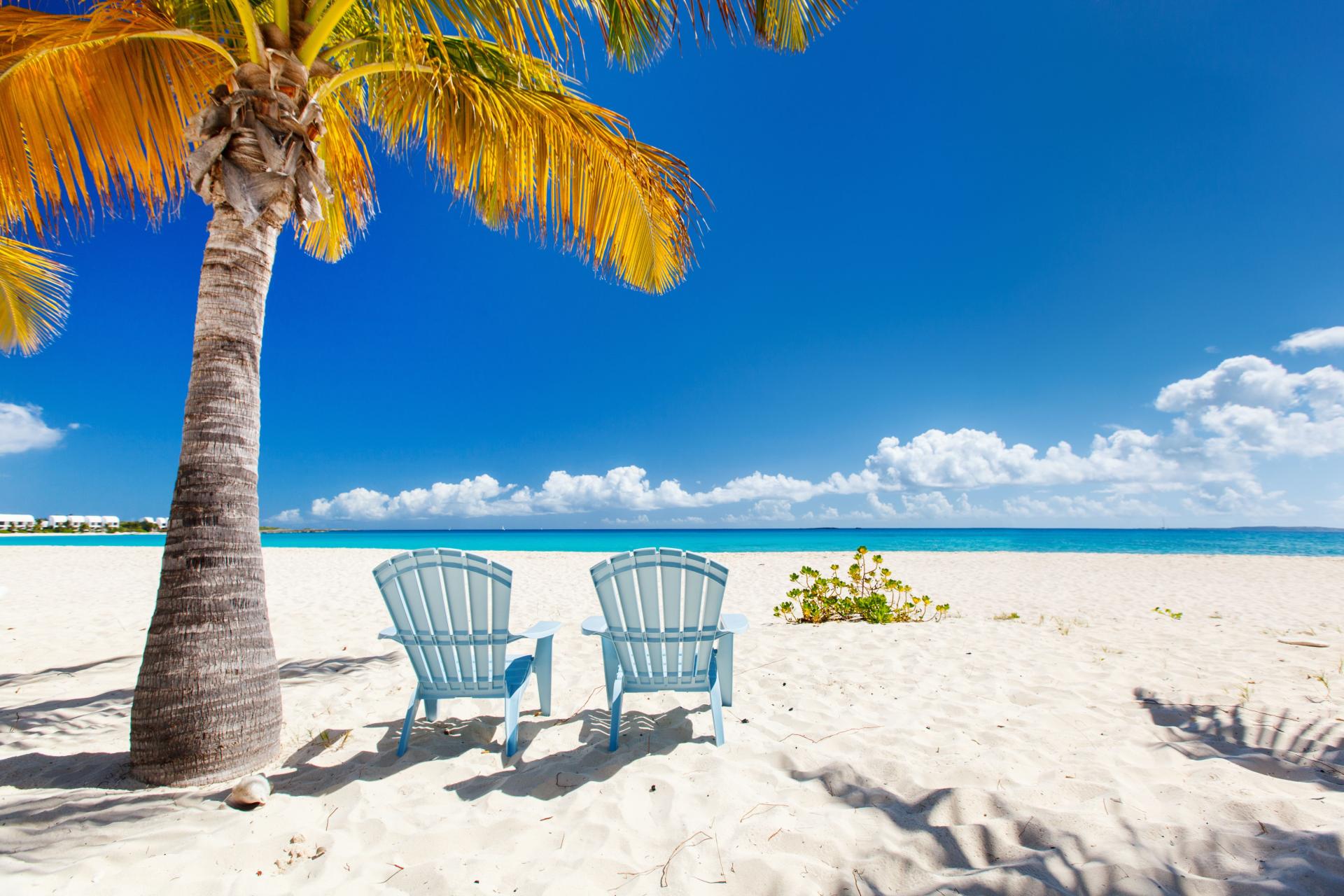
Anguilla is flat, dry, twenty-six kilometres long, and holds thirty-three beaches, several of which have sat in world rankings for years. Fifteen thousand residents, no high-rise, no fast-food chain, no casino. This British Overseas Territory decided long ago to bet on small numbers rather than volume, and you feel it the moment you step off the boat.
The essentials in four lines
- Canadian passport valid at least three months beyond your planned departure date. No visa for stays up to 90 days.
- There is no direct flight from Quebec: you go through Sint Maarten, then by ferry or private launch.
- East Caribbean dollar, with US dollars accepted everywhere. English is spoken.
- December to April is the dry season. Hurricane season runs from early June to late November.
How you actually get there
This is the question that shapes everything. Clayton J. Lloyd airport (AXA) takes regional aircraft only, with a few links from Miami and San Juan. From Montreal, the usual routing is to fly into Princess Juliana (SXM) on Sint Maarten and then cross the channel.
Two options. The public ferry runs between Blowing Point and Marigot on the French side of Saint Martin in twenty-five minutes; add a taxi between airport and dock. Or the private launch, which leaves from the pier next to the airport, takes about thirty minutes and handles immigration on the spot: more expensive, far simpler with luggage and children.
On the island, driving is on the left, and a temporary local driving permit, issued on arrival for a fee, is required in addition to your Quebec licence. Distances are short and the roads flat.
The beaches, one by one
Shoal Bay East
Three kilometres of near-white sand in the northeast, a reef close to shore and water that stays shallow a long way out. Two or three beach restaurants, a few chairs, and nothing else. This is the beach that made the island’s name.
Meads Bay and Maundays Bay
On the west end, two long curves of sand where the best-known hotels settled. Calm water, sunsets facing Saint Martin, and a walk from one end to the other.
Rendezvous Bay
Two and a half kilometres on the south coast, looking across at the hills of Saint Martin. One of the longest beaches on the island, and one of the quietest midweek.
Sandy Ground and Little Bay
Sandy Ground is the harbour and the centre of nightlife, with its shacks and weekend music. Little Bay, a tiny cove at the foot of a cliff, is reached by boat or by a rope fixed in the rock, and offers some of the best snorkelling around.
The cays
Sandy Island and Prickly Pear, two sandbars a few minutes offshore, each with a grill, fins and a reef. The classic half-day outing.
All-inclusive in Anguilla: plainly put
There is essentially none. Anguilla’s hotel industry grew around small beachfront properties and villas sold by the room, with a few plans covering breakfast or half board. No large wristband-and-buffet resort was ever built here, and the island does not want one.
Two ways to work with that. Choose Anguilla for what it is, and accept paying à la carte in what remains one of the best dining scenes in the Caribbean. Or stay at an all-inclusive on Sint Maarten, thirty minutes away by boat, and come over for a day or two. Our guidance on choosing an all-inclusive hotel helps work out what the format actually saves you given how you travel.
Eating, and listening to music
For an island of fifteen thousand people, the density of good tables is abnormal. A handful of beach restaurants appear regularly in regional rankings, and beside them the grills of Sandy Ground and The Valley serve grilled fish, ribs and rice and peas for a fraction of the price.
Music is part of the scenery. A well-known shack built from salvaged wood on Rendezvous Bay has hosted concerts for decades and remains the best place on the island to end the day.
Another local trait: sailing is the national sport. Not yachting, but racing wooden sloops built on the island, whose regattas mark the calendar, above all in the first week of August.
When to go, and what it costs
From December to April the air sits around 28 °C, rain is scarce and the trade winds blow constantly. Anguilla is among the driest islands in the region: little relief, so few clouds held back. From mid-August to October the cyclone season peaks and a good share of hotels and restaurants close, sometimes for weeks.
Price is the main obstacle: Anguilla sits at the top of the Caribbean market, for lodging as for meals. The window of May and the first half of June offers the best conditions relative to rate. Our guide on when to travel south from Montreal places those periods in the Quebec departure calendar.
Sargassum mainly affects the east and southeast coasts; Shoal Bay East and the western beaches generally stay clear.
Entry requirements, health and safety
A Canadian passport must be valid at least three months beyond the planned departure date. No visa is required for a stay of 90 days or less, but officers may ask for a return or onward ticket and proof of sufficient funds.
No vaccine is mandatory. Dengue, Zika and chikungunya circulate in the region: repellent morning and evening remains the best protection. Care is provided by a hospital in The Valley, with evacuation to Saint Martin, Martinique or Florida for serious cases. Travel insurance with evacuation coverage earns its keep here.
For current entry conditions and official recommendations, see the Government of Canada page on Anguilla.
Who this island suits
Anguilla rewards the traveller who comes for the beach, the table and the quiet, and who needs no programme. There is no volcano to climb, no rainforest, no major historic site, no nightlife beyond two or three addresses. In exchange you get sand of rare quality, very few people on it, and a welcome that keeps the measure of a small community.
For a first Caribbean trip with young children on a tight budget, other islands suit better. For a week of rest for two, or an escape grafted onto a stay in Saint Martin, few places do it as well.
To plan this trip, see also Anguilla, our month-by-month calendar and the All-inclusive vacations section.


