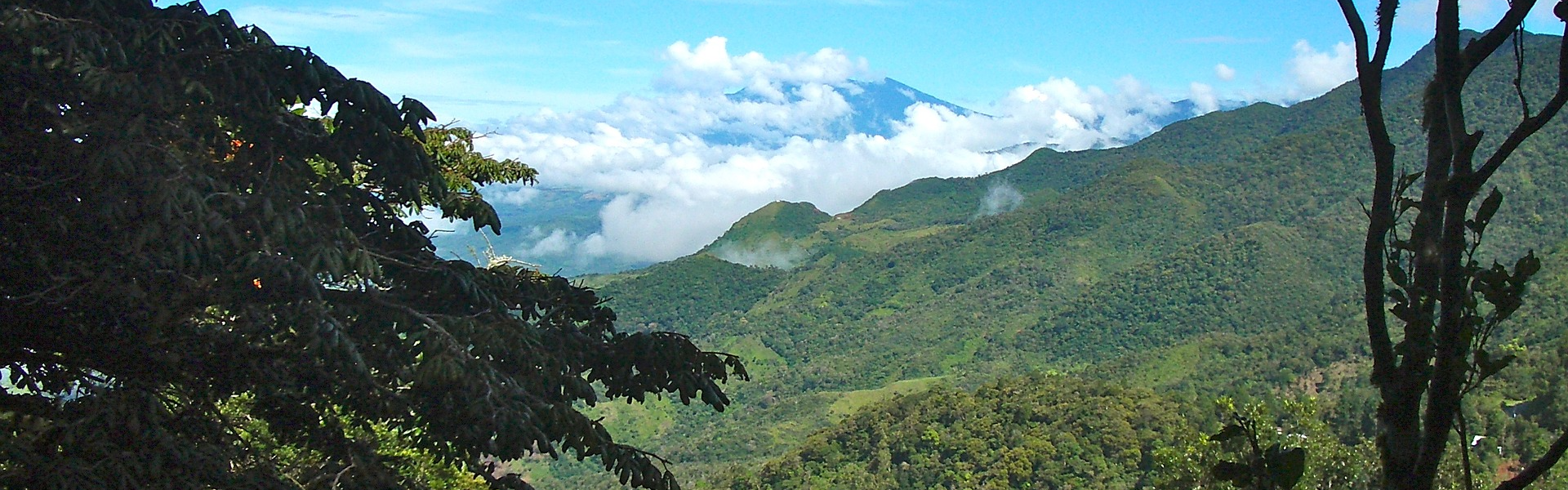
Gamboa lies forty minutes from the Panamanian capital, at the exact point where the Chagres river joins the canal. It is a former canal company village, built in the 1930s to house the dredging crews, now surrounded by primary forest on every side. You do not come here for a beach: you come because it is one of the best places in the Americas to watch tropical wildlife without giving up comfort.
The essentials in four lines
- About five and a half hours non-stop from Montreal to Panama (PTY), then forty-five minutes by road.
- Panama keeps Eastern time all year: same hour as Montreal in winter, one hour behind in summer.
- No beach: Gamboa is a destination of forest, river and wildlife watching.
- Dry season from mid-December to mid-April. The country lies outside the hurricane track.
Soberanía national park
It covers nineteen thousand hectares along the canal and protects a forest that was never cut, because the watershed had to be preserved to supply the locks with fresh water. That historical accident explains why primary forest survives forty minutes from a capital of two million people.
Pipeline Road, a former service track, is one of the most celebrated birdwatching sites in the world: more than four hundred species have been recorded there, and it has repeatedly held the world record for species seen in twenty-four hours. You walk it at dawn, slowly, with a guide.
On the other trails you meet howler monkeys, capuchins, sloths, coatis, agoutis and, with luck, an ocelot at dusk.
Gatún Lake
Created in 1913 by damming the Chagres, it was then the largest artificial lake in the world. Flooding drowned the valleys and turned hilltops into islands: animals found themselves isolated, which produced concentrated populations that are easy to observe.
Boat trips leave in the morning. You run alongside container ships in transit, enter quiet arms, and approach the islets where capuchins and squirrel monkeys live. Crocodiles and caimans lie on the banks.
Barro Colorado Island, the largest in the lake, has hosted a Smithsonian Institution research station since 1923, one of the most documented tropical forest study sites in the world. Visits are by reservation, in limited numbers.
The Chagres and the Emberá
Going up the river by dugout, you reach Emberá communities living inside the national park. Some receive day visitors: palm-roofed houses on stilts, basketry, jagua body painting, a meal of fish and plantain served on a leaf.
It is an organised visit, and it is presented as such. What is most worthwhile there is the conversation: these communities live in a park where farming and hunting are restricted, and tourism has become one of their few resources.
Seeing the canal differently
Gamboa is the best vantage point on the transit: the Gaillard Cut, the trench dug through the rock of the continental divide, passes right beside it. A walkway and a lookout let you watch ships pass a few dozen metres away.
The Miraflores locks are thirty minutes away, the Pedro Miguel locks closer still.
Accommodation
One large property occupies the hill above the river, with a canopy tram, an observation tower, a sloth sanctuary and a butterfly garden. The rest of the village has a few guest houses.
An all-inclusive plan is offered as an option; most of it sells by the room with excursions à la carte. Many travellers combine two or three nights at Gamboa with the capital and a week on the Pacific coast. Our criteria for choosing an all-inclusive hotel will apply to the beach portion.
When to go
The dry season, mid-December to mid-April, gives the most workable trails and the best comfort. It is also when the raptor migration crosses the isthmus, in October and November southbound and in March northbound: tens of thousands of hawks pass over the canal in a single day.
From May to November, late-afternoon showers make the forest louder and greener, and prices fall. Our guide on when to travel south from Montreal sets out the calendar.
To plan this trip, see also our Panama page, Playa Blanca, Colon and judging value for money.


