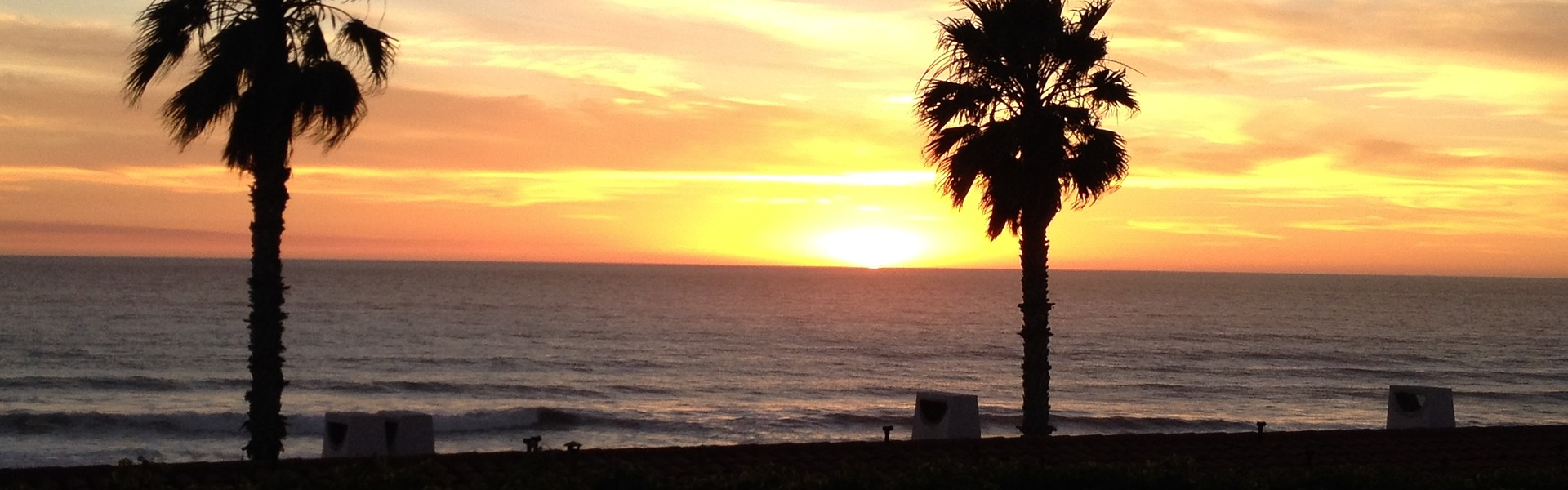
Huatulco was created by government plan in the early 1980s, like Cancún, but under the opposite instruction: do not pave it over. Thirty-six beaches spread across nine bays, a national park covering much of the territory, low buildings, and a single real hotel zone. The result is one of the most discreet beach resorts in Mexico, on the coast of Oaxaca.
The essentials in four lines
- About six hours from Montreal, with seasonal non-stop service to Huatulco (HUX), thirty minutes from the hotels.
- Oaxaca runs one hour behind Montreal in winter and two in summer.
- No sargassum: the coast faces the Pacific. The bays are sheltered and the water stays calm.
- November to May is the dry season. Rain and cyclones from June to October.
Four places to tell apart
Tangolunda
The hotel bay, with the large all-inclusive resorts, a golf course and a wide sheltered beach. The most convenient sector, fifteen minutes from town.
La Crucecita
The town, built from nothing from 1984 to house the resort’s workers. A shaded main square, a market, restaurants at local prices and a church whose ceiling carries an enormous painted Virgin of Guadalupe. This is where you eat when you want out of the resort.
Santa Cruz
The harbour and marina, from which the boat excursions to the bays depart. A cruise pier takes a few ships each season, and a small beach edges the village.
Chahué
Between the two, a quieter bay with a few mid-size hotels and a beach club. The water here is a little livelier.
The nine bays
This is what makes Huatulco distinctive: the coast is cut into successive coves, several reachable only from the sea. Day excursions leave Santa Cruz and string together three or four bays with snorkelling stops.
Maguey and El Órgano have the best shore-accessible reefs, with reef fish metres from the sand. Cacaluta, entirely within the national park, has no facilities at all: sand, low vegetation and nothing else. San Agustín, at the western end, is also reachable by track and offers grilled-fish palapas.
One tip: negotiate the shared boat trip at the dock rather than through the hotel desk. The price difference for the same route is considerable.
Oaxaca behind the beach
This is what really sets Huatulco apart from other Mexican beach resorts. Behind the coast, the Sierra Madre del Sur rises past two thousand metres and produces a well-regarded high-altitude coffee. The fincas around Pluma Hidalgo welcome day visitors, cherry to cup, on a mountain drive worth the trip on its own.
The Copalita archaeological site, fifteen minutes away, occupies a headland above a river mouth and covers two and a half thousand years of occupation. The same river is rafted from June to November.
And then there is the food. Oaxaca is regarded as the heart of Mexican cooking: the moles, long-simmered sauces combining chillies, spices, dried fruit and sometimes chocolate; quesillo, the stringy cheese sold in a ball; tlayudas; and mezcal, distilled in family palenques. Eating in La Crucecita costs a third of resort prices and tells you far more.
A resort planned differently
Huatulco makes a point of its environmental management: water treatment, protection of the marine and terrestrial national park, limits on building height. The region was among the first tourism communities in the Americas to earn an international sustainable-tourism certification, and it has renewed it since.
You can see it: the bays stay clean, the vegetation reaches the sand, and the whole place remains human in scale. It is also why the hotel supply is limited and fills quickly in high season.
All-inclusive in Huatulco
The format concentrates at Tangolunda, with a handful of large resorts, several of good standard and one adults-only property. The offering is far narrower than in Cancún, and rates stay moderate for the category.
Since the town is close and affordable, a room-only or half-board stay makes sense here for anyone who likes to go out. Our criteria for choosing an all-inclusive hotel help do the maths.
When to go
From November to May the sky stays clear, the air holds around 30 °C by day and the water near 27. That is the dry season and the tourist high season.
From June to October, heat and humidity climb, late-day storms become daily, the vegetation greens and prices fall. The southern Pacific coast has a cyclone season from June to November. Our guide on when to travel south from Montreal places those windows in the departure calendar.
To plan this trip, see also our Mexique page, Riviera Diamante, Riviera Maya and Mexico or the Dominican Republic.


