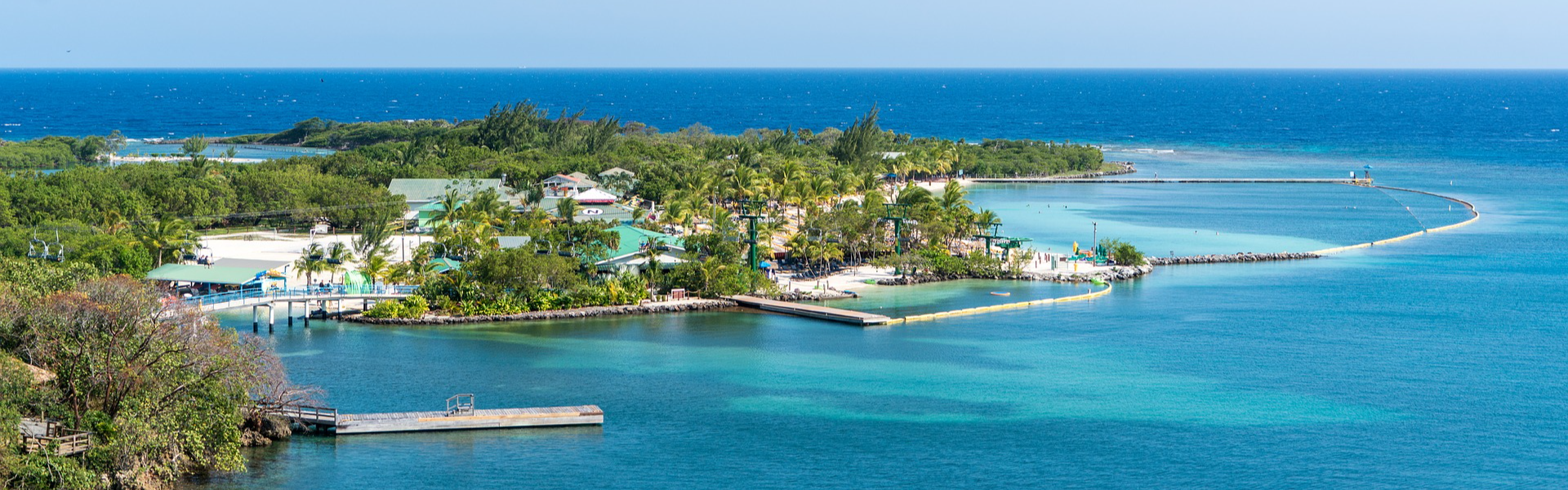
Roatán is a long, narrow island lying sixty kilometres off the north coast of Honduras, on the second largest barrier reef in the world. The reef runs a few dozen metres from shore along nearly its whole length, which explains most of what happens here: people come to get into the water, and it is one of the cheapest places on earth to learn to dive.
The essentials in four lines
- About five hours on a seasonal non-stop from Montreal to Roatán (RTB), twenty minutes from the hotel areas.
- Honduras runs one hour behind Montreal in winter and two in summer.
- Spanish and English are spoken: the Bay Islands were British until 1861 and creole English has persisted.
- December to April is the dry season. Rain is more frequent from October to January than elsewhere in the Caribbean.
The areas
West Bay
The finest beach on the island: two kilometres of white sand with the reef twenty metres offshore. You walk in, put on a mask, and the wall is right there. This is the sector of the large resorts and the busiest with cruise visitors in the middle of the day.
West End
Ten minutes away by water taxi or fifteen by road, a village of a single sand street lined with dive shops, restaurants and small hotels. It is the island’s social centre, where people take their diving certifications and eat in the evening. The beach is modest, but everything is walkable.
Sandy Bay
Between the two, quieter, with a marine sciences institute, a sloth sanctuary and a botanical garden.
The east of the island
Past French Harbour the road deteriorates and the island turns rural. Punta Gorda, on the north coast, is the oldest Garifuna settlement on Roatán, founded in 1797 by people deported from Saint Vincent. Garifuna culture, its language, music and dance, is on the UNESCO list of intangible cultural heritage.
Diving
About a hundred marked sites ring the island, between five and forty metres: walls, canyons, tunnels, two deliberately sunk wrecks. Visibility regularly exceeds twenty-five metres and the water stays between 26 and 29 degrees year-round.
Roatán’s particularity is economic as much as natural: the concentration of dive shops at West End keeps training prices among the lowest in the world. An entry-level certification takes three or four days for a fraction of what it costs in North America.
For non-divers, snorkelling from West Bay beach is enough to see coral, parrotfish, rays and turtles.
Out of the water
A sloth and monkey sanctuary, an iguana farm, ziplines over the canopy and kayak trips through a mangrove tunnel that crosses the island from one coast to the other.
The neighbouring islands are reached by boat: Utila, an hour away, is known for whale sharks, above all from February to April and from August to October. The Cayos Cochinos, further south, form a strict marine reserve with a stilted Garifuna village.
What to know
The island’s roads are uneven and distances take longer than expected. Water taxis link West End and West Bay in ten minutes, often faster than the road.
On cruise days, two terminals pour several thousand visitors onto West Bay between ten and three. Check the schedule: the same beach is unrecognisable in late afternoon.
Sargassum mainly affects the south and east coasts; West Bay and West End generally stay clear.
Accommodation
All-inclusive exists, with a few mid-size resorts at West Bay, often paired with dive packages. The rest consists of small hotels, residences and guest houses at West End, sold without meals and at very affordable prices.
The choice depends on your plans: all-inclusive for a week of beach and pool, a village hotel for diving daily and eating out. Our criteria for choosing an all-inclusive hotel and our file on affordable all-inclusive resorts help compare.
When to go
From February to May the weather is driest and the sea calmest: the best window. From June to September, heat builds with short showers. From October to January, rain is more frequent and the north can take wind.
Our guide on when to travel south from Montreal sets out the pricing calendar from Quebec.
To plan this trip, see also our Honduras page, La Ceiba and resorts that suit families.


