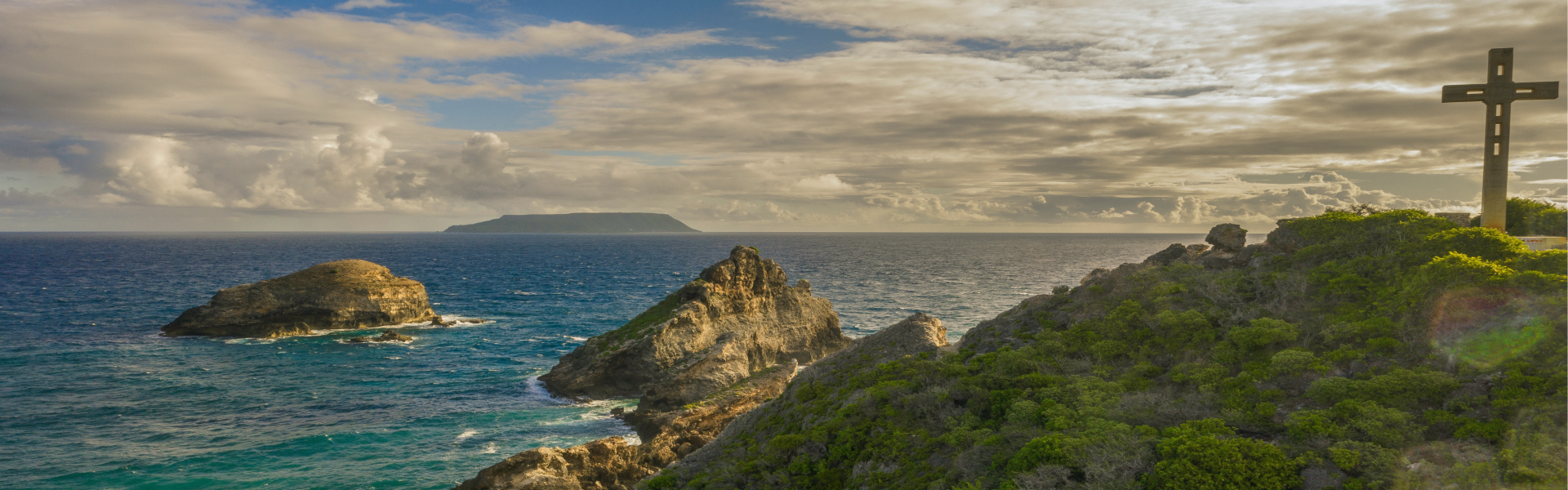
Seen from the air, Guadeloupe is shaped like a butterfly. The western wing, Basse-Terre, is volcanic, mountainous, covered in rainforest and topped by La Soufrière at 1 467 metres. The eastern wing, Grande-Terre, is flat, limestone, dry, and holds the beaches and the hotels. A channel a few dozen metres wide separates them, crossed by two bridges. Add four satellite islands and you have the most varied archipelago in the Lesser Antilles.
The essentials in four lines
- Canadian passport valid at least three months beyond your planned departure date. No visa up to 90 days.
- About five hours from Montreal to Pôle Caraïbes (PTP), with non-stop service in winter.
- French department: euro, French language, right-hand driving, European-standard hospital care.
- December to April is the dry season. Hurricane season runs from early June to late November.
Two wings, two different trips
Grande-Terre
The southern edge of this wing, from Le Gosier to Saint-François by way of Sainte-Anne, lines up pale-sand beaches, reef-protected lagoons and most of the hotel stock. The north, around Anse-Bertrand and Pointe de la Grande Vigie, turns far wilder: limestone cliffs, Atlantic swell, almost no one.
Basse-Terre
The national park covers the heart of the western wing: dense forest, rivers, the Carbet Falls, trails climbing to La Soufrière in two hours through the fumaroles. On the leeward coast, between Bouillante and Deshaies, the beaches are grey or golden, the sea is calm and the villages have kept their scale.
Crossing from one wing to the other takes forty-five minutes. Many travellers split the week between the two, and that is probably the best way to understand the island.
The Cousteau reserve
Off Malendure beach, two rocky islets shelter a marine area protected since the 1980s. Jacques-Yves Cousteau filmed here and named it among the great dive sites of the world; the reputation has held.
What makes the place unusual is that it asks for no certification. The drop-offs begin at three metres, the shuttle takes ten minutes, and a simple snorkelling trip is enough to see turtles, sea fans and schools of parrotfish. Certified divers go deeper, down to the submerged bust of Cousteau at fourteen metres.
The beaches worth knowing
La Caravelle and Bois Jolan
At Sainte-Anne, two long white-sand beaches in front of a shallow lagoon closed by the reef. Bois Jolan is the quieter of the two, with coconut palms and very few facilities.
Grande Anse, at Deshaies
A kilometre and a half of golden, ochre-tinged sand in northern Basse-Terre, backed by a wooded hill. The swell can be strong: a fine beach, with swimming to watch. The neighbouring village serves as the set for a detective series well known in Europe, which brings it unexpected traffic.
Plage de la Chapelle, at Anse-Bertrand
A white-sand cove protected by a natural barrier, in northern Grande-Terre. Little known to visitors, much used by Guadeloupeans on weekends.
Petite-Terre
Two uninhabited islets designated a nature reserve, an hour by boat from Saint-François. A turquoise lagoon, Lesser Antillean iguanas by the hundred and juvenile lemon sharks in the channel. Guided day trips only, with visitor numbers capped.
The southern islands
Les Saintes, forty-five minutes by ferry, form one of the world’s finest bays according to UNESCO. Terre-de-Haut is covered on foot or by scooter, with Fort Napoléon above and Anse Crawen as the reward.
Marie-Galante, an hour from Pointe-à-Pitre, is a flat island of cane fields where ox carts still work the roads and three distilleries produce a well-regarded rum, one of the few bottled at 59 per cent. Its southwestern beaches are among the quietest in the archipelago.
All-inclusive in Guadeloupe
As in Martinique, the format exists without dominating. The main all-inclusive property is a large holiday village at Sainte-Anne, built around water sports and families. Several hotels in Le Gosier, Saint-François and Deshaies sell an optional all-inclusive plan added to the room rate.
The rest of the hotel stock sells room-only or with breakfast, on an island where Creole kitchens, bokit trucks and markets make going out worthwhile every day. Our criteria for choosing an all-inclusive hotel help measure what the format actually saves you given your plans.
When to go
The dry season, December to April, brings trade winds, little rain and calm water on the Caribbean coast. From July to November, heat and humidity climb, showers turn daily but brief, and rates drop sharply.
Carnival fills all of January and February, with parades every Sunday until Ash Wednesday. In August, the cooks’ festival puts Creole cooks in procession through the streets of Pointe-à-Pitre, in costume, carrying their dishes. To place those periods in Quebec departure pricing, see when to travel south.
Sargassum mainly affects the southern and eastern coasts of Grande-Terre and the south of Basse-Terre. The leeward coast, on the western side of Basse-Terre, generally stays clear: a useful criterion when choosing an area.
Entry requirements, health and safety
A Canadian passport must be valid at least three months beyond the planned departure date. No visa for a tourist stay of 90 days or less. Officers may ask for a return ticket, proof of accommodation and proof of funds.
No vaccine is mandatory, except proof of yellow fever vaccination if arriving from an affected country. Dengue circulates periodically. The university hospital provides care to French standards, which greatly simplifies the medical question compared with neighbouring islands. Tap water is drinkable, with occasional service interruptions in some municipalities.
For current entry conditions and official recommendations, see the Government of Canada page on Guadeloupe.
At the table
The bokit, a fried bread filled with salt cod, chicken or tuna, is eaten standing at the roadside and costs about the price of a coffee. At the other end, the Creole kitchens of Basse-Terre serve goat colombo, snapper court-bouillon and ouassous, the large freshwater prawns raised in the island’s rivers.
And everywhere, the ti-punch: agricultural rum, cane sugar, a wedge of lime. You mix it yourself, to your own hand, as the local formula requires.
To plan this trip, see also Pointe a Pitre, our month-by-month calendar and the All-inclusive vacations section.


