The Dominican Republic is the best-selling sun destination in Quebec, and it is also the one where travellers most often pick the wrong region. The country takes up two thirds of an island. Between Punta Cana and Puerto Plata there are six hours of road, two climates and two very different ways to spend a week.
Here is how our travel advisors frame the choice, region by region, with what actually changes from one area to the next.
The essentials in four lines
Best time to go: December to April for dry weather, May and early June for the best value.
Which region: Punta Cana for calm sea and a non-stop flight, the north coast for wind and lower prices, La Romana for boat trips, Samana for nature and whales from January to March.
Entry: valid Canadian passport, no visa for thirty days or less, e-Ticket form to be completed online before each flight.
Flight time: just under five hours non-stop from Montreal to Punta Cana.
Four regions, four holidays
Punta Cana and Bavaro, in the east
Some fifty kilometres of sand in front of a calm sea sheltered by a reef. This is the highest concentration of all-inclusive resorts in the Caribbean and the only part of the country served non-stop from Montreal year-round, in just under five hours.
Within the region itself the areas are not equal. Bavaro is the historic core, with the greatest density of hotels and the liveliest beach. Cap Cana, to the south, holds the most expensive properties, a marina and a signature golf course. Uvero Alto and Macao, to the north, are newer and more isolated: rougher sea, wider beach, forty extra minutes by coach from the airport. That last detail matters when you travel with young children after a five-hour flight.
Puerto Plata and the north coast
The north coast catches the trade winds. The wind is steady, which delights the windsurfers of Cabarete and keeps the sea from going as flat as in the east. The region has relief, a cable car up Mount Isabel de Torres, villages and a real city. Prices there generally sit below Punta Cana for the same hotel category.
It is the right choice if you want to leave the resort. It is the wrong one if you want glassy water for four-year-olds.
La Romana and Bayahibe, in the southeast
Fewer resorts, more boats. The region is the gateway to Saona Island and the Eastern national park, and the sea is sheltered. The crowd skews slightly older, the mood is quieter, and La Romana airport spares you the long transfers.
Samana, on the peninsula
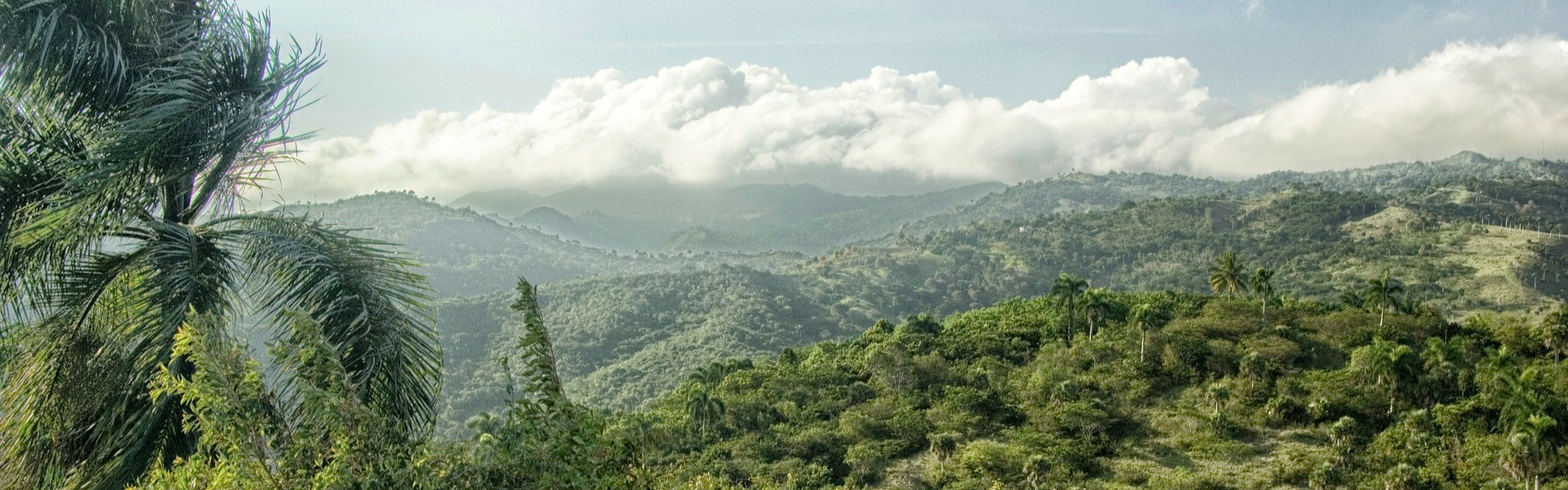
The green part of the country: waterfalls, coconut groves, small hotels rather than large resorts. From January to March humpback whales enter the bay to calve, and it is one of the best places in the world to watch them. The rest of the year it is a nature destination with wilder beaches, especially around Las Terrenas.
When to go
From December to April the country is dry and the heat stays manageable. It is also high season, so the most expensive stretch of the year, peaking around the holidays and Quebec’s March break.
Hurricane season runs June through November. The real risk concentrates in August, September and October. A trip in that window costs noticeably less, and it is the moment cancellation insurance stops being a debatable expense.
May and the first half of June are the best compromise of the year: prices have come down, the rains stay brief and fall mostly late in the day, the sea is warm.
Sargassum, stated plainly
The east coast receives sargassum seaweed, mostly between April and August. Intensity varies from year to year and from beach to beach, sometimes within a few kilometres. Large resorts rake their stretch of sand every morning, which solves much of the problem. The north coast and Samana are far less affected. We track the situation in our sargassum guide, and your advisor can give you the current picture before you book.
What you need in hand
A valid Canadian passport. Until 31 December 2026 a passport valid for the length of the stay is enough for tourists; after that date, allow six months of validity beyond arrival. No visa is required for thirty days or less, and the stay can be extended up to one hundred and twenty days through Dominican migration authorities.
The Dominican electronic form, the e-Ticket, must be completed online before boarding, both ways. It is free, it takes five minutes, and it is the first thing travellers forget. The tourist card itself is included in the price of the air ticket.
Customs may ask for proof of sufficient funds, the address of your accommodation and a return ticket.
For the current official advice, see the country page on travel.gc.ca.
On the ground
Money
The currency is the Dominican peso, but US dollars circulate everywhere in tourist areas. Bring small US bills for tips and excursions. Resort ATMs charge high fees.
Tipping
Tips are not included in the all-inclusive, whatever the brochure suggests. Budget a few dollars a day for housekeeping and a dollar or two per round at the bar. It is not an obligation, it is a custom, and it changes the quality of your week.
Hotel ratings
Dominican stars are generous. A local four-star often matches a North American three-star. This is exactly where an advisor who knows the properties one by one saves you a week of disappointment, because the gap does not show in the photos.
Getting around
For a resort stay, renting a car is hard to justify: transfers are included in the package and excursions pick you up at the hotel. If you stay in Samana or on the north coast and plan to move around, a car becomes useful.
Water
Drink bottled water, including for brushing your teeth. Resorts provide it. It is the simplest and most effective precaution of the trip.
Who the Dominican Republic suits
Families who want a calm beach, a short flight and a predictable budget: Punta Cana answers that better than any other Caribbean destination. Couples looking for upscale without crossing the Atlantic: Cap Cana and Samana. Travellers who get bored on a lounger: the north coast, with its wind, its mountains and its towns.
Less so anyone hoping for cultural immersion from inside a resort. The country has a dense history, a World Heritage capital and a strong musical life, but none of it comes to you: you have to step out to find it.
To plan this trip, see also Cabarete, La Romana, Michès, Mexico or the Dominican Republic and the All-inclusive vacations section.


