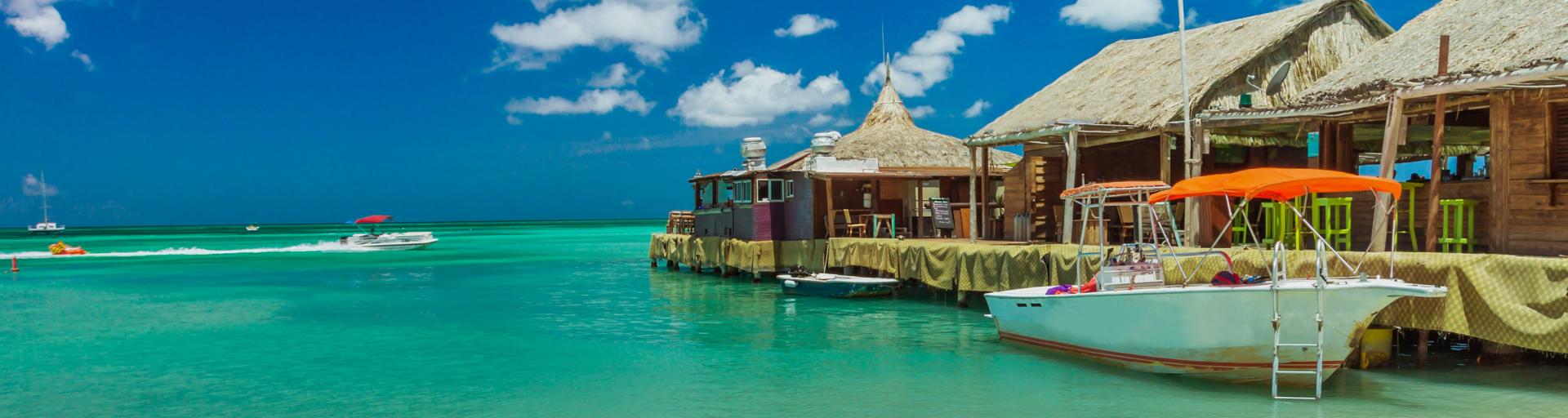
Aruba sells something its neighbours cannot promise: the weather. The island sits outside the usual hurricane belt, some thirty kilometres off the Venezuelan coast, and the trade wind blows all year. It is the Caribbean destination where the risk of losing a week to the weather is lowest.
The essentials in four lines
Where to stay: Palm Beach for buzz and large resorts, Eagle Beach for space and quiet, the east coast for wind and nobody.
Best time to go: any time. The island gets little rain and lies outside the hurricane belt.
Entry: Canadian passport valid for the length of the stay, no visa up to ninety days, and a digital embarkation card to be completed online within seven days before arrival.
Language: Dutch and Papiamento are official, but everyone speaks English and many speak Spanish.
Two beaches, two holidays
Palm Beach
The strip of large resorts, restaurants and casinos, in the northwest. It is busy, it is commercial, and everything is walkable. If you want to go out in the evening without taking a taxi, this is it.
Eagle Beach
Just to the south, wider, less built up, with the wind-bent divi-divi trees that serve as the island’s postcard. Hotels there are lower and further apart. Same sea, different rhythm.
The east coast and Arikok
The windward side is a desert of cactus, volcanic rock and waves. Arikok national park covers nearly a fifth of the island. You go in four-wheel drive, not in flip-flops, and it surprises everyone who came only for the beach.
The wind, stated plainly
Aruba’s trade wind is steady and strong. It is what makes the heat bearable and what makes the island a known windsurfing and kiting spot. It is also what sends sand across your towel in the afternoon and keeps the sea from going as flat as Punta Cana. Travellers who hate wind should know before booking, not on arrival.
What you need in hand
A Canadian passport valid for the whole stay. No visa is required for a tourist stay of up to ninety days in any one hundred and eighty day period.
The digital embarkation card, the ED Card, must be completed and signed online within seven days before arrival. It is mandatory for every traveller and it is the most commonly forgotten step on this destination.
Customs may ask for a return ticket, proof of sufficient funds and valid travel health insurance.
For the current official advice, see the country page on travel.gc.ca.
On the ground
Money
The currency is the Aruban florin, but US dollars are accepted everywhere, including in shops. Prices are often posted in both.
The cost
Aruba is among the more expensive islands in the region. Its stable weather and its safety are priced in. For the same budget you will stay in a better room in the Dominican Republic; in Aruba, what you buy is a week without bad surprises.
Getting around
A bus links Palm Beach, Eagle Beach and Oranjestad at regular intervals, and it is reliable. A rental car only becomes useful for Arikok and the east coast.
Who Aruba suits
Travellers who have already lost a week to a hurricane or a rainy season and do not want to repeat it. Windsurfers. Couples who want to walk to dinner rather than stay inside a resort.
Less so families looking for glassy water for young children, and travellers on a tight budget. This is not the island of quantity for your money, it is the island of reliability.
To plan this trip, see also Aruba, judging value for money and the All-inclusive vacations section.


