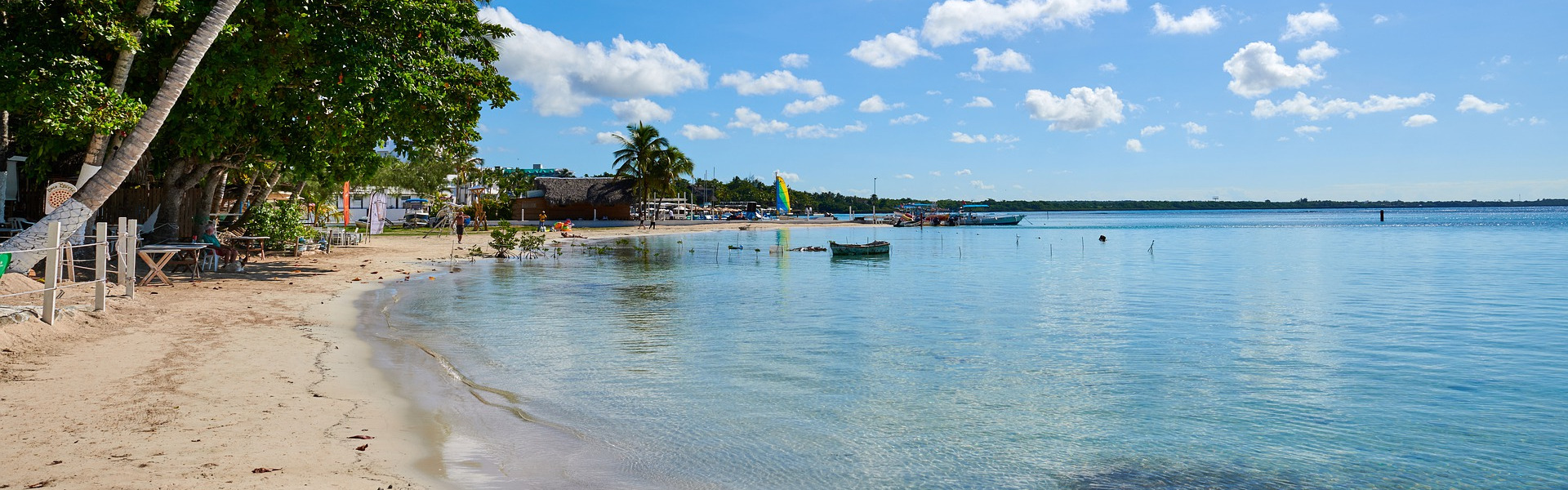
Sosúa sits in a horseshoe bay on the Dominican north coast, fifteen minutes from Puerto Plata airport. The reef closes the mouth of the bay, which gives calm, clear water rare on this Atlantic shore. It is also a village with a singular history: in 1940 the Dominican Republic took in several hundred Jewish refugees from Europe here, and their descendants left a lasting mark on local life.
The essentials in four lines
- About four and a quarter hours non-stop from Montreal to Puerto Plata (POP), fifteen minutes away by road.
- The Dominican Republic is one hour ahead of Montreal in winter and on the same time in summer.
- The north coast is largely spared by sargassum.
- December to April for the driest weather. Hurricane season runs June to November.
The bay
Playa Sosúa occupies the head of the bay: a kilometre of pale sand, shallow water and a reef you swim to from shore. It is one of the best snorkelling sites in the country without taking a boat. The beach is lined with restaurants and shops, and vendor attention is constant.
Playa Alicia, below a cliff to the west, is shorter, quieter and generally cleaner. It appeared after a shift of sand in the 2000s and did not exist on older maps.
For diving, the bay and its surroundings hold some fifteen sites between eight and thirty metres: walls, coral heads, a wreck and shallow caves. Visibility is best from November to April.
The Sosúa story
In 1938, at an international conference on refugees in Évian, the Dominican Republic was the only country to offer to take a significant number of Jews fleeing Europe. Several hundred arrived from 1940 onward and settled at Sosúa, where land had been allocated to them.
They founded a dairy and charcuterie cooperative whose brand still exists and sells across the country. The small wooden synagogue and the museum beside it, open to the public, tell that story in half an hour. It is one of the most unexpected visits in the Caribbean.
The two villages
Sosúa divides into two quarters separated by the bay. El Batey, to the east, is the tourist sector, with the hotels, restaurants and nightlife. Los Charamicos, to the west, is the Dominican quarter: market, colmados, motoconchos, and prices from another world.
A word of honesty: the nightlife in central El Batey has a reputation that does not suit every traveller. Families and couples generally prefer hotels along the edge of the bay or toward Cabarete, and the question does not arise during the day.
What lies around
Cabarete is twenty minutes east, with its kiteboarding schools and beach bars. The 27 waterfalls of Damajagua are forty minutes inland, and Puerto Plata with its cable car and Victorian old town twenty minutes west.
From mid-January to late March, whale-watching excursions to Samaná Bay leave from hotels in the region; allow a full day.
All-inclusive in Sosúa
The supply is modest: a few mid-size resorts around the bay, at rates among the lowest in the Dominican Republic. The rest of the accommodation consists of small hotels, apartments and residences sold without meals.
It is a good choice for an economical stay with fine swimming and snorkelling within walking distance, less so for anyone wanting a large resort with a water park and entertainment. Our criteria for choosing an all-inclusive hotel and our file on affordable all-inclusive resorts from Quebec help compare.
When to go
From December to April the air holds around 28 °C with steady trade winds. The north coast gets slightly more rain than the east of the country, especially in November and December, but the showers are brief. Our guide on when to travel south from Montreal sets out the pricing calendar.
To plan this trip, see also our Republique Dominicaine page, Santo Domingo, Cabarete and Punta Cana or Cancun.


