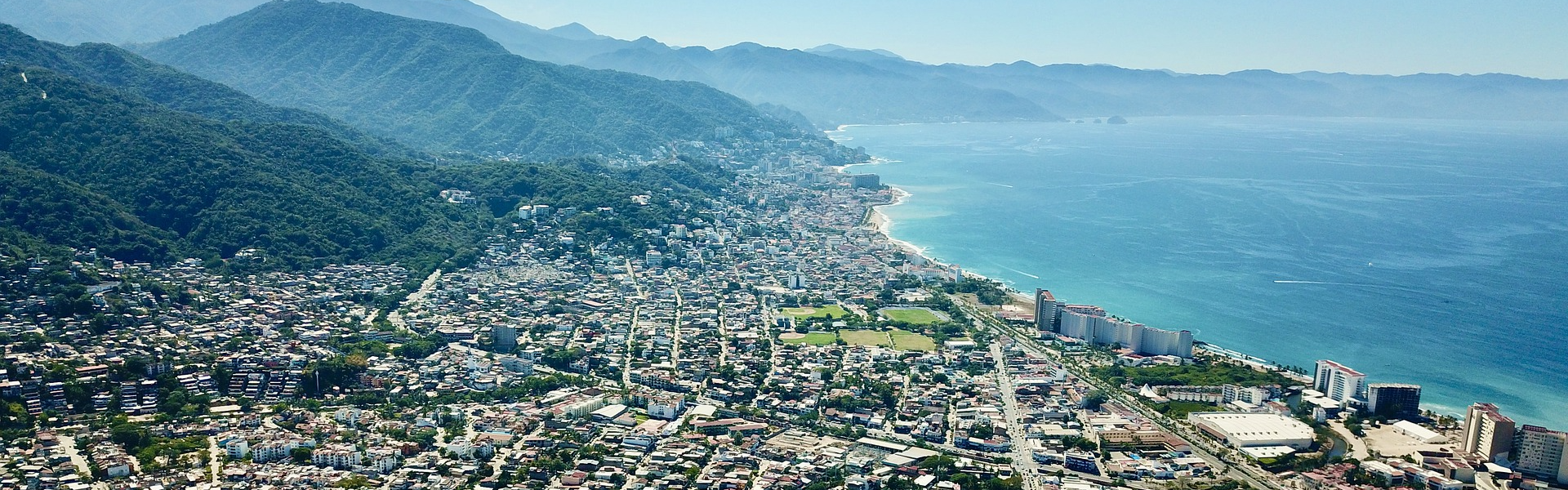
Puerto Vallarta has a quality rare among Mexican beach destinations: it is a real town, and it was one before tourism. An old centre of cobbled streets climbs the flank of the Sierra Madre, a two-kilometre seafront promenade crosses the heart of it, and the jungle begins fifteen minutes past the last buildings. All of it inside Banderas Bay, one of the largest and deepest in the Americas.
The essentials in four lines
- About six hours from Montreal, with non-stop service in winter to Puerto Vallarta airport (PVR).
- Jalisco runs one hour behind Montreal in winter and two in summer.
- No sargassum: the region faces the Pacific.
- November to May is the dry season. Rain and cyclone season runs June to October.
The areas
The Romantic Zone and old Vallarta
South of the Cuale river, the historic quarter holds the restaurants, the galleries and Playa de los Muertos with its sail-shaped pier. You walk everywhere, you eat at any hour, and the feel is that of a lived-in neighbourhood rather than a hotel zone. It is also one of the most welcoming areas in Latin America for LGBTQ visitors, a reputation built since the 1980s.
The centre and the malecón
The promenade runs two kilometres along the sea, punctuated by bronze sculptures that have become local landmarks. Behind it, the church of Our Lady of Guadalupe and its wrought-iron crown overlook the main square. In the evening, street performers, vendors and families mix there until late.
The marina and the northern hotel zone
Quieter, with larger resorts, a marina, a golf course and the airport ten minutes away. A good compromise for anyone who wants all-inclusive without giving up a twenty-minute ride into town.
The south shore
Past Mismaloya the road ends at Boca de Tomatlán. Beyond it, four villages are reachable only by boat or on foot: Las Ánimas, Quimixto, Majahuitas and Yelapa. No road, no cars, a beach, a few palapas and a waterfall twenty minutes’ walk inland. It is the most disorienting excursion in the region, and one of the cheapest.
The bay and what it holds
The rock islets of Los Arcos, ten minutes by boat from Mismaloya, form a marine park where pierced arches fall away toward an underwater canyon. Snorkelling and diving run year-round, with better visibility from November to May.
Further north, the Marietas Islands hold a hidden beach at the bottom of a crater open to the sea. Access has been strictly capped since visitor numbers nearly destroyed the site: limited numbers, limited duration, licensed operators only. Book well ahead.
From December to March, humpback whales come into the bay to calve. Trips run three to four hours in small boats; regulations impose a minimum distance, though the animals often close it themselves.
Behind the town, the sierra
The Sierra Madre Occidental drops straight into the sea, which gives Puerto Vallarta its relief and its vegetation. The canyons of the Cuale and Los Horcones rivers are covered by zipline, on horseback or in off-road vehicles. Coffee and agave plantations inland welcome day visitors, with tastings of raicilla, the local agave spirit, long clandestine and now protected by an appellation.
All-inclusive in Puerto Vallarta
The format is well established in the northern hotel zone, at the marina and across the Ameca river in Nuevo Vallarta, already in the state of Nayarit. The choice runs from large family resorts to adults-only properties.
One local feature deserves emphasis: unlike Cancún, the town has a restaurant scene rich enough that a room-only stay makes sense. If you plan to eat out several evenings, do the maths. Our criteria for choosing an all-inclusive hotel and our file on value for money will help you decide.
When to go
From November to May the sky stays clear, the air holds around 28 °C and humidity is low. This is whale season, the tourist high season, and the best period for walking the town.
From June to October, heat and humidity climb sharply, late-day storms become daily and the vegetation goes wild. Prices fall accordingly. The bay, facing due west and shielded by its headlands, rarely takes a direct cyclone hit, without being immune. Our guide on when to travel south from Montreal sets out the pricing windows.
The bay stays warmer than Los Cabos: around 24 degrees in February, close to 29 in September.
To plan this trip, see also our Mexique page, Huatulco, Isla Holbox and the sargassum picture.


