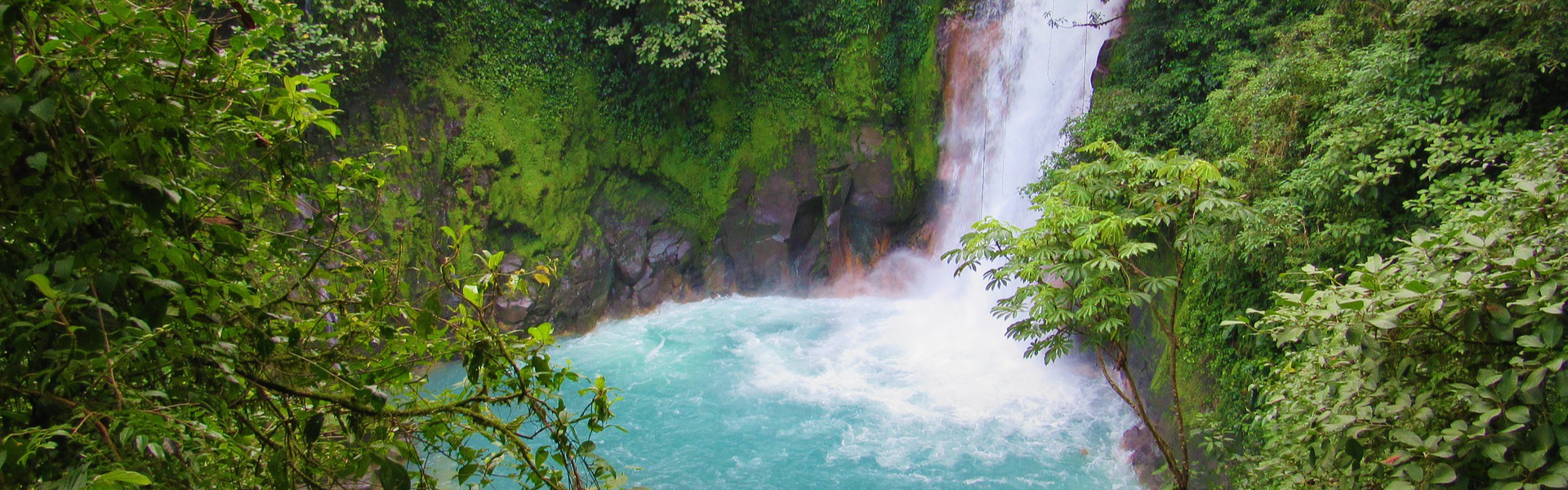
San José is a highland city at eleven hundred and seventy metres, ringed by mountains and volcanoes. It is not a beach destination and nobody goes there for that: it is the country’s entry point, the hub for domestic flights, and the place where you grasp that Costa Rica is first a country of forests and volcanoes, not a beach postcard.
The essentials in four lines
- About six hours from Montreal to Juan Santamaría airport (SJO), twenty minutes from the centre.
- Costa Rica runs one hour behind Montreal in winter and two in summer.
- Altitude tempers everything: around 24 °C by day and 16 °C at night, all year.
- December to April is the dry season. From May to November, showers arrive in late afternoon.
What to see in town
The National Theatre, opened in 1897, was paid for by a tax the coffee growers imposed on themselves to give the country a hall worthy of European touring companies. Italian marble, ceiling frescoes, a grand staircase: it is the most carefully made building in the country, and it can be visited by day.
The Pre-Columbian Gold Museum, beneath the Plaza de la Cultura, displays nearly sixteen hundred pieces worked between 500 and 1500 AD. The Jade Museum nearby holds the largest collection of pre-Columbian jade in the Americas, in a recent and well-conceived building.
The National Museum occupies a former barracks whose facade still carries bullet holes from 1948, the year the country abolished its army. A butterfly garden fills the inner courtyard.
Otherwise: the central market for a casado at midday, the Amón district for its early twentieth-century coffee-grower houses, and the Escalante district for evening restaurants.
The volcanoes, within a day
Poás, an hour and a half away, is viewed from a platform on the rim of a crater a kilometre and a half across, holding an acid lake that steams continuously. Access is capped and booked online; the summit clouds over by mid-morning, so leave early.
Irazú, also an hour and a half away, tops out at three thousand four hundred and thirty-two metres. On a clear day you see both oceans from the summit. Bring a jacket: it is often below ten degrees.
Between the two, the La Paz gardens and their five waterfalls, and the Orosi valley with its coffee plantations and its colonial church of 1743, the oldest still in use in the country.
Coffee
The central valley is the cradle of Costa Rican coffee, grown here since the 1830s. Several fincas in the hills around the city welcome day visitors, cherry to cup, with tastings. It is also the chance to understand why the country banned robusta varieties for decades to protect its reputation.
How to fit San José into a trip
Few travellers spend a week here. The usual approach is one or two nights, on arrival or before the return, then on to the coast or the northern volcanoes.
It is also the departure point for domestic flights to Tambor, Islita, Quepos, Drake Bay or Tortuguero, often the only reasonable way to reach those destinations in a short trip.
There is no all-inclusive resort in San José: accommodation consists of business hotels, converted coffee-grower houses and small addresses in the residential districts. Our criteria for choosing an all-inclusive hotel will apply to the beach portion of your trip.
When to go
Altitude keeps the climate stable and mild year-round. From December to April the sky stays clear. From May to November, mornings are generally bright and rain falls in the late afternoon, for an hour or two.
Our guide on when to travel south from Montreal places those periods in the Quebec departure calendar.
To plan this trip, see also our Costa Rica page, Puntarenas, Samara and our month-by-month calendar.


