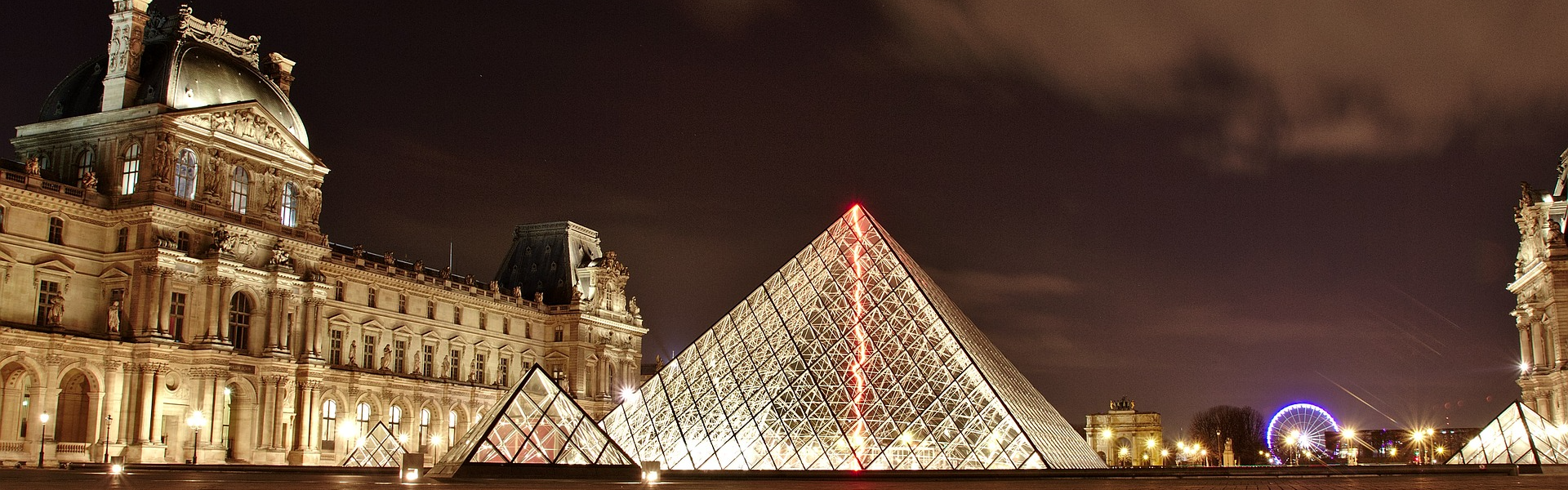
Paris Travel from Canada: The Complete Guide
Paris is the easiest European gateway for Canadian travellers: the Montreal-Paris CDG route is the densest link in Montreal's entire transatlantic network, with year-round nonstop flights on Air Canada, Air France and Air Transat, and Toronto also enjoys year-round nonstop service. Eastbound flight time from Montreal is about 6 h 45. Canadian citizens enter France visa-free for stays of 90 days or less in the Schengen area. The best months are May-June and September-October. Budget-wise, expect big-capital prices: Paris hotels run about 21% above the French average. Since January 14, 2026, the Louvre and Versailles have also charged a higher rate for visitors from outside the European Union, which applies directly to Canadians.
The essentials at a glance
| Flights from Canada | Nonstop year-round from Montreal (about 6 h 45; Air Canada, Air France, Air Transat) and from Toronto |
| Visa for Canadians | None required (stays of 90 days or less per 180-day period in Schengen) |
| Time difference | +6 hours ahead of Montreal and Toronto, year-round |
| Currency | Euro (1 € ≈ $1.60-1.62 CAD, July 2026) |
| Language | French (English widely understood in tourist areas) |
| Best time to visit | May-June and September-October |
| Driving | A car is useless in Paris: métro (2.50 € per ticket), RER and walking |
| Electricity | 230 V, type E plugs, adapter required |
Why Paris
For many Canadians, Paris is the classic first trip to Europe, and it earns that role honestly. The Atlantic crossing from Montreal is one of the shortest there is, the city needs no rental car, and the great museums, monuments and historic neighbourhoods sit within a surprisingly compact perimeter. With four or five well-planned days, you cover the essentials without rushing.
Paris also makes a perfect base for exploring further. From Montparnasse station, the TGV puts Bordeaux about 2 h 08 away, and from Gare de Lyon, Lyon is about 2 h away. A Paris stay easily grows into a two- or three-stop trip without another flight. Our complete France travel guide covers the other regions you can reach from the capital.
A word of honesty from an advisor: Paris is expensive, especially for hotels, and the major sights now require planning. Since 2026, booking a timed-entry slot has been strongly advised nearly everywhere, from the Louvre to Versailles. A successful stay is planned a few weeks ahead, not the night before departure.
When to go
Aim for May-June or September-October: pleasant weather, shorter lines and better prices than midsummer. July is still a fine month, but very busy. August is the trap too many travellers discover on arrival: a great many shops and restaurants close for the French holidays, especially in Paris.
| May-June | Mild, long days, café terraces in full swing | Ideal |
| July | Warm, heavy tourist crowds | Fine, if you book early |
| August | Many shops and restaurants closed for holidays | Avoid if you can |
| September-October | Pleasant temperatures, thinning crowds and prices | Ideal |
| November-April | Cool, short days | Good for a museum-focused stay |
Getting there from Canada
From Montreal-Trudeau (YUL), three carriers fly nonstop to Paris CDG year-round: Air Canada, Air France and Air Transat, with a typical eastbound flight time of about 6 h 45 to 7 h. In summer, Air Transat operates several daily departures and accounts for roughly 25% of Canada-France capacity, making it the leading carrier on the market in peak season. Corsair no longer serves Montreal. Toronto travellers also have year-round nonstop options to Paris, with comparable convenience.
On price, peak summer round trips often exceed $1,000 to $1,400 CAD: book several months ahead for July, or simply shift to May-June or September-October. Once you land, public transit does the job. The Navigo Jour day pass for zones 1-5 (20.60 €) covers the airports and Versailles, and a single métro-train-RER ticket costs 2.50 € (about $4 CAD, valid 2 hours). Tickets are now paperless: load them onto a Navigo Easy card or straight onto your phone.
Neighbourhoods and must-sees
Paris has 20 arrondissements arranged in a spiral. For a first stay, the most useful sectors are the 1st (Louvre, Tuileries), the 4th (Marais, Notre-Dame), the 5th and 6th (Latin Quarter, Saint-Germain), the 7th (Eiffel Tower, Invalides, Musée d'Orsay) and the 18th (Montmartre).
The Louvre and the great museums
The Louvre is closed on Tuesdays, and booking a timed-entry slot online is strongly recommended, often essential in high season. Since January 14, 2026, admission has been 32 € (about $52 CAD) for visitors from outside the EU/EEA, which includes Canadians, versus 22 € for European residents. Entry remains free for visitors under 18, a real plus for families. Allow at least half a day and pick your galleries before you walk in.
The Eiffel Tower and Les Invalides
In the 7th arrondissement, the Eiffel Tower's 2026 rates are 23.50 € for the elevator to the second floor, 36.70 € (about $59 CAD) to the summit, 14.80 € by the stairs, or 28 € for the stairs-plus-elevator combination. As of September 29, 2026, any group of more than 9 people must book online. Les Invalides and the Musée d'Orsay sit in the same sector, within walking distance along the Seine.
Montmartre
On the hilltop of the 18th arrondissement, the Sacré-Cœur basilica is free to visit, and the Place du Tertre still gathers its painters. The funicular climbs the hill on a regular transit ticket, a welcome option when the stairs start to wear on you late in the day. The neighbourhood is at its best early in the morning, before the tour groups arrive.
The Marais and the islands
The Marais, in the 4th, is one of the most pleasant districts to explore on foot, between boutiques and cafés. Close by, the Seine islands hold Notre-Dame and the Sainte-Chapelle. The latter also applies the 2026 dual pricing, at 22 € for non-European visitors versus 16 € for EU residents. Similar increases have been announced for the Arc de Triomphe and the Conciergerie.
The Left Bank: Latin Quarter and Saint-Germain
The 5th and 6th arrondissements form the historic heart of the Left Bank. The Latin Quarter and Saint-Germain make an excellent base for your hotel: you sleep within walking distance of the islands, the Louvre just across the river and the Musée d'Orsay, on streets that stay lively in the evening. It is the sector we recommend most often for a first visit.
Versailles as a day trip
The Palace of Versailles is about 45 minutes away on the RER C, a ride covered by the Navigo Jour zones 1-5 day pass. The estate is closed on Mondays. In 2026, admission is 25 € in low season and 35 € in high season for non-EU/EEA residents, and booking a timed slot is recommended. Musical Fountain Show days carry a surcharge.
The budget, in Canadian dollars
Paris is the most expensive place in France to sleep: about 21% above the national average. In spring 2026, a 3-star hotel averaged 139 € per night, roughly $225 CAD. To eat well without draining the budget, the fixed-price lunch menu (starter-main or main-dessert) remains the habit to adopt. With the euro at about $1.60 to $1.62 CAD, here are the orders of magnitude.
| Round-trip flight, Montreal-Paris | Highly variable: often $1,000 to $1,400+ in summer |
| 3-star hotel (per night) | $115 to $320, averaging around $225 |
| Lunch menu (per person) | $25 to $40 |
| Métro ticket / Navigo Jour day pass | About $4 / about $33 |
| Louvre (adult, non-EU) | About $52 |
| Eiffel Tower (summit, elevator) | About $59 |
| Versailles (adult, non-EU) | About $40 to $57 depending on season |
These amounts are indicative only and vary with the season, the exchange rate and how far ahead you book.
Entry requirements and health for Canadian citizens
- Passport valid for at least 3 months beyond your planned departure date from the Schengen area.
- Visa: none for stays of 90 days or less per 180-day period in the Schengen area (cumulative across all Schengen countries).
- EES is in force: at the border, your facial image and fingerprints are collected, with no steps to complete before departure.
- ETIAS: still not in force as of July 2026 (launch expected late 2026). Beware of fraudulent websites, since no application is currently possible.
- The 1950 Canada-France agreement allows Canadians up to 90 extra days in metropolitan France beyond the Schengen cap, provided you declare it when crossing the French border.
- The Government of Canada advises a high degree of caution in France (threat of terrorism): check travel.gc.ca before departure.
- Travel insurance covering medical care and cancellation is strongly recommended for any trip to Europe.
Three advisor tips before you go. Book your Louvre, Versailles and Eiffel Tower slots as soon as your flights are confirmed: in high season, last-minute availability melts away fast. Load your transit tickets onto a Navigo Easy card or your phone right at the airport and skip the machine lines. And if you dream of going further, the TGV puts Bordeaux and Lyon about 2 h from Paris: book early, since prices climb quickly, and OUIGO offers low-cost fares.
Ready to plan your trip to Paris? Our advisors know France well and will build your itinerary with you, at no cost and with no obligation. 450-628-6241 | 1-866-628-6241 | info@voyagesaquaterra.com
Voyages AquaTerra holds a Quebec travel agency permit.
Frequently asked questions about Paris
Do Canadians need a visa to visit Paris?
Canadian citizens enter France visa-free for stays of 90 days or less per 180-day period in the Schengen area. Your passport must remain valid for at least 3 months after your planned exit from Schengen. At the border, the EES system records your photo and fingerprints, with nothing to do in advance.
How long is the flight from Montreal to Paris?
About 6 h 45 to 7 h eastbound, nonstop. Air Canada, Air France and Air Transat all fly the route year-round from Montreal-Trudeau, making it the densest transatlantic link out of Montreal. Toronto also has year-round nonstop service to Paris.
When is the best time to visit Paris?
May-June and September-October offer the best balance of weather, prices and crowds. August is worth avoiding if you care about neighbourhood shops and restaurants, as many close for the holidays. Winter suits a museum-focused stay well.
Is Paris safe?
The Government of Canada advises exercising a high degree of caution in France due to the threat of terrorism. Day to day, standard big-city precautions are enough for the vast majority of travellers. Check travel.gc.ca before departure for current advisories.
How much does a trip to Paris cost?
As a guideline, budget about $225 CAD per night for an average 3-star hotel, $25 to $40 per person for a lunch menu and about $4 per métro ride. Major sights add $40 to $60 per admission under the 2026 pricing for non-EU visitors. Round-trip flights often top $1,000 in summer.
What is the time difference between Canada and Paris?
Paris is 6 hours ahead of Montreal and Toronto, in summer and winter alike, since the clock changes are nearly synchronized. An overnight flight lands in the morning: plan a light first day to absorb the jet lag.
Should I book the Louvre and the Eiffel Tower in advance?
Yes. At the Louvre, a timed-entry slot is strongly recommended and often essential in high season, and the museum is closed on Tuesdays. For the Eiffel Tower, buy tickets online as soon as your dates are set. As of September 29, 2026, any group of more than 9 people must book online.
Which arrondissement should I stay in?
For a first visit, the 5th and 6th (Latin Quarter, Saint-Germain) and the 4th (Marais) put nearly everything within walking distance. The 7th brings you close to the Eiffel Tower and the Musée d'Orsay, the 1st to the Louvre. Montmartre (18th) has plenty of charm but sits a little far from the major sights.
How many days do you need in Paris?
Four to five full days cover the great museums, two or three neighbourhoods and time to wander without rushing. Add a full day for Versailles. With a week or more, add Bordeaux or Lyon by TGV, each about 2 h from the capital.
What does a typical Versailles day trip look like?
Leave in the morning on the RER C (about 45 minutes, covered by the Navigo Jour zones 1-5 day pass) with a reserved slot for the palace. Plan on the whole day between the palace and the gardens. The estate is closed on Mondays, and the Musical Fountain Shows carry a surcharge on certain days.
From Montreal, a fourth option now serves Paris year-round, and it lands at Orly rather than Roissy. Metro line 14 then drops you in the centre of the city in thirty-five minutes, with no transfer. The month-by-month flight calendar is in our article Montreal to Paris via Orly.