Departure

Return


Loading

Berlin Travel from Canada: The Complete Guide

Berlin, the capital of Germany, is one of Western Europe's most affordable major cities for Canadian travellers. Starting in summer 2026, Air Canada flies nonstop from Montreal to Berlin in about 7 h 45 min, three times a week. From Toronto, you can connect through Frankfurt or Munich, both served by daily nonstop flights. Canadian citizens need no visa: you can stay up to 90 days in any 180-day period in the Schengen area. The best time to visit runs from May to September, with pleasant summer temperatures of 23 to 25 °C. Expect roughly $900 to $1,500 CAD for a round-trip flight, and daily costs that can drop to $100-$120 CAD on a budget, since Berlin is cheaper than Munich. Our advisors plan Berlin trips from Quebec and across Canada — here is everything you need to know.

The essentials at a glance

Flights from CanadaMontreal-Berlin nonstop with Air Canada from summer 2026 (~7 h 45 min, 3x weekly); one-stop options 9 h 45 min to 11 h; from Toronto, connect via Frankfurt or Munich (daily nonstops to both hubs)
Visa for CanadiansNo visa; up to 90 days in any 180-day period in the Schengen area
Time difference6 hours ahead of Montreal and Toronto
CurrencyEuro; 1 € ≈ $1.62 CAD
LanguageGerman
Best time to goMay to September; Christmas markets from late November through December
DrivingNo car needed in the city: full BVG network (U-Bahn, S-Bahn, tram), tickets by fare zones (AB)
Electricity230 V, type F plugs; adapter required

Why Berlin

Few cities tell the story of the 20th century as clearly as Berlin. You can walk the East Side Gallery, the longest preserved stretch of the Berlin Wall, pass through the Brandenburg Gate, then stop at the Holocaust Memorial and the glass dome of the Reichstag. History here is not locked away in museums: it is out in the street, free or nearly free, and easy to reach on public transit.

Berlin is also surprisingly easy on the wallet. It costs less than Munich, street food is a way of life (count on 5 to 8 € for a currywurst or a döner), and several major sites, including the Reichstag dome and the Holocaust Memorial, are free to visit. For a first long-haul trip to Europe with family or friends, the value is hard to beat.

Finally, it is a city of neighbourhoods, each with its own character: Mitte for history and museums, Kreuzberg for nightlife and street art, Prenzlauer Berg for cafés and families. A few U-Bahn stops take you to a completely different atmosphere.

When to go

The warm season, May through September, is the best window: summer temperatures sit between 23 and 25 °C, ideal for exploring on foot and enjoying the parks. Berlin winters are cold (0 to 3 °C) and often grey, but late November and December have their own appeal: the Christmas markets.

PeriodClimateGood to know
May to SeptemberMild to warmThe ideal window; terraces and parks in full swing
June to August23 to 25 °CPeak summer; Sunday afternoons at Mauerpark are at their liveliest
Late November to DecemberColdChristmas markets across the city; dress warmly
January to March0 to 3 °C, often greyLow season; better for museums than for long walks

Getting there from Canada

The big news for summer 2026: Air Canada now connects Montreal (YUL) to Berlin Brandenburg Airport (BER) nonstop in about 7 h 45 min, with three weekly departures (Tuesday, Thursday and Saturday). Outside those days or the direct flight's season, one-stop itineraries run through Frankfurt, Munich, Vienna or Zurich, for a total travel time of 9 h 45 min to 11 h.

From Toronto, the simplest routings connect through Frankfurt or Munich, both served by daily nonstop flights from YYZ, with a short onward hop to Berlin. A typical round-trip fare to Berlin runs between $900 and $1,500 CAD, depending on the season and how far ahead you book. On arrival, BER airport is linked to the city centre by S-Bahn and the FEX express train, a ride of about 30 to 40 minutes.

The neighbourhoods and must-sees

Mitte, the historic heart

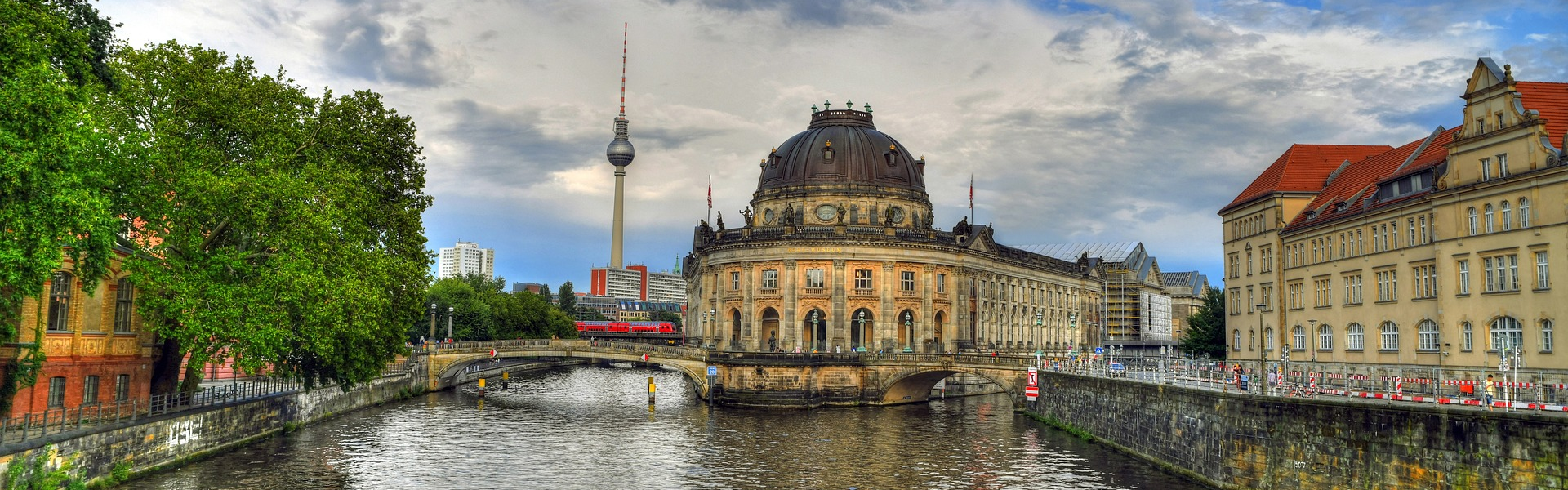
Any Germany travel itinerary that includes Berlin starts in Mitte. This is where you will find the Brandenburg Gate and Museum Island, a group of five museums listed as a Unesco World Heritage site. Note that the Pergamon Museum is undergoing partial renovation: check which halls are open before you visit. A few steps from the Brandenburg Gate, the Holocaust Memorial and its 2,711 concrete stelae are open to all, no ticket required.

The Reichstag and its glass dome

The seat of the German parliament is free to visit, and its glass dome offers a 360-degree view over the city. Online booking is mandatory at bundestag.de, and you must show your passport at the entrance. Book several days ahead, especially in summer.

The East Side Gallery, the Wall turned open-air gallery

Along the Spree, 1.3 km of the Berlin Wall have been painted by artists from around the world. It is the longest preserved section of the Wall and one of the most photographed places in the city. Access is free at any hour: allow a good hour to walk its length.

Kreuzberg, multicultural energy

Berlin's multicultural district par excellence, Kreuzberg concentrates the city's street art and nightlife. It is also home turf for the döner kebab, a Berlin invention, and the currywurst, the local institution: a full street meal costs 5 to 8 €. Come here to eat, wander and go out rather than to tick off monuments.

Prenzlauer Berg and Mauerpark

Prenzlauer Berg draws families and café lovers with its quiet streets and neighbourhood shops. On Sundays, head to Mauerpark: flea market by day, open-air karaoke in the afternoon. It is one of the most typically Berlin experiences you can have, and it costs nothing.

The budget, in Canadian dollars

Berlin costs less than Munich, and that is one of its strongest selling points. With the euro at about $1.62 CAD, a frugal traveller can manage on $100 to $120 CAD a day with simple lodging and street food (the 5-8 € currywurst and döner help a lot). A mid-range budget runs around $200 to $280 CAD a day, and a comfort-level trip starts at $400 CAD and up. These figures are provided as a guideline only.

StyleDaily budget per personWhat to expect
Budget$100 to $120 CADSimple lodging, street food (5 to 8 €), public transit, free sights
Mid-range$200 to $280 CADMid-range hotel, restaurants, museums and activities
Comfort$400 CAD and upUpscale hotels, fine dining, private guided visits

Add the round-trip flight, typically $900 to $1,500 CAD from Canada, again as a guideline only.

Entry requirements and health for Canadian citizens

  • No visa is required for tourist stays: a maximum of 90 days in any 180-day period in the Schengen area (source: travel.gc.ca).
  • Your passport must be valid for at least 3 months after your planned departure from the Schengen area.
  • The European Entry/Exit System (EES) is in effect: your photo and fingerprints are taken on arrival.
  • ETIAS authorization is not yet required as of July 2026; check the program's status before you leave.
  • The Government of Canada advises travellers to "exercise a high degree of caution" in Germany due to the terrorist threat in Europe.
  • No particular health precautions are flagged for Germany.
  • Travel insurance covering medical care abroad is strongly recommended.

A few tips from our advisors before you go. Book the Reichstag dome online at bundestag.de before your trip, passport in hand, because slots go fast. Buy BVG transit tickets for zones AB: they cover the U-Bahn, S-Bahn and tram everywhere you are likely to go. If Museum Island is your priority, check the status of the Pergamon Museum's partial renovation before buying tickets. And if you are in Berlin on a Sunday, keep the afternoon free for Mauerpark: flea market first, karaoke after.

Ready to plan your Berlin trip? Our advisors know the flights, the neighbourhoods and the right addresses, and will build an itinerary that fits you. 450-628-6241 | 1-866-628-6241 | info@voyagesaquaterra.com — More than 950 travel advisors across Quebec. Voyages AquaTerra holds a Quebec travel agency licence.

Frequently Asked Questions

No. Canadian citizens can stay in Germany visa-free for up to 90 days in any 180-day period in the Schengen area. Your passport must be valid for at least 3 months after your planned exit from Schengen, and the EES system records your photo and fingerprints on arrival. ETIAS is not yet required as of July 2026.
Air Canada's new nonstop, launched in summer 2026, flies Montreal to Berlin in about 7 h 45 min, three times a week (Tuesday, Thursday, Saturday). With one stop via Frankfurt, Munich, Vienna or Zurich, total travel time runs 9 h 45 min to 11 h. From Toronto, the usual routing connects through Frankfurt or Munich.
May through September, when summer temperatures reach 23 to 25 °C and the city lives outdoors. Winter is cold (0 to 3 °C) and often grey, but late November and December are worth it for the Christmas markets.
The Government of Canada advises travellers to "exercise a high degree of caution" in Germany because of the terrorist threat in Europe. In the city, apply the usual big-city precautions and follow the instructions of local authorities.
Berlin is cheaper than Munich. As a guideline, a frugal traveller can manage on $100 to $120 CAD a day, a mid-range budget runs $200 to $280 CAD, and comfort-level travel starts at $400 CAD and up. Add a round-trip flight, typically $900 to $1,500 CAD from Canada.
Berlin is 6 hours ahead of Montreal and Toronto. When it is noon in Montreal or Toronto, it is 6 p.m. in Berlin.
Access to the Reichstag's glass dome is free, but online booking is mandatory at bundestag.de. You must show your passport at the entrance. Book several days ahead, especially in high season.
At the East Side Gallery, the longest preserved section of the Wall: 1.3 km painted by artists from around the world. Access is free at all times, along the Spree river.
Berlin Brandenburg Airport (BER) is linked to the city centre by S-Bahn and the FEX express train, a ride of about 30 to 40 minutes. In the city, the BVG network (U-Bahn, S-Bahn, tram) uses zone-based tickets, with zone AB covering most of what visitors need.
Two street classics: the currywurst, a local institution, and the döner kebab, invented in Berlin. A street meal costs about 5 to 8 €, which helps keep your daily budget in check.
  • #Travel
  • #Germany
  • #Berlin
  • #tourism
  • #history
  • #culture
  • #attractions
  • #museums
  • #restaurants
  • #nightlife
  • #transportation
  • #accommodation
  • #booking
  • #events
  • #neighborhoods
  • #landmarks
  • #tours
  • #travelers
  • #tips
  • #weather