Departure

Return


Loading

Brussels Travel from Canada: The Complete Guide

Brussels may be the easiest European capital to reach from Canada. Canadian citizens need no visa for stays of 90 days or less in the Schengen area, and both Air Canada and Air Transat fly nonstop from Montréal to Brussels in about 7 hours, leaving in the evening and landing in the morning. From Toronto, one-stop itineraries take 9 to 11 hours. The best months run from May to September, with December a strong option for the Christmas market. As a guideline, plan on 1,800 to 2,800 CAD per person for five comfortable days including flights. The historic centre is fully walkable, English is widely spoken, and the city sits 6 hours ahead of Eastern Time.

The essentials at a glance

ItemWhat to know
Flights from CanadaNonstop from Montréal (about 7 h) with Air Canada or Air Transat; from Toronto, one stop, 9 to 11 h total
Visa for CanadiansNone for stays of 90 days or less (Schengen 90/180 rule)
Time difference6 hours ahead of Montréal and Toronto
CurrencyEuro; 1 euro is about 1.60 CAD
LanguageOfficially bilingual French-Dutch; English widely spoken
Best time to goMay to September; December for the Christmas market
DrivingNot needed: walk, metro and tram cover everything
Electricity230 V, type E plugs; bring an adapter

Why Brussels

Brussels is a capital built at human scale. You can cross the historic centre on foot in twenty minutes, the major museums cluster around the Mont des Arts, and a Gothic facade gives way to an Art Nouveau townhouse within two street corners. It is also a city that refuses to take itself seriously: its most photographed statue, the Manneken-Pis, stands 55 cm tall, Magritte's surrealism has a whole museum, and self-deprecating humour is part of the local operating manual.

It is also one of Europe's great eating cities. Between a paper cone of twice-fried frites on Place Jourdan, pralines from the Sablon chocolate houses and cellars pouring gueuze, you eat and drink remarkably well at every price point. Then there is the location: Bruges, Ghent and Antwerp sit under an hour away by train, and Eurostar puts Paris at 1 h 22. To plan beyond the capital, see our complete guide to Belgium travel from Canada.

When to go

PeriodClimateVerdict
April and May10 to 17 °C, terraces reopeningVery pleasant, moderate crowds
June to August18 to 25 °C, long eveningsHigh season; the Flower Carpet covers the Grand-Place in mid-August in even years
September and October12 to 19 °C, fine autumn lightExcellent choice, better hotel rates
November to March2 to 8 °C, often greyLow season, except the Winter Wonders Christmas market from late November to early January

Rain is part of the Brussels landscape in every season: keep a light rain jacket in your day bag and hold a museum or a brewery visit as plan B. On weekends, hotels in the European quarter drop their rates once the EU crowd goes home, which makes it one of the best-value neighbourhoods for a comfortable stay.

Getting there from Canada

From Montréal, Air Canada and Air Transat fly nonstop to Brussels Airport in about 6 h 45 eastbound (a little over 7 hours coming home). Departures are in the evening, so you land in the morning, ready to start with coffee and a waffle. Service is most frequent from late spring through fall; check schedules for your dates, especially in winter, when a connection through Paris, Amsterdam or Frankfurt may be the practical option.

From Toronto, there is no nonstop flight to Brussels. The usual choices are connecting through Montréal for the nonstop, or one-stop routings via London, Frankfurt or Amsterdam with Air Canada and its Star Alliance partners, for 9 to 11 hours total. On arrival, skip the taxi: trains leave the airport every ten to fifteen minutes and reach Brussels-Central in about 20 minutes for roughly 10 euros. In town, the STIB network (metro, tram, bus) covers everything, with single tickets around 2.50 euros and a 24-hour pass around 8 euros; the historic centre itself is entirely walkable.

Neighbourhoods and highlights

The Grand-Place and the Îlot Sacré

Start at the Grand-Place at dawn, when the gilded guild-house facades belong to you alone. A UNESCO World Heritage site, it is quite simply one of the most beautiful squares in Europe. Steps away are the Galeries Royales Saint-Hubert, a 19th-century covered arcade lined with historic chocolatiers, and the Manneken-Pis, smaller than you expect. One honest tip: skip the tout-heavy restaurants of Rue des Bouchers and walk five more minutes to Sainte-Catherine to eat better.

The Sablon and the Marolles

The Grand Sablon square lines up antique dealers and top-tier chocolate makers, including Pierre Marcolini and Wittamer: this is where you compare pralines before committing. Downhill, the Marolles plays a different tune: a flea market every morning on Place du Jeu de Balle, second-hand shops along Rue Haute and Rue Blaes, and old-school Brussels cafés. The free Marolles elevator lifts you to the Palace of Justice esplanade and one of the best views over the city.

The Mont des Arts and the museums

On the hill between the Grand-Place and the Royal Palace sit the Royal Museums of Fine Arts (Bruegel, Rubens) and the Magritte Museum, the world's largest collection of the surrealist painter. The Musical Instruments Museum occupies a former Art Nouveau department store whose top floor looks out over the rooftops. Comic-strip fans should head to the Belgian Comic Strip Center, then follow the comic-book route, some sixty murals painted across the city centre.

Ixelles, Saint-Gilles and Art Nouveau

South of the centre, Ixelles and Saint-Gilles show you the Brussels that Brussels residents actually live in: the Ixelles ponds ringed by Art Nouveau houses, Place Flagey and its famous frite stand, the African quarter of Matongé, and the cafés and boutiques around Avenue Louise. Saint-Gilles is home to the Horta Museum, the house and studio of Art Nouveau pioneer Victor Horta. Book online ahead of time; entry slots are limited.

The European quarter and the Cinquantenaire

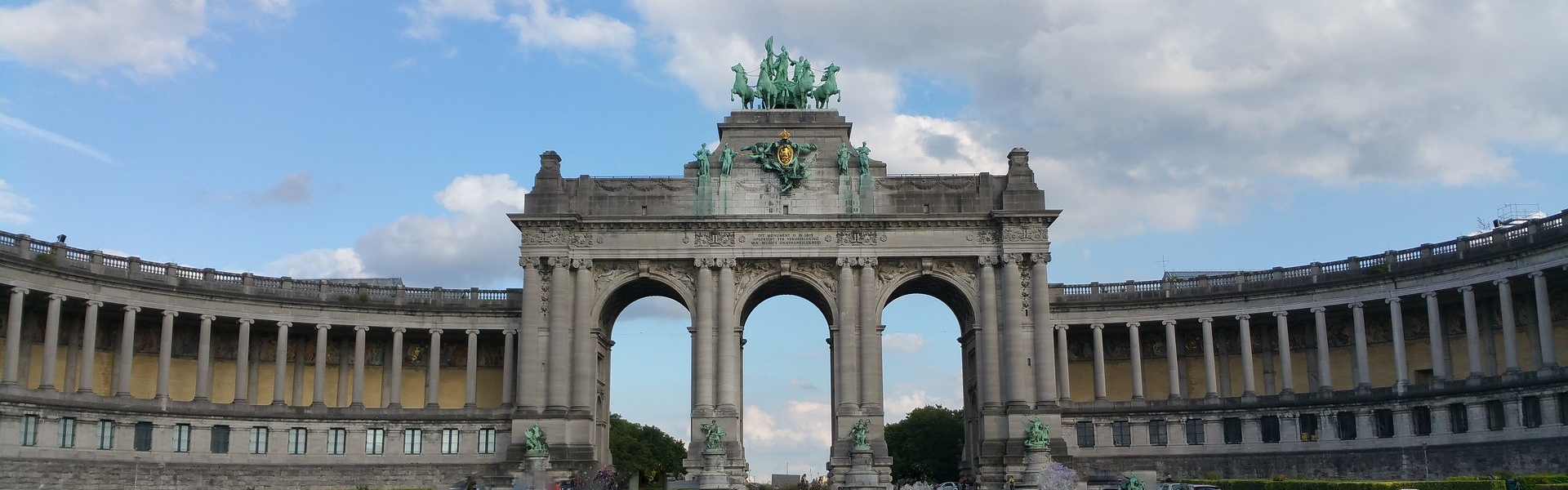
Brussels hosts the institutions of the European Union, and visiting them is free: the Parlamentarium and the House of European History tell the continent's story better than any textbook. Next door, Cinquantenaire Park gathers the Art and History Museum and Autoworld beneath its triumphal arch. North of the centre, the Atomium, built for the 1958 World's Fair, rounds things out with Mini-Europe at its feet.

Eating like a local

A few pointers to eat well without missteps. The Brussels waffle is rectangular, light and crisp; the Liège waffle is denser and caramelized with pearl sugar. Frites come in a paper cone, fried twice, at Maison Antoine on Place Jourdan or Frit Flagey. At the table, aim for the classics: moules-frites, beef braised in beer (carbonnade), stoemp. On the beer side, Brussels is the home of lambic and gueuze, spontaneously fermented styles unique to the region: the family-run Cantillon brewery in Anderlecht welcomes visitors, and specialist cafés such as Moeder Lambic also pour the Trappists, Orval, Chimay, Rochefort and Westmalle.

Budget in Canadian dollars

ItemBudgetMid-rangeHigh end
Return flight from Montréal or Toronto700 to 1,000 CAD1,000 to 1,400 CAD3,500 CAD and up (business class)
Hotel (per night, double room)110 to 160 CAD180 to 280 CAD350 CAD and up
Meals (per day, per person)40 to 60 CAD80 to 120 CAD160 CAD and up
City transit (per day)5 to 12 CAD12 to 20 CAD40 CAD and up with taxis
Museums and activities (per day)10 to 20 CAD25 to 50 CAD80 CAD and up

These figures are a guideline only, based on 2025-2026 rates. For five comfortable days including flights, most of our clients spend between 1,800 and 2,800 CAD per person, double occupancy. Several museums are free on the first Sunday of the month, and the Brussels Card can pay off if you plan several visits back to back.

Entry requirements and health for Canadian citizens

  • Visa: none required for tourist stays of 90 days or less in any 180-day period across the Schengen area.
  • Passport: valid at least 3 months beyond your planned departure from the Schengen area.
  • EES system: since October 2025, Schengen borders record your photo and fingerprints on arrival. Nothing to do beforehand, but allow extra time at your first crossing.
  • ETIAS: this electronic travel authorization was not yet in force at the time of writing; its launch is now expected in 2027. Check travel.gc.ca shortly before departure.
  • Official advisory: the Government of Canada advises exercising a high degree of caution in Belgium due to the threat of terrorism in Europe. Stay alert in crowded places.
  • Petty crime: pickpocketing concentrates in train stations (especially Brussels-Midi), on the metro and in tourist crowds. Keep your bag zipped in front of you and your phone out of back pockets.
  • Health: routine vaccinations should be up to date, and Canadian authorities also suggest hepatitis B. No mandatory vaccines.
  • Insurance: proof of travel insurance covering at least 30,000 euros in medical costs can be requested at entry. Provincial health plans cover very little abroad, so travel insured.

Three full days make a fine first visit; with five, add a day trip to Ghent or Antwerp and an evening in Bruges after the tour groups leave. Book the Horta Museum and the popular tables before you fly, and keep one morning unplanned: Brussels reveals itself in the detours.

Ready to taste Brussels, from the Grand-Place to the gueuze cellars? Our travel advisors arrange flights, well-located hotels and train day trips to Bruges or Ghent, matched to your pace and budget. 450-628-6241 | 1-866-628-6241 | info@voyagesaquaterra.com

Voyages AquaTerra holds a Québec travel agent permit.

Frequently Asked Questions

No. Canadian citizens enter Belgium visa-free for stays of 90 days or less in any 180-day period within the Schengen area. Your passport must remain valid at least 3 months beyond your planned departure from Schengen. Since October 2025, the EU's Entry/Exit System records your photo and fingerprints on arrival, with no paperwork needed beforehand.
About 6 h 45 nonstop from Montréal with Air Canada or Air Transat, and a little over 7 hours on the return. Flights leave in the evening and land the next morning. From Toronto there is no nonstop service; connecting through Montréal, London, Frankfurt or Amsterdam takes roughly 9 to 11 hours in total.
May through September, with terrace weather between 18 and 25 °C. In mid-August of even-numbered years, the Flower Carpet covers the Grand-Place for a few days. December draws visitors with Winter Wonders, the city's large Christmas market. Rain is possible year-round, so pack a light rain jacket whatever the month.
Broadly yes. The Government of Canada advises exercising a high degree of caution in Belgium because of the terrorism threat affecting Europe. In practice, the main day-to-day risk is pickpocketing in train stations, particularly Brussels-Midi, on the metro and in tourist crowds. Keep your bag zipped and in front of you.
As a guideline, plan on 1,800 to 2,800 CAD per person, double occupancy, for five comfortable days including flights from Canada. Hostel-and-friterie travellers can manage on about 1,400 CAD. Hotels in the European quarter often drop their weekend rates, which is a reliable way to stay well for less.
Brussels is 6 hours ahead of Montréal and Toronto. When it is noon in Toronto, it is 6 p.m. in Brussels. The gap briefly narrows to 5 hours for a week or two each spring and fall, because Europe and North America switch their clocks on different dates. Add up to 3 more hours from Western Canada.
From Brussels Airport, trains run every ten to fifteen minutes and reach Brussels-Central in about 20 minutes for roughly 10 euros. The historic centre is entirely walkable, and the STIB network of metro, trams and buses covers the rest: single tickets cost around 2.50 euros and a 24-hour pass about 8 euros.
The Brussels waffle is rectangular, airy and crisp, traditionally served with icing sugar. The Liège waffle is smaller, denser and caramelized thanks to pearl sugar in the dough. Both are sold all over the city; just be wary of tourist-facing windows piled high with whipped cream and toppings.
Bruges is about 1 hour away by train, Ghent 35 minutes and Antwerp 45 minutes, with frequent SNCB departures and discounted weekend return fares. Eurostar puts Paris at 1 h 22 and Amsterdam at about 1 h 50, close enough for a day abroad. A good trick: arrive in Bruges late afternoon, once the tour groups have left.
Yes, comfortably. Brussels is officially bilingual French-Dutch, and as the seat of the EU institutions it functions in English every day, in hotels, restaurants and museums. Francophone Canadians will feel at home, since French dominates on the street, and a few words of French or Dutch are always appreciated.
  • #Travel
  • #Brussels
  • #Belgium
  • #tourism
  • #culture
  • #city
  • #gastronomy
  • #attractions
  • #museums
  • #architecture
  • #events
  • #festivals
  • #history
  • #beer
  • #chocolate
  • #booking
  • #hotels
  • #restaurants
  • #nightlife
  • #neighborhoods
  • #shopping
  • #parks
  • #transportation
  • #tips
  • #weather
  • #visit
  • #art
  • #sustainable tourism
  • #activities
  • #experience
  • #getaway