India Travel from Canada: The Complete Guide
India requires a visa for all Canadian citizens: the tourist e-Visa is applied for online, and only through the official portal indianvisaonline.gov.in. On the flight side, Air Canada's nonstop Toronto-Delhi service is active (about 14 hours eastbound), while the Montreal-Delhi nonstop is suspended for summer 2026, with a return announced for late October 2026, to be confirmed. Travellers can also connect through Europe or the Gulf, for a total of 17 to 22 hours. The best season for northern India and the Golden Triangle runs from October to March, with the monsoon covering June through September. Once you land, India remains one of the most affordable destinations in the world: the flight is often the single biggest expense of the trip.
The essentials at a glance
| Flights from Canada | Toronto-Delhi nonstop, daily (about 14 h); Montreal-Delhi nonstop suspended (summer 2026, return announced for late October, to be confirmed); via Europe or the Gulf, 17 to 22 h |
| Visa for Canadians | Required. Tourist e-Visa online (30 days, 1 year or 5 years) at indianvisaonline.gov.in |
| Time difference | +9.5 hours in summer, +10.5 in winter vs. Eastern Time (single time zone, UTC+5:30) |
| Currency | Indian rupee (₹); $1 CAD ≈ 68 ₹, as a rough guide |
| Language | Hindi and regional languages; English widely spoken in tourism |
| Best time to go | October to March for the north; December to February for Kerala and Goa |
| Driving | A car with a private driver is the smart choice over self-driving (about $60 to $120 CAD/day) |
| Electricity | 230 V, plug types C, D and M; adapter needed |
Why India
India packs into one country what you would otherwise chase across five or six. The Taj Mahal at sunrise, the forts and palaces of Rajasthan, a night aboard a houseboat on the Kerala backwaters, the ghats of Varanasi on the Ganges: every stop changes the scenery, the food and the mood completely. One of the world's largest rail networks ties it all together, with air-conditioned trains costing a few dozen dollars per journey.
It is also a destination where your dollars go far. A meal in a local restaurant costs $3 to $10 CAD, a good mid-range hotel runs $80 to $200 CAD per night, and a private car with driver works out to about $60 to $120 CAD per day, fuel included. At the top end, Rajasthan's palace hotels start around $400 CAD per night.
Let's be honest: India takes some getting used to. The noise, the crowds and the visible poverty unsettle many travellers in the first days, and travel.gc.ca advises a "high degree of caution" throughout the country. This is the kind of destination where a solid itinerary, a reliable driver and an advisor you can reach change everything.
When to go
The basic rule: aim for the dry season, October to March, in both the north and the south. The monsoon reaches Kerala in early June and moves north through September. From April to June, the northern plains and Rajasthan regularly top 40°C. If your dates fall over Diwali (November 8, 2026) or Holi in the spring, book trains and hotels well ahead: domestic demand is intense.
| October to March | Dry and pleasant in the north | High season, ideal for the Golden Triangle and Rajasthan |
| December to February | Warm and dry in the south | The best window for Kerala and Goa |
| April to June | Extreme heat on the plains, often above 40°C | Best avoided in the north |
| June to September | Monsoon over most of the country | Generally a pass, except for Ladakh, which stays dry in summer |
Getting there from Canada
Toronto is the gateway. Air Canada flies Toronto-Delhi nonstop daily on a Boeing 777, taking about 14 hours eastbound and up to 16 or 17 hours on the return, since the aircraft routes around Russian airspace. In peak season the frequency is sometimes doubled.
From Montreal, the picture is different for 2026: Air Canada has suspended its Montreal-Delhi nonstop for the summer season, with service announced to resume in late October 2026. Have that date confirmed at booking time, as the India schedule has been adjusted mid-year before. Meanwhile, Montreal passengers connect through Toronto.
One-stop routings through Europe (Air France via Paris, KLM via Amsterdam, Lufthansa via Frankfurt) total about 17 to 20 hours to Delhi and are often the fastest option for the north. Gulf carriers (Qatar Airways via Doha, Emirates via Dubai, Etihad from Toronto) take 18 to 22 hours but serve an extensive Indian network: they are frequently the best choice for reaching Kerala, Goa or southern India directly.
The regions to know
The Golden Triangle (Delhi, Agra, Jaipur)
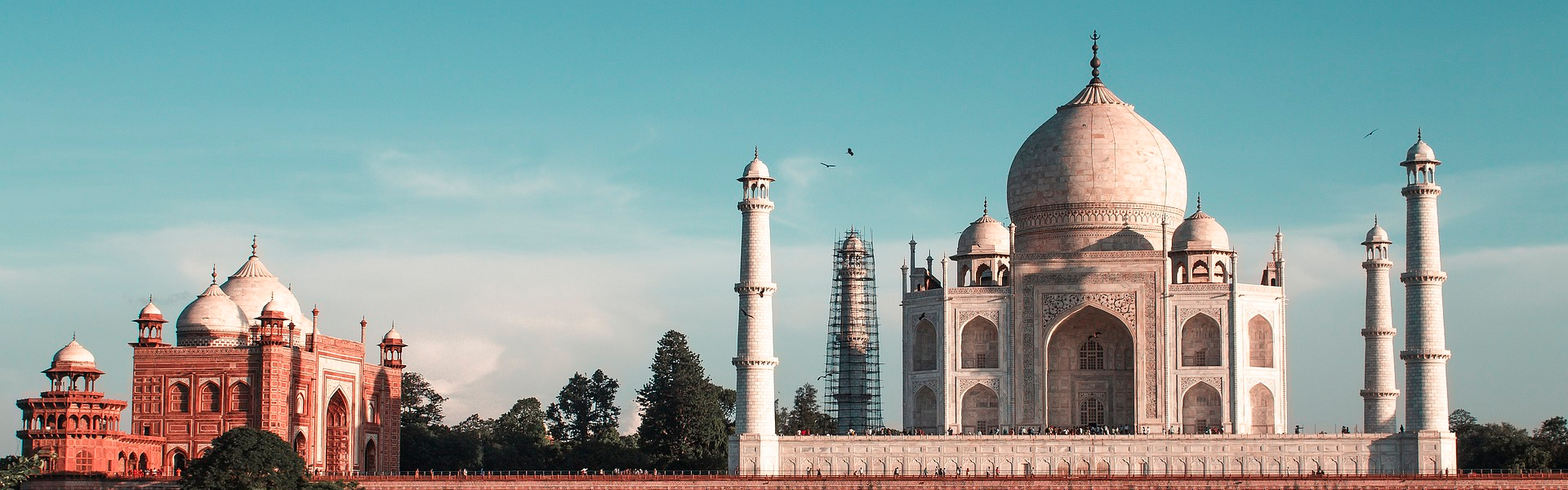
The classic first-timer's circuit, doable in about a week. It links New Delhi and its monuments (Red Fort, Qutub Minar, Humayun's Tomb), Agra and the Taj Mahal, then Jaipur, the "Pink City," with the Palace of Winds and Amber Fort. Worth knowing: the Taj Mahal is closed on Fridays, and the fast train covers Delhi to Agra in about 2 hours.
Rajasthan
The natural extension of the Golden Triangle, ideally by private car and driver. Jodhpur, the "Blue City," with Mehrangarh Fort, Udaipur on Lake Pichola, then Jaisalmer at the edge of the Thar Desert and its camel excursions. This is also palace-hotel country and home to Ranthambore, the most accessible tiger reserve from the Triangle.
Varanasi and the Ganges
Hinduism's holy city, on the banks of the Ganges. The dawn boat ride past the ghats and the evening aarti ceremony rank among the most powerful moments of any India trip. Varanasi is intense, with open-air cremations along the river: we usually place it late in an itinerary, once the country feels familiar.
Kerala and the backwaters
The tropical south, far gentler than the north and often our pick for a first taste of India. Spend a night or two on a houseboat on the Alleppey backwaters (about $150 to $400 CAD per night with full board, as a guide), explore Fort Cochin and the Munnar tea plantations, then finish on the beaches of Varkala or Kovalam.
Goa and the beaches
The former Portuguese enclave is now the country's beach destination. Northern Goa is lively, the south quieter, and the churches of Old Goa recall four centuries of Portuguese rule. The prime season runs November to February, and dress codes are noticeably more relaxed here than elsewhere in India.
Mumbai
The gateway to the south and India's business capital. Mumbai revolves around the Gateway of India, the UNESCO-listed Chhatrapati Shivaji railway station and the Marine Drive seafront, with a boat excursion to the Elephanta Caves. Note that Air Canada had no Mumbai service at the time of writing: you get there via Europe or the Gulf.
The budget, in Canadian dollars
The flight is the big-ticket item; on the ground, India stays very affordable even when you travel comfortably. With $1 CAD worth about 68 ₹, a local meal or a tuk-tuk ride costs a few dollars. Indicative ranges as of July 2026:
| Return flight Toronto-Delhi nonstop | ≈ $1,400 to $2,200 CAD |
| Return flight Montreal-Delhi (one stop) | ≈ $1,300 to $2,000 CAD (more in December-January) |
| Tourist e-Visa | ≈ $15 to $110 CAD depending on category |
| Simple guesthouse | ≈ $20 to $60 CAD/night |
| Mid-range hotel | ≈ $80 to $200 CAD/night |
| Rajasthan palace hotel | ≈ $400 CAD/night and up |
| Meal in a local restaurant | ≈ $3 to $10 CAD |
| Long-distance train, air-conditioned class | ≈ $15 to $50 CAD per journey |
| Private car with driver | ≈ $60 to $120 CAD/day |
These amounts are provided as a guide only and vary with the season and the exchange rate; ask your advisor for an up-to-date quote.
Entry requirements and health for Canadian citizens
- Visa required: Canadians must obtain a tourist e-Visa online before departure. Three categories: 30 days, 1 year or 5 years (multiple entry), in the range of $10 to $80 USD depending on the category, as a guide.
- Official site only: apply at indianvisaonline.gov.in. Many unofficial intermediary sites imitate the portal and charge inflated fees.
- Timing: processing generally takes 3 to 7 business days; apply 2 to 4 weeks before departure. The e-Visa requires arrival through a designated airport or seaport (Delhi and Mumbai qualify).
- Passport: valid for at least 6 months beyond your arrival date, with at least 2 blank pages.
- Safety: travel.gc.ca advises a "high degree of caution" throughout India and to avoid all travel to Jammu and Kashmir and the border zone with Pakistan.
- Health: hepatitis A and typhoid vaccines are recommended; visit a travel health clinic 6 weeks before departure. Malaria is present in some regions, so prophylaxis depends on your itinerary.
- Food and water: drink only sealed bottled water, skip ice and raw vegetables, and stick to well-cooked food served hot.
- Insurance: travel insurance with medical and evacuation coverage is essential, as the quality of care varies widely outside major private hospitals.
Three pieces of advice from our advisors. Apply for your e-Visa as soon as your dates are firm, and re-check the visa service status when you book: India suspended it for Canadians for two months in 2023 before restoring it. Plan Agra around the Friday closure of the Taj Mahal. And if this is your first India, start with Kerala or with an escorted Golden Triangle tour: you get the country without wrestling with its logistics.
Ready to plan your trip to India? Our travel advisors across Canada will guide you from e-Visa to itinerary, free of charge and with no obligation. 450-628-6241 | 1-866-628-6241 | info@voyagesaquaterra.com
Voyages AquaTerra holds a Quebec travel agency permit.
Frequently asked questions about India
Do Canadians need a visa for India?
Yes, a visa is mandatory for all Canadian citizens. The tourist e-Visa is applied for online through the official portal indianvisaonline.gov.in, in 30-day, 1-year or 5-year versions, in the range of $10 to $80 USD depending on the category, as a guide. Your passport must be valid for 6 months beyond arrival with 2 blank pages.
How long is the flight from Montreal?
Air Canada's Montreal-Delhi nonstop is suspended for summer 2026, with a return announced for late October 2026, to be confirmed. Connecting through Toronto, the nonstop to Delhi takes about 14 hours, plus the Montreal-Toronto leg. Via Europe or the Gulf, plan on 17 to 22 hours in total.
When is the best time to visit India?
October to March for the north, the Golden Triangle and Rajasthan, with dry weather and comfortable temperatures. Kerala and Goa are at their best from December to February. The monsoon runs June through September, and the northern plains turn scorching from April to June.
Is India safe for Canadian travellers?
The Government of Canada advises a "high degree of caution" throughout the country and to avoid all travel to Jammu and Kashmir and the border zone with Pakistan. The classic tourist circuits (Golden Triangle, Rajasthan, Kerala, Goa) carry no specific regional warning, but check travel.gc.ca while planning and again before departure.
How much does a trip to India cost?
The flight is the largest expense: about $1,400 to $2,200 CAD return on the Toronto-Delhi nonstop, or $1,300 to $2,000 CAD from Montreal with a connection, as a guide. On the ground, India is very affordable: local meals for $3 to $10 CAD, mid-range hotels at $80 to $200 CAD per night, air-conditioned trains at $15 to $50 CAD per journey.
What is the time difference with India?
India uses a single time zone, UTC+5:30, with no daylight saving time. The gap with Eastern Time is 9.5 hours in summer and 10.5 hours in winter. When it is noon in Montreal or Toronto in July, it is 9:30 p.m. in Delhi.
How do I get the Indian e-Visa?
Complete the application online at indianvisaonline.gov.in, the only official portal, with a photo and a copy of your passport, then pay the fee by card. Processing generally takes 3 to 7 business days; give yourself 2 to 4 weeks of margin. Watch out for lookalike intermediary sites that inflate the fees.
First time in India: which itinerary should I choose?
Two safe bets. The Golden Triangle (Delhi, Agra, Jaipur) in about a week, extended into Rajasthan if time allows, delivers the grand India of forts and the Taj Mahal. Kerala, gentler and slower-paced, with its backwaters and beaches, suits travellers wary of the north's intensity.
Can India be done as an organized tour?
Yes, and it is often what we recommend for a first visit. Choose a small-group escorted tour or a private itinerary with car and driver (about $60 to $120 CAD per day, as a guide): you enjoy the country while someone else handles the roads, the train tickets and the surprises.
What food precautions should I take in India?
Drink only sealed or treated bottled water, without ice, and choose well-cooked dishes served hot. Skip raw vegetables and any fruit you have not peeled yourself. Traveller's diarrhea is very common: pack a kit with rehydration salts and the medication recommended by your travel health clinic.