Departure

Return


Loading

Hawaii Travel from Canada: The Complete Guide

Hawaii is an American state, so Canadian citizens need no visa and no ESTA, just a passport valid for the length of the stay; visits of more than 30 days must be registered with the U.S. government. In winter, Air Canada flies nonstop from Toronto to Honolulu in about 10 hours; from Montréal there is no direct flight, so plan one stop in Vancouver, Toronto, Los Angeles or San Francisco and 12 to 15 hours door to door. The best-value windows are April-May and September-October, while December through March brings humpback whales and peak prices. Budget roughly 4,500 to 6,500 CAD per person for a mid-range week, flights included. One honest note up front: true all-inclusive resorts are rare in Hawaii; what you really book is a flight-plus-hotel package. Here is how to plan it well.

The essentials at a glance

QuestionAnswer
Flights from CanadaSeasonal winter nonstop Toronto-Honolulu (about 10 h); from Montréal, one stop and 12 to 15 h total
Visa for CanadiansNo visa or ESTA by air; registration required for stays over 30 days
Time difference-6 h from Eastern Canada in summer, -5 h in winter (Hawaii never changes its clocks)
CurrencyU.S. dollar (1 USD = about 1.40 CAD)
LanguageEnglish and Hawaiian
Best time to goApril-May and September-October; December to March for whales
DrivingCanadian licences recognized, right-hand traffic
Electricity120 V, same plugs as Canada

Why Hawaii

Nowhere else inside the United States can you find active volcanoes, 1,000-metre sea cliffs, black-sand beaches and humpback whales calving a few hundred metres offshore. Hawaii delivers total change of scenery with American simplicity: no visa, no vaccinations, the same electrical outlets, drinkable tap water and a Canadian driver's licence accepted everywhere. For a first big Pacific trip, the barrier to entry is low.

The archipelago has four main visitor islands, and they are genuinely different. Oahu concentrates history and urban life, Maui the polished beaches and the whales, Kauai the raw nature, the island of Hawaii the volcanoes. The climate is remarkably stable: 24 to 31 °C all year, with ocean temperatures of 24 to 27 °C. You pick your dates for prices and crowds far more than for weather.

Let's be frank: Hawaii is expensive, among the priciest destinations in the United States, which is the cost of an isolated mid-Pacific territory. The good news is that the right island, the right season and a well-built package can swing the final bill by several thousand dollars.

When to go

PeriodClimateVerdict
December to March24 to 27 °C, more frequent showers on north and east shores, huge surf on northern beachesWhale season at its peak, but top prices; book months ahead
April and MayDry weather, 26 to 29 °CExcellent value, moderate crowds
June to AugustDry season, 29 to 31 °CGreat for families, but summer crowds
September to NovemberWarm, ocean at its warmest; official hurricane season (direct hits remain rare)Good value, quiet beaches

The winter rainy season, November through March, deserves nuance: showers fall mostly at night or in the mountains, and the leeward coasts (Waikiki, Kaanapali, Poipu, Kona) stay largely sunny. The period to avoid is the Christmas holidays, when prices nearly double, and remember that big winter swell makes some northern beaches unsafe for swimming.

Getting there from Canada

Air Canada operates a seasonal winter nonstop from Toronto to Honolulu, about 10 hours on a Boeing 787, alongside year-round nonstops from Vancouver to Honolulu and Maui. From Montréal there is no direct flight: Air Canada routes through Vancouver or Toronto, WestJet through Calgary or Vancouver, and U.S. carriers United, Delta and American connect via Los Angeles, San Francisco, Denver or Seattle, with U.S. preclearance at both Montréal-Trudeau and Toronto Pearson. Plan 12 to 15 hours door to door from Montréal, and 10 to 14 from Toronto depending on routing.

Two advisor tips: a West Coast connection splits the journey into two manageable segments and reduces missed-connection risk. And check flights arriving directly at your chosen island: Kahului (Maui), Kona and Lihue (Kauai) all receive mainland flights, which saves backtracking through Honolulu. Between islands, Hawaiian Airlines and Southwest operate 30-to-45-minute hops.

The islands, one by one

Oahu, the gateway

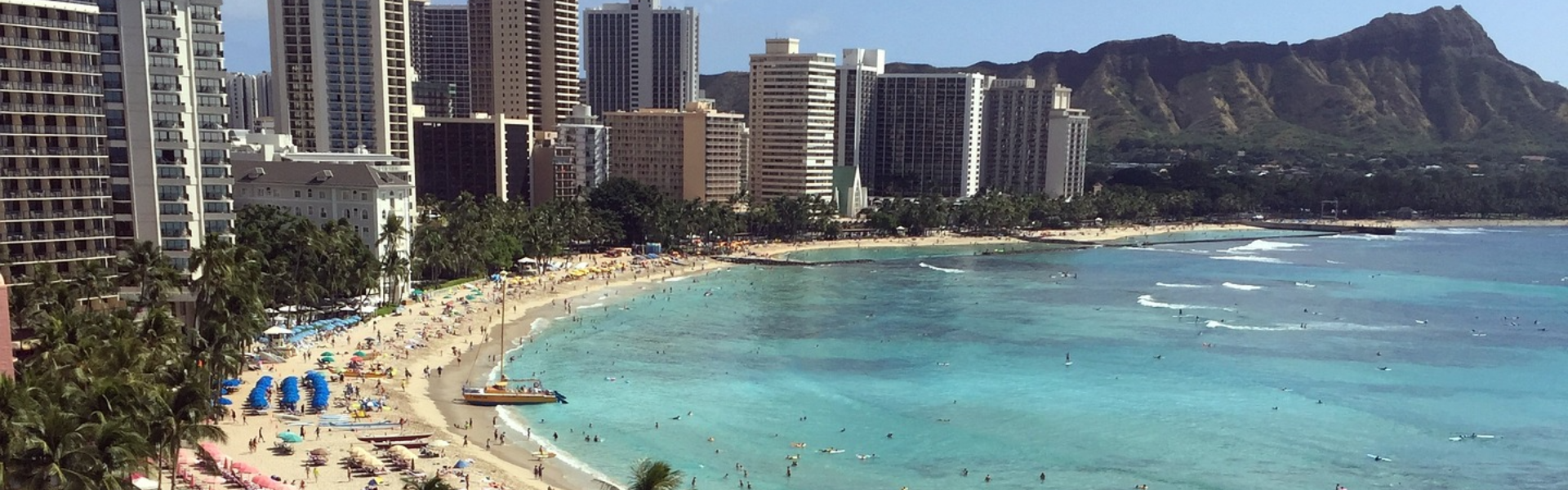
Most flights land here, and the state's pulse beats here. Waikiki lines up hotels and surf schools beneath Diamond Head crater; Pearl Harbor and the USS Arizona Memorial make a moving half-day; the North Shore, an hour away, lives to the rhythm of giant winter waves and the shrimp trucks of Haleiwa. Three or four nights make a solid first taste.

Maui, beaches and whales

Maui draws couples and families with the long beaches of Kaanapali and Wailea, the 600-turn Road to Hana through the jungle, and sunrise atop the 3,055-metre Haleakala volcano (advance reservation required for dawn). From December to April, humpback whales can be spotted from the shore itself. The 2023 wildfire destroyed historic Lahaina town, which is rebuilding; the resort areas of Kaanapali and Wailea fully welcome visitors again, and tourism is genuinely wanted.

Kauai, the garden island

The oldest and greenest of the four. The Napali Coast cliffs reveal themselves by boat, helicopter or the Kalalau Trail; Waimea Canyon stretches its reds and greens over 16 km; Hanalei, in the north, keeps a village feel. The north side is wetter, especially in winter, so travellers chasing constant sunshine stay in Poipu, on the south shore.

The island of Hawaii, volcano country

The biggest and youngest, known as the Big Island. In Hawaii Volcanoes National Park, Kilauea offers lava flows and a glowing crater depending on activity; the Kona region grows renowned coffee and hides excellent snorkelling; beaches shift from white sand to black, with even a green-sand beach in the south. Two sides, two worlds: rainy, lush Hilo and dry, sunny Kona.

Budget in Canadian dollars

Let's talk honestly about "all-inclusive": the Caribbean formula where meals, drinks and activities are bundled in barely exists in Hawaii. Resorts charge separately for rooms, meals and activities, and most add resort fees of 30 to 60 USD per night. What you actually book is a flight-plus-hotel package, sometimes with a partial meal plan or hotel credits. An advisor who knows the individual resorts makes a real difference here.

ItemBudgetMid-rangeHigh-end
Return flight from Montréal or Toronto900 to 1,200 $1,200 to 1,700 $2,500 $ and up
Accommodation (per night)250 to 400 $450 to 700 $900 $ and up
Meals (per day, per person)60 to 90 $100 to 160 $250 $ and up
Car rental (per day)60 to 80 $80 to 110 $150 $ and up

These figures are provided as a guideline, in Canadian dollars, at about 1.40 CAD per USD. Add resort fees, roughly 18 percent tax on accommodation, and restaurant tips of 18 to 22 percent. For a mid-range week, a total budget of 4,500 to 6,500 CAD per person, flights included, is realistic.

Entry requirements and health for Canadian citizens

  • Passport: valid for the length of your stay; no visa and no ESTA are required for Canadian citizens arriving by air, and admission is generally granted for up to six months.
  • Registration for stays over 30 days: since April 11, 2025, any U.S. stay of more than 30 days, Hawaii included, must be registered. For air arrivals, the electronic I-94 issued on entry counts as registration; verify it on the CBP website. A proclamation effective January 1, 2026 also restricts entry for nationals of certain countries, without targeting Canadian passport holders.
  • Health: no special vaccinations are required and tap water is safe to drink. The main hazard is the ocean: powerful currents, winter swell and sharp coral; respect warning flags and swim at lifeguarded beaches.
  • Travel insurance: essential. U.S. medical care is among the most expensive in the world and provincial plans reimburse only a fraction; insist on hospitalization and medical evacuation coverage.
  • Official advisory: the Government of Canada advises taking normal security precautions in the United States (travel.gc.ca).

A final tip: book capacity-controlled activities early, such as Haleakala sunrise or Hanauma Bay, and keep your first two or three days gentle while you absorb the five-to-six-hour time change. To weigh Hawaii against other American destinations, see our United States travel guide.

Ready to pick your island? Voyages AquaTerra advisors build your flight-plus-hotel package, compare resorts from Waikiki to Wailea and handle connections and activity reservations for you. 450-628-6241 | 1-866-628-6241 | info@voyagesaquaterra.com

Voyages AquaTerra holds a Québec travel agent permit.

Frequently Asked Questions

No. Hawaii is an American state, so Canadian citizens need neither a visa nor an ESTA, just a passport valid for the length of the stay. Admission is generally granted for up to six months. Stays of more than 30 days must be registered with the U.S. government, which happens automatically through the electronic I-94 issued to air travellers.
In winter, Air Canada flies nonstop from Toronto to Honolulu in about 10 hours. From Montréal there is no direct flight: with one stop in Vancouver, Toronto, Los Angeles or San Francisco, the total journey takes 12 to 15 hours. Vancouver has year-round nonstops to Honolulu and Maui of about 6 hours.
April-May and September-October offer the best value: dry weather, moderate crowds and softer prices. December through March is humpback whale season but also peak season, with more frequent showers and top prices, especially over the holidays. Temperatures stay between 24 and 31 °C all year.
Yes, Hawaii ranks among the safest American destinations, and the Government of Canada advises only normal security precautions. The real hazard is the ocean: powerful currents and heavy winter swell on north-facing shores. Swim at lifeguarded beaches and respect the warning flags.
As a guideline, plan 4,500 to 6,500 CAD per person for a mid-range week, connecting flights included. Hawaii is one of the most expensive U.S. destinations: add resort fees of 30 to 60 USD per night, roughly 18 percent tax on lodging, and tips. Booking a flight-plus-hotel package early trims the bill noticeably.
Hawaii runs 6 hours behind Toronto and Montréal during daylight saving time and 5 hours behind in winter, since the islands never change their clocks. When it is noon in Montréal in July, it is 6 a.m. in Honolulu. Allow two or three days to adjust after arrival.
Very few, and it is worth knowing before you book. Unlike Mexico or the Caribbean, Hawaiian resorts charge separately for rooms, meals and activities, and most add resort fees of 30 to 60 USD per night. What you actually book is a flight-plus-hotel package, sometimes with a partial meal plan or resort credits; an advisor can compare those options for you.
Oahu is the ideal gateway: Waikiki, Pearl Harbor, the North Shore and Honolulu's urban energy. Maui suits couples with the beaches of Kaanapali and Wailea and winter whales; Kauai rewards nature lovers; the island of Hawaii is for volcano enthusiasts. With two weeks, combining two islands, linked by a 30-to-45-minute flight, is the classic formula.
On Maui, Kauai and the island of Hawaii, yes: sights are spread out, public transit is limited, and Canadian licences are accepted. On Oahu you can stay in Waikiki without a car using shuttles, TheBus and organized excursions, then rent for a day or two to explore the North Shore. Reserve vehicles months ahead for high season.
Humpback whales migrate from Alaska to Hawaiian waters from December to April, peaking January through March. The channel between Maui, Lanai and Molokai is the world's best viewing area for the species, and sightings from the beach are common. Whale-watching cruises depart notably from Lahaina and Maalaea harbours on Maui.
  • #ravel
  • #Destinations
  • #Tourism
  • #Beaches
  • #Oahu
  • #Maui
  • #Kauai
  • #Big Island
  • #Volcanoes
  • #Honolulu
  • #Pearl Harbor
  • #Hotels
  • #Accommodation
  • #Outdoor Activities
  • #Hiking
  • #Diving
  • #Surfing
  • #Hawaiian Culture
  • #Luau
  • #Restaurants
  • #Nature
  • #National Parks
  • #Marine Wildlife
  • #Humpback Whales
  • #Water Sports
  • #Golf
  • #Waterfalls
  • #Historic Sites
  • #Botanical Gardens
  • #Hawaiian Music.