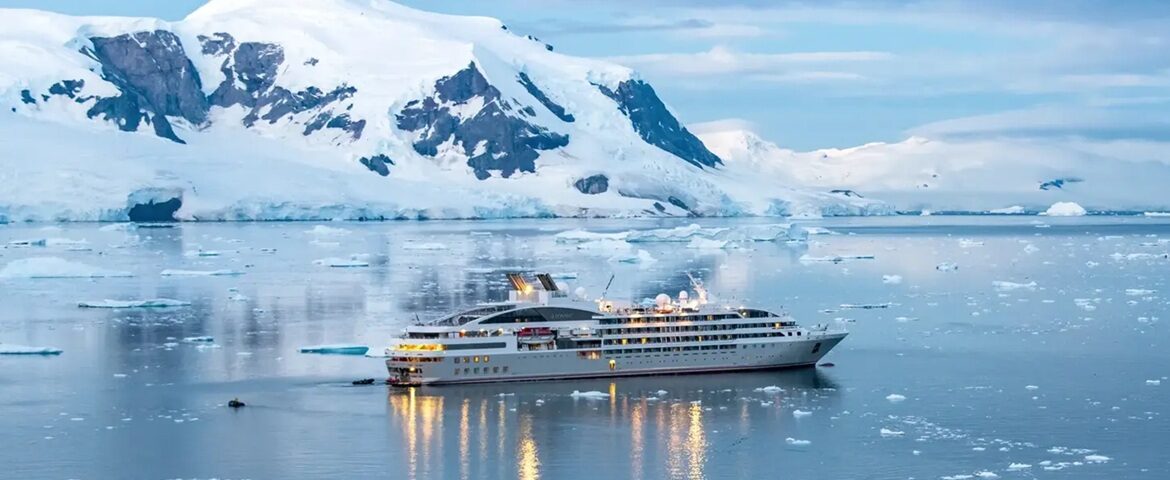
Enderby Island | Cruise Port Guide

Well south of New Zealand, where the Roaring Forties give way to the Furious Fifties, a small, flat-topped island guards the northern entrance to the Auckland Islands. Enderby Island appears on no standard itinerary: only permitted expedition ships stop here, Department of Conservation permit in hand, bound for one of the strictest wildlife sanctuaries in the Southern Hemisphere.

Landing is done by Zodiac at Sandy Bay, the island's only truly accessible beach. Even before boots touch the sand, the welcoming committee is already there: New Zealand fur seals and, above all, New Zealand sea lions, one of the rarest pinnipeds on Earth, lounging, playing, and squabbling on the beach where they come to give birth.

The Rata Forest and Its Scarlet Flowers

Behind the beach begins a forest unlike almost anywhere else: southern rata trees, their trunks twisted by the wind, standing just a few metres tall, covered in bright red flowers during the austral summer. A wooden boardwalk crosses this dwarf vegetation before opening onto moorlands where megaherbs thrive, those giant, crinkle-leaved plants unique to the subantarctic islands. The contrast is striking: an open-air botanical greenhouse, watered by sea spray.

Yellow-Eyed Penguins and Royal Albatrosses

The island holds a remarkable concentration of birds. The yellow-eyed penguin, one of the rarest in the world, hurries across the beach between the sea and its nests hidden in the vegetation. Higher up, the southern royal albatross broods right out on the moorland, unbothered by the passage of visitors who keep their distance. The cliffs to the north are home to the light-mantled sooty albatross, while Auckland shags, subantarctic snipe, and endemic parakeets round out a scene that the onboard ornithologists narrate, binoculars in hand.

Walking at the Edge of the World

Depending on the voyage, two options divide the day: a demanding multi-hour loop around the island for strong walkers, or a gentler there-and-back walk along the boardwalk to the northern cliffs. Either way, the weather calls all the shots. A squall can sweep across the moorland in ten minutes, followed by a bright clear spell: that's the subantarctic rule of the game, and waterproof layers are non-negotiable.

Shipwrecks, Rabbits, and Rebirth

The island's name honours the Enderby brothers, London whaling ship owners whose captains sailed these seas in the nineteenth century. The place has also seen its share of tragedy: the three-masted Derry Castle broke apart here in 1887, and food depots were maintained here for a long time for any future shipwreck survivors. More recently, the complete eradication of introduced rabbits and cattle has allowed the vegetation to reclaim its place, a revival the onboard guides are happy to point out in detail on the ground.

Rules of the Sanctuary

  • Access limited to permit-holding expeditions, with visitor quotas.
  • Strict biosecurity: brushed and disinfected soles, pockets emptied of any seeds, gear inspected before landing.
  • A mandatory distance must be kept from the sea lions, especially males during the breeding season.
  • Nothing is picked, nothing is taken home; visitors leave with photographs only.

When the Zodiac Heads Back Out to Sea

On the way back, soaked with sea spray and drizzle, it's easy to grasp just how fortunate you are: only a few hundred people set foot on this shore each year, fewer than the number of visitors who climb to the top of the Eiffel Tower in a single hour. Enderby Island leaves behind the memory of a world that gets along perfectly well without us, where sea lions sleep across the trail and albatrosses take no notice of your existence. It's for that rare, slightly dizzying feeling that people venture this far south in the first place.

Frequently Asked Questions

At the northern end of the Auckland Islands, far south of New Zealand, where the roaring forties give way to the furious fifties. This small flat-topped island guards the northern entrance to the group.
By zodiac, at Sandy Bay, the only genuinely accessible beach on the island. Only permitted expedition ships call here, carrying a Department of Conservation permit.
The welcoming party is on the beach: fur seals and above all New Zealand sea lions, one of the rarest pinnipeds on earth, which pup on this sand. Add yellow-eyed penguins, southern royal albatrosses, light-mantled sooty albatrosses, Auckland Island shags and endemic parakeets.
A dwarf forest of a kind found almost nowhere else: southern rata with trunks twisted by the wind, barely a few metres high, which burst into bright red flower during the austral summer. A wooden boardwalk crosses it.
Giant plants with crinkled leaves unique to the subantarctic islands, thriving on the heath beyond the forest. The contrast is startling: an open-air botanical glasshouse, watered by sea spray.
Two options depending on the voyage: a demanding several-hour circuit of the island for strong walkers, or the gentler out-and-back along the boardwalk to the northern cliffs. Either way, the weather decides.
Waterproof layers, non-negotiable: a squall can sweep the heath in ten minutes, followed by brilliant sunshine. That is the subantarctic rule. Add binoculars and waterproof protection for your camera.
Access limited to permitted expeditions, with visitor quotas. Strict biosecurity: soles scrubbed and disinfected, pockets emptied of any seed, gear inspected. A mandatory distance from sea lions, especially breeding males. Nothing is picked, nothing is taken home.
From the Enderby brothers, London whaling shipowners whose captains worked these seas in the nineteenth century. The island has its share of tragedy too: the barque Derry Castle was wrecked here in 1887.
Only a few hundred — fewer than climb the Eiffel Tower in an hour. The complete eradication of introduced rabbits and cattle has let the vegetation reclaim the island.