Great Lakes USA-Canada

41 Cruises availables At departure or passage at this port

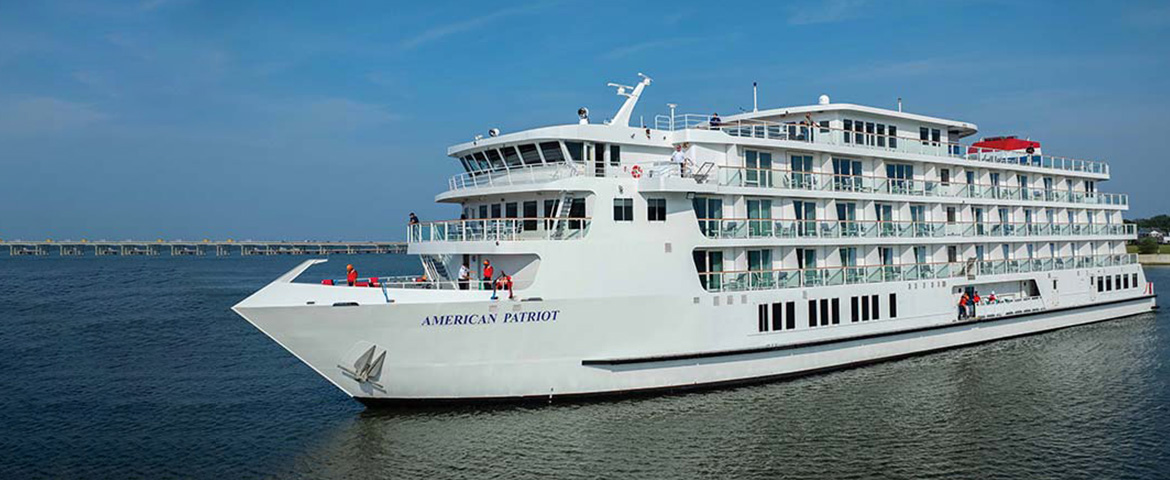
American Cruise Lines (36 Cruises)

American Patriot

Visit the ship's page

Great Lakes, Canada and United States | Cruise Port Guide

Five inland seas at the heart of the continent. The Great Lakes contain roughly one-fifth of the world's surface fresh water, and yet, a cruise on these waters remains one of North America's best-kept secrets. From the deck, the horizon sometimes blurs with that of an ocean. Then a wooded island appears, a lighthouse, a 300-metre cargo ship, and you remember you are sailing in the continent's midst, between Ontario and the American Midwest.

Navigation Reserved for Small Ships

The locks connecting the basins impose their dimensions: only modestly sized ships, generally fewer than 400 passengers, can move from one basin to another. This constraint shapes the entire experience. Port calls are lived at human scale, harbours welcome a single ship at a time and passengers often disembark at the very heart of cities. Several expedition companies deploy zodiacs, kayaks and lecturers there, transforming the region into a true exploration territory.

From One Lake to Another

The season runs May to October. Classical itineraries connect Toronto or Milwaukee to Duluth or Thunder Bay in eight to fifteen days, crossing all five lakes: Ontario, Erie, Huron, Michigan and Superior. Two passages mark the memory of navigators. The Welland Canal first, whose eight locks hoist the ship nearly 100 metres to bypass Niagara Falls. Then the Soo Locks at Sault Ste. Marie, which open the door to Lake Superior, the largest and most wild of the five.

From Metropolises to Archipelagos

Few itineraries offer such contrasts in a single week. One morning, the ship traces the skyscrapers of Toronto, Cleveland or Detroit, whose silhouettes rise across from Windsor, Ontario. The next day, it anchors off Georgian Bay, where some 30,000 islands of pink granite and wind-bent pine compose a biosphere reserve recognized by UNESCO. History enthusiasts find fur-trading posts; the contemplative watch loons from the deck.

Mackinac, the Car-Free Island

Favourite call of most itineraries, Mackinac Island, at the confluence of Lakes Huron and Michigan, has prohibited motor vehicles since the late 19th century. You travel by bicycle, on foot or by carriage, between Victorian residences and fudge shops, the island's emblematic confection. Fort Mackinac overlooks the strait and recounts the Franco-British rivalries that shaped the region, when French-Canadian voyageurs paddled these waters in birch-bark canoes.

The Legacy of New France

For Quebec travellers, these waters carry a family scent. Sault Ste. Marie, Detroit, Duluth: the place names recall that explorers and missionaries of New France mapped these shores from the 1620s onward. Cavelier de La Salle launches the Griffon on Lake Erie in 1679, Antoine de Lamothe-Cadillac founds Detroit in 1701, and generations of voyageurs paddle thereafter between Montreal and posts in the West. Several lecturers aboard devote a talk to this era, and afterwards you watch the shoreline pass differently.

Preparing for This Type of Cruise

A few practical reference points help in choosing your itinerary.

AspectTo Remember
SeasonMay to October; autumn colours from mid-September
Typical Duration8 to 15 days
ShipsSmall vessels (100 to 380 passengers), often expedition-type
Frequent DeparturesToronto, Milwaukee, Chicago, Duluth, Thunder Bay
WeatherVariable; pack layers even in summer

The waters generally remain calm, an advantage appreciated by travellers prone to seasickness. Customs formalities between Canada and the United States are settled aboard, but a passport remains mandatory as itineraries cross the border several times.

Return to the Ship

After a day in Georgian Bay or on the docks of Mackinac Island, several passengers reach the same conclusion: they thought they knew their own continent. These lakes, which residents simply call the sweet seas, offer navigation unlike any other. You leave with the urge to open a map of Canada and the United States to spot all that remains to explore, one lake at a time.

Frequently Asked Questions

A voyage across five inland seas holding roughly a fifth of the world's surface fresh water, between Canada and the United States. It alternates major cities, wild archipelagos and dramatic locks.
Because the locks connecting the basins set the limits. No large cruise liner fits: itineraries are operated by modest-sized ships, often under 400 passengers, which completely changes the atmosphere on board.
May to October. Autumn colours arrive from mid-September and make one of the finest windows of the year; outside that season the lakes freeze and navigation stops.
Routes generally link Toronto or Milwaukee with Chicago, Detroit or Duluth, crossing several lakes in one or two weeks. Each itinerary combines city calls with island calls.
Yes. Itineraries cross the Canada-US border several times, with formalities at each crossing. A valid passport is essential, including for Canadians.
The signature call of most itineraries, where Lakes Huron and Michigan meet. Cars are banned: you move on foot, by bicycle or by horse-drawn carriage, which gives the island an out-of-time atmosphere.
Both: the Canadian dollar on the Canadian side, the US dollar on the American side. Credit cards settle the question in the vast majority of calls.
Yes, and it is striking for a Quebec traveller. Sault Sainte Marie, Detroit, Duluth: the place names still carry the trace of the French explorers and missionaries who opened these water routes.
Rarely, but it is not impossible. These are lakes without tides or ocean swell, yet their size lets the wind raise a short, unpleasant chop during autumn blows.
Better suited to families with teenagers. The ships are small, without kids' club facilities, and the programme rests on touring, nature and history rather than entertainment.