Ile Rousse Corsica France

27 Cruises availables At departure or passage at this port

CroisiEurope (22 Cruises)

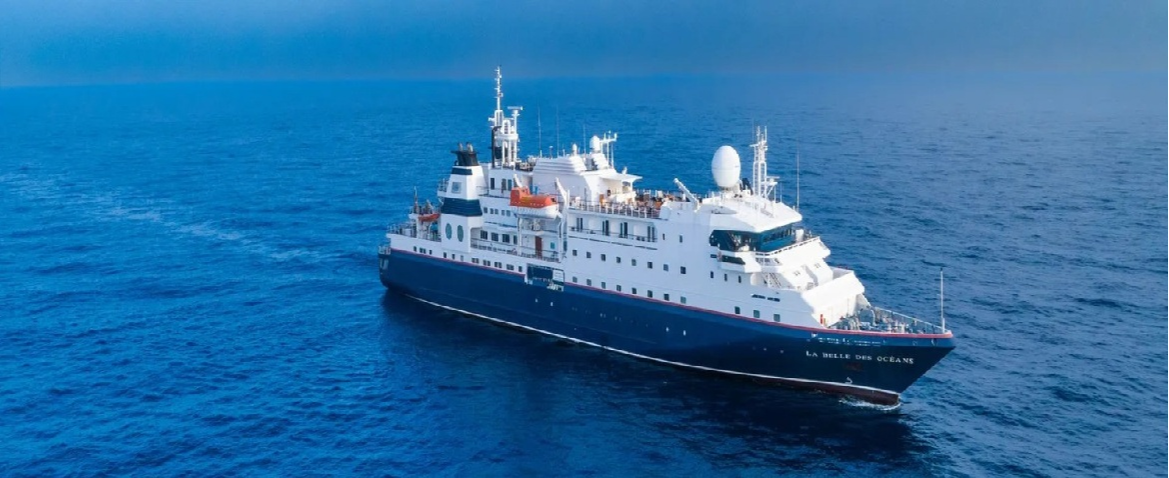
MV LA BELLE DES OCEANS.

Mv La Belle Des Oceans

130 Passengers
Visit the ship's page

L’Île-Rousse Corsica France | Mediterranean Cruise Guide

Red granite sets the tone before you even dock. Facing the town, the islet of La Pietra raises its crimson rocks, crowned with a lighthouse and a Genoese tower, and it's from this blazing stone that L'Île-Rousse takes its name. Tenders drop passengers straight at the marina, right in the heart of town: no shuttle, no transfer, Corsica begins at the end of the gangway.

A Town Born of an Idea

L'Île-Rousse is young by Mediterranean standards: Pascal Paoli, father of the Corsican nation, founded it in 1758 to give his country a landing point free of Genoese influence from Calvi. The regular grid of its streets gives away that planned origin. A few minutes' walk brings you to Place Paoli, a vast esplanade shaded by century-old plane trees, where games of pétanque play out beneath the founder's bust. All around, cafés and ice cream shops set up their terraces from the morning on, and regulars settle in there until evening.

Just steps away, the covered market is worth a look as much for its architecture as for its stalls: built in the 19th century in the style of a Greek temple, it rests on 21 columns. Here you can stock up on local flavours while listening to vendors switch effortlessly from one language to another. Cured meats from the interior, sheep's cheese, canistrelli biscuits, and fig preserves make up a condensed sampling of Corsican flavours. The Church of the Immaculate Conception, right nearby, rounds out this historic heart of ochre and pink façades.

The La Pietra Peninsula

A causeway connects the town to its emblematic islet. The walk to the lighthouse takes about twenty minutes, winding between granite blocks sculpted by the wind and coves where the water takes on shades of ink and turquoise. From the top, the view takes in the gulf, the town's rooftops, and the mountains of Balagne closing off the horizon. Late in the day, when the rock catches fire with colour, the sight alone explains the town's name.

Beaches and the Coastal Little Train

Beaches frame the town centre: pale sand, clear water, and gentle slopes that families love. The nearest one begins practically at the foot of the train station, five minutes from the main square, so you can easily alternate between swimming, shopping, and food breaks throughout the day.

Those wanting to explore the coast can hop aboard the Tramway de la Balagne, a small train linking L'Île-Rousse to Calvi along the shoreline; it serves coves otherwise hard to reach and offers, for just a few euros, one of the finest rail journeys in the Mediterranean.

The inland area is also worth the detour: the perched villages of Balagne, Pigna and Sant'Antonino, line their stone lanes above the olive groves, about twenty minutes by road. Finally, some boat excursions head out to the Scandola Nature Reserve, a UNESCO World Heritage site, whose glowing red volcanic cliffs can only be admired from the water; allow half a day.

Worth Remembering for the Stop

  • Landing right downtown: the whole town is within walking distance.
  • Lighthouse: about a 20-minute walk along the causeway, with no difficulty.
  • Little train to Calvi: regular departures in season from the station, near the beach.
  • Perched villages or Scandola: by organized excursion or taxi.

Before heading back aboard, it's worth setting aside a few minutes to sit facing La Pietra with a chestnut ice cream or a glass of muscat. Corsica is captured in that scene: the granite, the maquis, the sea, and an easy way of life that never hurries. You leave L'Île-Rousse already promising, almost out loud, to come back and explore the whole of Corsica through this gateway.

Frequently Asked Questions

By tender, straight into the marina in the heart of town. No shuttle, no transfer: Corsica begins at the end of the gangway.
Because of the red granite of the Pietra islet facing the town, whose purple rocks are crowned by a lighthouse and a Genoese tower. At the end of the day, when the rock catches fire, the name explains itself.
The place Paoli and the covered market, the walk out to the Pietra lighthouse, then a swim at the nearby beach. The Balagne tram or the hill villages need a longer call.
Pascal Paoli, father of the Corsican nation, in 1758, to give his country a landing place free of Genoese Calvi's influence. The regular grid of streets betrays that planned birth — the town is young by Mediterranean standards.
A broad esplanade shaded by century-old plane trees, where pétanque games play out beneath the founder's bust. Cafés and ice-cream shops set out their terraces from morning on, and the regulars take root there until evening.
Charcuterie from the interior, sheep's cheeses, canistrelli biscuits and fig jam. The building itself is worth a look: raised in the 19th century on the model of a Greek temple, it rests on 21 columns.
Yes, a causeway links the town to its islet and the walk takes about twenty minutes, between wind-carved granite blocks and coves where the water turns ink and turquoise. From the top the view takes in the gulf and the Balagne mountains.
Yes, they flank the centre: pale sand, clear water and gentle slopes that suit families. The nearest starts practically at the foot of the station, five minutes from the main square.
A small train linking L'Île-Rousse to Calvi along the coast, serving coves that are otherwise hard to reach. For a few euros it is one of the finest rail journeys in the Mediterranean.
The euro, cards accepted in shops and restaurants. French and Corsican are spoken — at the market, traders switch between them without thinking. English is found in the tourist-facing shops.