Wuhan China, Yangtze River
14
Cruises availables
At departure or passage at this port
Avalon Waterways (14 Cruises)
Century Legend
14 Cruises
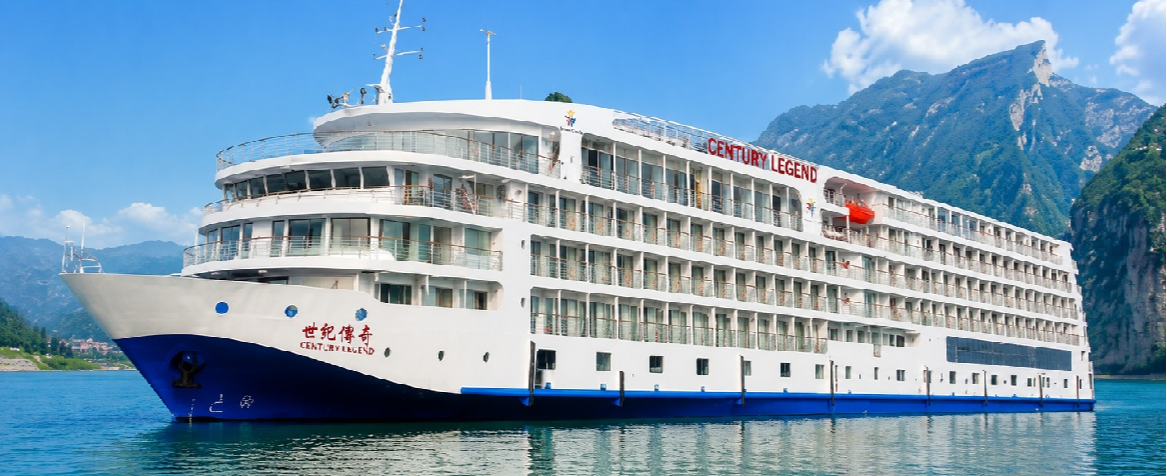

| 14 May | 16 days | One-way from Basel to Shanghai |
450-628-6241
Call us
|
| 15 May | 15 days | One-way from Basel to Shanghai |
450-628-6241
Call us
|
| 4 June | 16 days | One-way from Basel to Shanghai |
450-628-6241
Call us
|
| 5 June | 15 days | One-way from Basel to Shanghai |
450-628-6241
Call us
|
| 10 September | 16 days | One-way from Basel to Shanghai |
450-628-6241
Call us
|
| 11 September | 15 days | One-way from Basel to Shanghai |
450-628-6241
Call us
|
Port of Wuhan | Cruise Port Guide
Frequently Asked Questions
Along the Hankou bank, close to the colonnaded façades of the former concessions. It is one of the few major Chinese river ports where you step ashore straight into a walkable district.
Because it grew from the stitching together of Wuchang, Hankou and Hanyang, three separate towns at the confluence of the Han River and the Yangtze. Each keeps its character, and the river remains the best way to grasp their layout.
Wuhan's emblematic monument, on Snake Hill on the Wuchang side: five storeys of upswept roofs above the current. First raised in the Three Kingdoms era, destroyed and rebuilt countless times, it owes its fame to the Tang poets.
The first bridge ever thrown across the Yangtze, a two-level structure where trains run beneath the cars, and the skyscrapers lined up on the far bank. Chinese visitors sometimes recite school-learned verses aloud up there.
The treasure unearthed from the tomb of Marquis Yi of Zeng: a complete set of 65 bells, each able to sound two notes depending on where it is struck. Musicians play replicas in short concerts. The sword of Goujian, still sharp after two and a half millennia, is also on display.
The Yellow Crane Tower and the provincial museum form the core of most excursions. If time is short, pick one and keep an hour for the concessions quarter, a short walk from the pier.
Reganmian, the hot-dry noodles coated in sesame paste, eaten standing on the pavement. The city even has a word for the art of breakfasting out, guozao. Hubu Alley near Snake Hill is lined with steaming counters: follow the queues of regulars and point.
A sanctuary in Hanyang where hundreds of arhat statues, each with a different expression, fill an entire hall. Tradition invites you to count them, and the place offers a quiet counterpoint to the lively riverside districts.
Century-old banks and trading houses that kept their dressed stone, the clock tower of the former customs house watching over the riverside promenade, and pedestrian Jianghan Street, where neon signs mix with prewar buildings.
Spring and autumn, April to May and September to October. Summer is famously oppressive on this stretch of the Yangtze, and winter damp, with a chill that gets through despite moderate temperatures.


