Loch Ness, Scotland | Cruise Port Guide

The water is so dark it swallows the light: peat from the hills stains Loch Ness a deep brown where visibility is measured in centimetres. That is no doubt why this Scottish lake has fuelled imaginations for fourteen centuries. Ocean-going ships don't venture here, of course: cruise passengers visit from Invergordon or Inverness, or aboard the small vessels that travel the Caledonian Canal. Either way, the day leads to the heart of the Great Glen, the geological fault that slices diagonally across Scotland, a string of lochs set between the mountains.

An Extraordinary Lake

The figures give a sense of the place: 37 kilometres long, more than 200 metres deep in places, and a volume of fresh water greater than that of all the lakes in England and Wales combined. The shores drop steeply, waves rise quickly, and mist clings to the water in the early morning. Even without a monster, the place commands a kind of silent respect that you feel from the very first kilometres of shoreline.

The Caledonian Canal

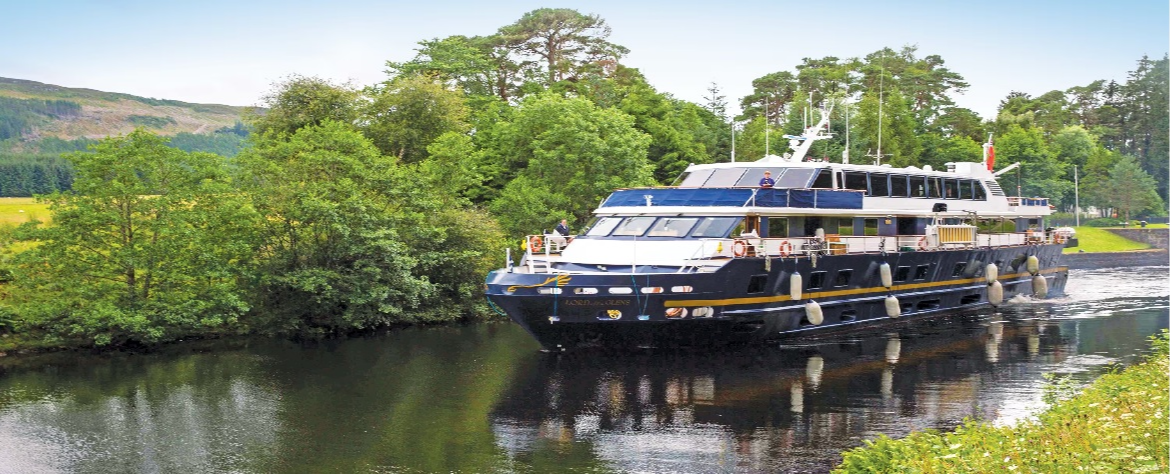
In the early 19th century, engineer Thomas Telford linked the lochs of the Great Glen with a canal opened in 1822, allowing boats to cross Scotland without braving the northern storms. The waterway still works: barges and sailboats pass through its stone locks amid grazing sheep. Boat excursions depart notably from Dochgarroch, near Inverness, and head down to open water past woods and castles, including the elegant Aldourie set at the water's edge.

Urquhart, Scotland's Most Photographed Ruin

Halfway along the shore, on a promontory jutting into the water, the ruins of Urquhart Castle sum up seven centuries of Scottish wars. Besieged, retaken and deliberately dismantled in 1692 so that no one could use it, all that remains is a tower, sections of wall and cellars open to the sky. You climb Grant Tower for the plunging view over the loch, then come back down across lawns featuring a reconstructed siege engine and the foundations of the great hall. The visitor centre shows a short film and displays objects found on site.

Drumnadrochit and the Touchy Question

The neighbouring village of Drumnadrochit has made a specialty of examining the legend. Its interpretive centre, recently redesigned, reviews fourteen centuries of sightings: the first mention dates back to St. Columba in the 6th century, the famous 1934 photograph was exposed as a hoax, and sonar surveys have never found anything conclusive. Visitors leave with at least one certainty: the mystery is doing just fine as it is.

Fort Augustus, the Water Staircase

At the southern tip of the loch, the village of Fort Augustus wraps around a staircase of five locks where boats rise and descend before the eyes of strollers seated on patios. The Caledonian Canal Centre tells Telford's epic story; the patios serve fish and chips and local beers by the water. It's the ideal place to complete the loop before heading back to the ship.

Planning the Day

Starting pointDistance to the shoreUsual format
Invergordon (port of call)About 50 kmCoach excursion, often with a cruise
Inverness10 to 15 kmBoat from Dochgarroch or coach
Fort AugustusOn the south shoreLocal cruises on the loch

On the way back, everyone swears they weren't watching the surface, and everyone is fibbing a little. That is the lake's power: it turns the most reasonable adults into children scanning the waves. You leave the Great Glen with images of ramparts, locks and black water, and that delicious hint of doubt that makes for great travel memories.

Frequently Asked Questions

No. Ocean-going ships do not go there: the visit is made from Invergordon or Inverness for large vessels, or aboard the small craft that work the Caledonian Canal. Either way, you reach the loch by road or by canal.
The classic programme combines a boat trip and the ruins of Urquhart Castle. Boat excursions leave from Dochgarroch near Inverness and run down to open water past woods and castles. Factor in the road time: Inverness is about 20 kilometres from the loch.
Thirty-seven kilometres long, over 200 metres deep in places, and holding more fresh water than all the lakes of England and Wales combined. The shores drop away steeply and waves get up quickly.
Because of peat washing down from the surrounding hills, which stains it deep brown. Visibility is measured in centimetres. That is probably part of why this loch has fed the imagination for fourteen centuries.
The most photographed ruin in Scotland, on a headland jutting into the water halfway along the loch. Besieged, retaken and deliberately destroyed in 1692 so nobody could hold it, all that remains is a tower, sections of wall and cellars open to the sky. You climb Grant Tower for the view straight down the loch.
A canal opened in 1822, designed by engineer Thomas Telford, linking the lochs of the Great Glen so that boats could cross Scotland without facing the northern storms. It still works: barges and yachts pass through its stone locks among the sheep.
A geological fault that slices diagonally across Scotland, a chain of lochs set between mountains. Loch Ness is its most famous link, and the Caledonian Canal follows its whole length from one sea to the other.
No, and it is best said plainly. What remains is a vast, dark, silent lake that commands a certain respect from the first kilometre of shore. The local exhibitions present the scientific searches and the hoaxes honestly.
Yes, and the legend helps a great deal. The boat trip is always a hit, the Urquhart ruins can be explored freely with a reconstructed siege engine on the lawns, and the visitor centre screens a short film. Bring a windproof layer: it is often cold on the water.
Pound sterling and English. Scottish banks issue their own notes, valid throughout the UK. Cards are accepted everywhere, including for boat trips and castle admission.