Fort Augustus Scotland
United Kingdom
10
Cruises availables
At departure or passage at this port
Lindblad Expeditions (10 Cruises)
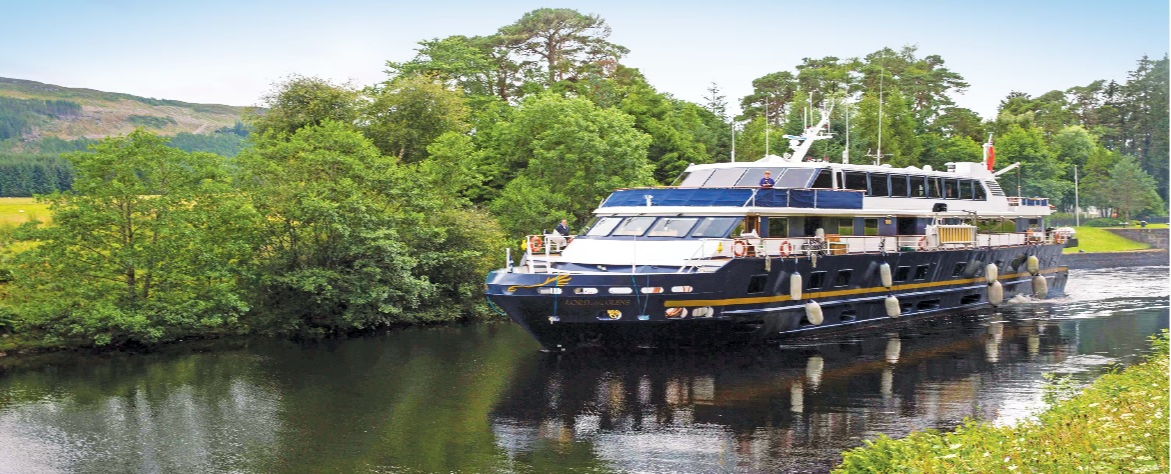
Lord of the Glens
10 Cruises

| 7 June | 8 days | One-way from Inverness to Kyle of Lochalsh |
450-628-6241
Call us
|
| 8 June | 5 days | One-way from Inverness to Kyle of Lochalsh |
450-628-6241
Call us
|
Fort Augustus, Scotland | Cruise Port Guide
Frequently Asked Questions
Alongside the Caledonian Canal, right in the village. Getting there is earned: five staircase locks separate Loch Ness from the rest of the canal and working through them takes more than an hour. Only small vessels navigate here, which gives the call a very human scale.
Yes. The quays can be walked in minutes, the pubs and cafés face the locks, and the Caledonian Canal Centre is at the water's edge. No transport is needed unless you want to head further into the Great Glen.
Walk up the lock staircase to its top, carry on a few hundred metres to where Loch Ness opens out, then choose between a boat trip on the loch, the Clansman Centre or a section of the Great Glen Way. About thirty minutes of climbing through woods is enough to see the loch in full.
A dark expanse 37 kilometres long, framed by mountains, opening all at once after the still water of the canal. In places it is more than 200 metres deep, which has fed stories about its most famous resident for generations.
Yes, trips leave straight from the village banks. Some carry sonar, others simply focus on the scenery and the eagles that sometimes cross the ridges. It is the most direct way to grasp the scale of the loch.
An interpretation centre in an old stone school a few steps from the quays, devoted to Highland clan life in the seventeenth century. Weapons, costume and demonstrations put a concrete face on a history too often reduced to legend.
Almost nothing visible. The fort was raised after the Jacobite risings to control the region, and it is the imposing former Benedictine abbey, built on its site in the nineteenth century, that dominates the shore today.
Yes, and the main attraction is free: watching boats climb the water staircase, lock by lock, fascinates children and adults alike. Terrace tables face the operation and the banks are easy to walk.
Pounds sterling and English, in a Highland village where Gaelic survives mainly on the signs. Cards work in the pubs, cafés and canal centre, but mobile coverage is uneven in the glen.
May to September, when Highland days stretch late into the evening and heather colours the slopes. Midges are at their worst from June to August in still weather: repellent makes the end of the day considerably more pleasant.


