Marstrand Marstrandson-Koon Island Sweden
Sweden
1
Cruises availables
At departure or passage at this port
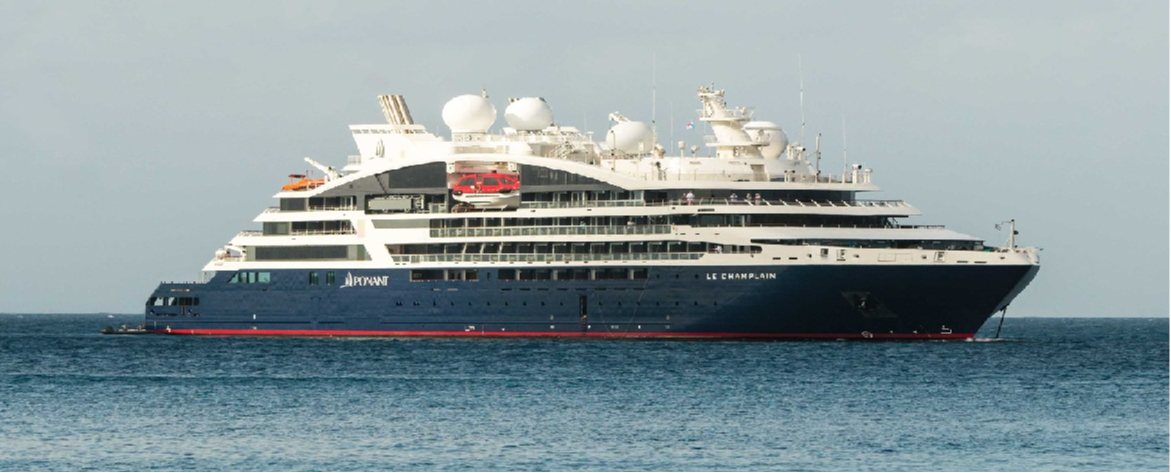
Ponant (1 Cruises)

Port of Marstrand, Sweden | Cruise Port Guide
Frequently Asked Questions
It stays at anchor — ships anchor off the archipelago and land passengers by tender. Marstrand is a car-free island in Bohuslän, northwest of Gothenburg. A short ferry also connects the neighbouring island of Koön.
On foot only. There are no cars and no buses on the island, and distances are tiny: the village, the fortress and the coastal loop are all walkable. Bring proper shoes — the cobbles and stairs up to Carlsten have to be earned.
The round granite citadel crowning the island, visible long before the houses. Raised in the seventeenth century after the region — long Norwegian, then Danish — passed to Sweden, it holds casemates, cobbled courts, a round tower and ramparts with views across the whole archipelago. Allow ten to fifteen minutes to climb from the quays.
The most famous inmate of the dungeons: a cross-dressing thief turned folk hero, a sort of Swedish Robin Hood whose exploits still amuse the country. Guided tours of the fortress tell his story, along with the daily life of the soldiers and convicts who built the walls.
Climb to Carlsten and tour it, come back down through the pastel lanes of the village, then walk the hour-long coastal loop around the island. Finish with pickled herring and new potatoes on a terrace while the sailing boats manoeuvre in the channel.
A path circling the island in about an hour, alternating boardwalks, smooth rock and coves. On the seaward side the Skagerrak wind is fierce and waves fringe the skerries; on the channel side everything calms and kayaks slip between the buoys. The coves invite you to sit — build in pauses.
Yes, straight off the granite. Locals spread their towels on the bare rock, and ladders and diving boards are set into the stone, as Swedish tradition demands. Skagerrak water stays cool, even in August.
A former military battery converted into an art museum, on the coastal loop: photography and sculpture exhibitions in vaulted rooms. It is the cultural stop on the walk, and a useful shelter if the wind turns.
Because in the late nineteenth century it became the most fashionable bathing resort on the west coast under the patronage of King Oscar II, who returned every summer. The pavilions and broad verandas date from then. Today Marstrand is one of Sweden’s sailing capitals, and the big summer regattas turn the water into a ballet of spinnakers.
Mid-June to mid-August: full terraces, flags on the masts and guaranteed regatta atmosphere. Outside that window the island keeps its scenery but loses much of its life.


