Northwest Passage Canadian Arctic
Canada

42 Cruises availables At departure or passage at this port

Seabourn Cruise Line (42 Cruises)

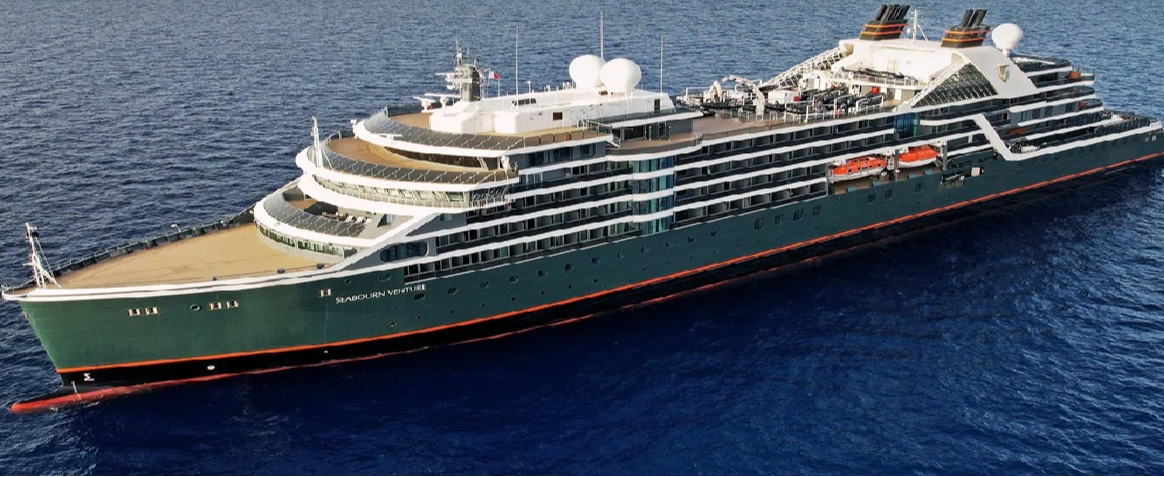
Seabourn Venture

Seabourn Venture

Visit the ship's page

Northwest Passage, Canada | Arctic Cruise Guide

For four centuries, sailors sought this route at the cost of their lives; today, a few expedition ships make the crossing each summer. The Northwest Passage is not a port of call: it is a voyage of about 1,500 kilometres through the Canadian Arctic Archipelago, between Baffin Bay and the Beaufort Sea, where each day depends on the ice, the wind and the captain's decisions. Under a sun that does not set in midsummer, here is what passengers on this exceptional voyage really experience.

In the footsteps of Franklin and Amundsen

History accompanies every nautical mile. On wind-swept Beechey Island, three headboards mark the graves of sailors from the Franklin expedition, lost with its 129 men after 1845; you land by Zodiac, in a silence no one thinks of breaking. Farther west, the Inuit hamlet of Gjoa Haven bears the name of Roald Amundsen's sailing ship, which wintered there for two years alongside the Netsilik — learning polar survival from them — before achieving, in 1906, the first complete transit. Dundas Harbour, an abandoned government post with sagging buildings, adds its own chapter of solitude, as does the wreck of the Maud, Amundsen's other ship, visible in the shallow waters of Cambridge Bay.

The communities of the Far North

Itineraries stop in a few Inuit communities — Pond Inlet on Baffin Island, facing the glaciers and bird cliffs of Bylot Island, Gjoa Haven, Cambridge Bay and sometimes Ulukhaktok, renowned for its prints. Everywhere, the welcome follows the rhythm of the place, between the co-op store, the school and the beach where boats are drying. The visits, prepared with the communities, combine throat singing, traditional games of strength and agility, craft workshops and simple conversations in an arena or a co-op. These encounters, where Elders talk about life on the land before and after settlement, are often among the most memorable moments of the voyage.

The wildlife of the straits

Lancaster Sound, at the eastern entrance of the route, ranks among the richest waters in the Arctic. From the bridge or the Zodiacs, you watch for polar bears on ice floes, walruses hauled out on the shallows, migrating belugas and narwhals, and sometimes a bowhead whale, the elder of the cold seas. At Prince Leopold Island, 300-metre cliffs shelter one of the largest seabird colonies in the Canadian North: murres, kittiwakes and fulmars by the hundreds of thousands. On the tundra, musk oxen in defensive formation and Arctic foxes complete the picture, under the watchful eye of the armed guides who accompany every walk.

Sailing dictated by the ice

No itinerary is guaranteed here, and that is its very nature. Charts are redrawn every day based on ice reports; a blocked strait is bypassed, an open bay becomes an impromptu landing site, a morning by Zodiac along an active glacier like the one in Croker Bay replaces a planned hike. Days alternate between sailing through cliff-lined channels, naturalists' lectures, observations from the bridge and landings on the tundra. You have to accept the unexpected: it is part of the deal, and it is what turns the cruise into a true expedition.

Crossing the line

One evening, somewhere between two straits, the expedition leader announces that the legendary part of the route has been completed. Passengers raise a glass where so many crews were shipwrecked, aware of the privilege of a crossing still reserved for a handful of ships each year. You do not come back from the Northwest Passage with mere photographs: you come back with a sense of the world's measure — its immensity, its fragility and the tenacity of the peoples who have lived there for millennia.

Frequently Asked Questions

A crossing. The Northwest Passage covers roughly 1,500 kilometres through the Canadian Arctic Archipelago, between the Baffin Sea and the Beaufort Sea. It is not a port but a multi-day navigation punctuated by landings.
By zodiac, everywhere. No site on the route has a pier: landings happen on beaches, on tundra or in Inuit hamlets, escorted by armed guides because of polar bears.
Beechey Island and its three headstones marking the graves of Franklin expedition sailors, lost with all 129 men after 1845. The route also passes Gjoa Haven, where Roald Amundsen wintered for two years before completing the first full transit in 1906, and Dundas Harbour, an abandoned government post.
Depending on the itinerary: Pond Inlet on Baffin Island, Gjoa Haven, Cambridge Bay and sometimes Ulukhaktok, known for its printmaking. Visits, arranged with the communities, include throat singing, traditional games, craft workshops and conversations with elders.
Polar bears on the ice, walrus hauled out on shoals, beluga and narwhal on migration, occasionally a bowhead whale. At Prince Leopold Island, 300-metre cliffs hold hundreds of thousands of murres, kittiwakes and fulmars; on the tundra, muskoxen and Arctic foxes.
No, and that is the point. The charts are redrawn daily from ice reports: a blocked strait is worked around, a landing site is improvised. Accepting the unexpected is part of the contract and is what makes it an expedition rather than a cruise.
In high summer only, when the ice allows, under a sun that never sets. Only a handful of expedition ships make the transit each year.
The Canadian dollar; English and Inuktitut are used in the hamlets. Bring cash: local co-ops do not always have reliable card terminals.
Rarely. Days revolve around zodiac landings, tundra walks and long hours of observation on the bridge, in a harsh climate with no quick way home. This voyage suits independent passengers in good physical condition.
It alternates navigation through cliff-lined channels, naturalist lectures, bridge watching and landings. A zodiac outing along an active glacier such as Croker Bay may replace a planned hike if the ice decides otherwise.