Gironde Estuary France

33 Cruises availables At departure or passage at this port

CroisiEurope (33 Cruises)

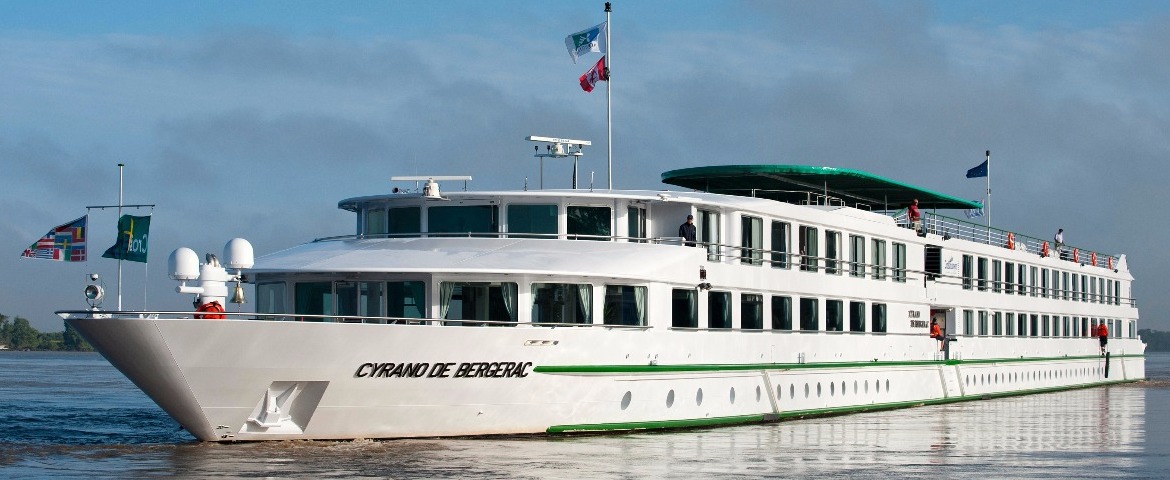
Cruise CE Croisieurope MS Cyrano de Bergerac ship

MS Cyrano de Bergerac

172 Passengers
Visit the ship's page

Gironde Estuary France | River Cruise & Bordeaux Heritage Guide

Two rivers meet at Ambès Point, and from their union a giant is born. The Gironde estuary, formed by the Garonne and Dordogne, stretches 75 kilometres to the Atlantic and reaches 12 kilometres wide at its mouth. It is western Europe's largest estuary. River cruise ships sailing toward Bordeaux or returning from it traverse this world of silty waters, tinged with ochre by sediments, where each shore tells a different story. From the deck, the traveller witnesses a spectacle that shifts with the tide.

A Landscape to Read from the Deck

Navigation through these waters is an experience in itself. Along the banks parade the carrelets, fishing huts on stilts whose square nets swing at the end of long poles. They dot the shores by the hundreds and form the region's visual signature. Between the two banks low islands emerge, fringed with reeds, shaped by currents over centuries. Patiras Island bears a 30-metre lighthouse, lit for the first time in 1879, which guided ships for over a century before extinguishing in 1992. Restored by the Coastal Conservancy, it can now be visited and certain excursions dock there.

Blaye, Vauban's Sentinel

On the right bank, the Blaye citadel rises above the water. Vauban built it in the second half of the 17th century to lock the approach to Bordeaux against English and Dutch fleets. The fortified ensemble ranks as UNESCO World Heritage. Ships dock at the very foot of the ramparts, and minutes of walking suffice to cross the stone gates. Inside, alleyways bordered by former barracks lead to plunging vistas over the Gironde. Your gaze embraces the full width of the river, and you understand at once why this position commanded the road to Bordeaux.

Pauillac and the Médoc Vineyards

Opposite, on the left bank, Pauillac opens the doors to the Médoc. The quay sits steps from the centre, and vineyards begin almost immediately behind the last houses. Excursions lead toward châteaux whose names rank among France's most prestigious wines. Vine rows descend gently toward the water, broken by villages with pale stone steeples. A tasting in a barrel room, facing rows of barrels, counts among the moments passengers recall long after returning home.

Bourg, the Promontory

Further upstream, where the Dordogne joins the main watercourse, Bourg-sur-Gironde occupies a limestone promontory. The upper town dominates the old port, linked by stairs and sloped alleyways. Stops here are more intimate than elsewhere: a market, shaded squares, terraces from which you follow passing ships. Here are the main stops offered on itineraries:

  • Blaye and its citadel, reachable on foot from the dock
  • Pauillac, gateway to the Médoc's great growths
  • Bourg-sur-Gironde, village perched at the Dordogne confluence
  • Cussac-Fort-Médoc, another link in Vauban's fortified chain
  • Royan, at the mouth, facing the ocean

The Rhythm of Water

The tide governs everything here. It reaches far inland, reverses currents twice daily and imposes its calendar on captains as it once did on gabarre bargemen transporting wine. Birds know it too: herons and egrets frequent the mudflats exposed at low tide, while sturgeon, discreet giants, find in these turbid waters one of their last European refuges.

As the ship glides between the islands, when evening sun ignites Blaye's façades and the fishing huts cut against the sky, the estuary reveals its true nature: that of a river become almost sea, broad enough to carry the dreams of all who have sailed it. The traveller remains with the urge to follow the water a little further, toward Bordeaux or toward the ocean.

Frequently Asked Questions

The largest estuary in Western Europe, formed where the Garonne and the Dordogne meet at the bec d'Ambès. It runs 75 kilometres to the Atlantic and reaches 12 kilometres across at its mouth.
Because of the sediment that tints it ochre. These silty waters are not a sign of pollution but the signature of a living estuary, whose landscape shifts with every tide.
Carrelets by the hundred — stilt fishing huts whose square net swings from a long pole — and low reed-fringed islands shaped by the currents. The navigation itself is the experience.
A 30-metre lighthouse on the Île de Patiras, first lit in 1879, which guided ships for over a century before going dark in 1992. Restored by the Conservatoire du littoral, it can be visited and some excursions land there.
The citadel built by Vauban in the second half of the 17th century to close the approach to Bordeaux against English and Dutch fleets. The fortified ensemble is UNESCO World Heritage and ships berth at the foot of the ramparts.
Yes, a few minutes from the quay takes you through the stone gates. Inside, lanes lined with former barracks lead to viewpoints looking straight down the full width of the river.
Pauillac opens the door to the Médoc, on the left bank. The quay is steps from the centre and the vineyards start almost immediately behind the last houses. Excursions run to châteaux among the most prestigious in French wine.
An upper town perched on a limestone promontory, where the Dordogne joins the main channel. It looks down on the old port, linked by stairways and steep lanes. Calls here are more intimate than elsewhere on the estuary.
Several hours depending on direction and tide, and that time is exactly what it takes to grasp its scale. Ships heading up to Bordeaux or back down cross 75 kilometres of these silty waters.
The euro, cards accepted at Blaye, at Pauillac and at the wine châteaux. French is spoken; Médoc estates host international visitors and run tours in English.