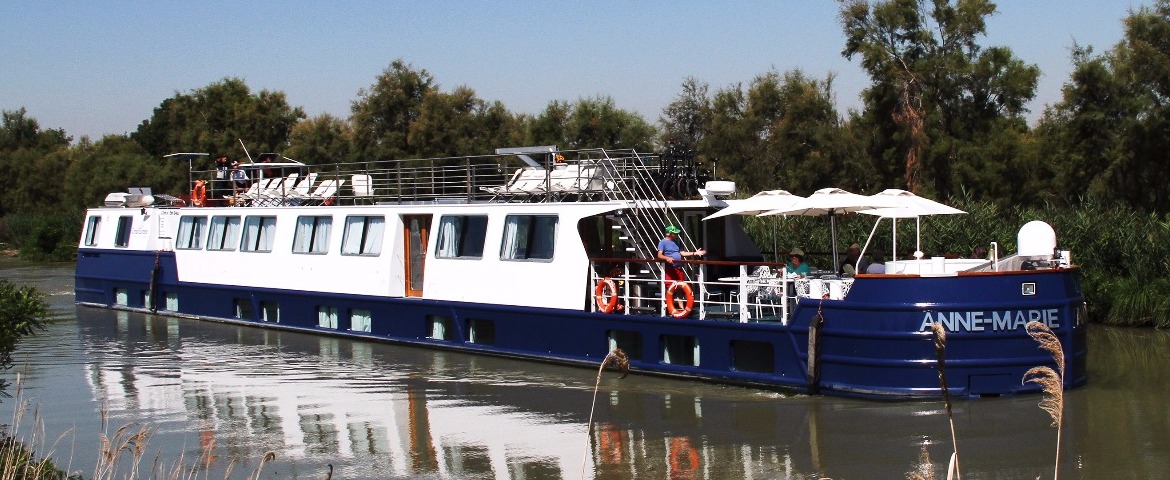
Gallician France | Camargue Nature & River Cruise Guide

A heron takes flight from the reeds, a barge glides silently, and time changes speed. Welcome to Gallician, a tiny river stop on the Rhône-to-Sète Canal, in the heart of Gardian Camargue. Here, no monuments in a line nor souvenir shops: expanses of water and reed beds stretching endlessly, vineyards, bulls in salt marshes and one of Europe's finest bird spectacles. River cruises that stop there offer a plunge into a wild, confidential France.

A Village Between Vineyards and Pools

Gallician lines its low houses steps from the mooring, which welcomes boats year-round. The tour of the hamlet is done peacefully: quiet laneways, a small 18th-century church, a wine cellar and conversations of residents on doorsteps. The village lives by the vine and pond fishing, as always, and this accepted simplicity sets the port-call's tone: you come here to slow down, observe and taste. At first light as at dusk, the raking light gives façades a honey tint. The gardians, those riders tending herds of bulls, sometimes cross walkers' paths, a reminder that Camargue tradition remains a living livelihood.

The Scamandre, Cathedral of Reeds

A short distance from the village, the Scamandre Nature Reserve protects one of Gardian Camargue's great wetland complexes. Paths on stilts penetrate between the reed beds, at water level, and allow approaching without disturbing herons, egrets and pink flamingos. By season, the observatories offer scenes worthy of nature documentaries: flocks of waders at dawn, ballets of colourful bee-eaters, horses free in neighbouring meadows. The silence is never complete: rustle of wings, raucous calls, a carp's splash, a whole world bustles behind the plant curtain. Bring binoculars; photographers won't know where to point their lens.

The Costières, the Next Vineyard

The plateau bordering the ponds bears the vines of Costières de Nîmes, the emblematic appellation of the area. Several estates open their doors for tastings: structured reds, quenching rosés and whites that pair beautifully with lagoon products. A glass in the cool, facing vine rows, whilst the mistral makes leaves shiver: the scene is worth guided tours. Some cellars add grape juice and local products, enough to compose a basket of flavours to take back aboard.

From the Bridge, an Unmoving Safari

The canal itself composes a continuous attraction. Navigating toward Gallician or departing, the ship's bridge becomes an observation post: flamingos in flight, herons frozen in shallows, European bee-eaters on wires, black bulls and white horses in flood-prone pastures. Little Camargue files slowly past, flat and luminous, dotted with gardian cabins. Further along the itinerary, the medieval ramparts of Aigues-Mortes remind you this land of water was also a land of kings and crusades.

The Patient's Port-Call

Gallician rewards those who know how to look. No list of things to tick, no record to break: a lagoon breathing, a village living at its rhythm, a wine telling its terroir's story. Resuming navigation, you hold long in mind the pink of flamingos against the green of reed beds, and this comforting thought: there still exist, steps from the great routes of southern France, corners where nature dictates the schedule.

Frequently Asked Questions

At the river landing on the Rhône-to-Sète canal, in the Camargue of the Gard, which takes boats year-round. The hamlet's low houses line up a few steps away.
The Scamandre nature reserve for the birds, a tasting at a Costières de Nîmes estate, and a turn around the hamlet. This is a nature call: anyone looking for monuments will be disappointed.
Not much, and it makes no apology: quiet lanes, a small 18th-century church, a village winery and conversations on doorsteps. The village lives off vines and lagoon fishing, as it always has.
One of the great wetland complexes of the Gard Camargue, a short distance from the village. Boardwalk paths run out among the reed beds at water level, letting you approach herons, egrets and flamingos without disturbing them.
Yes, in the Scamandre reserve and sometimes from the deck. Depending on the season, the hides offer scenes worthy of wildlife documentaries: clouds of wading birds at first light, displays of coloured bee-eaters, horses running free in the neighbouring meadows.
Binoculars, above all. Good shoes for the boardwalks, a hat and water. Photographers should bring a telephoto lens: they will not know where to point it first.
Costières de Nîmes, the appellation of the plateau bordering the lagoons. Several estates open their doors: structured reds, thirst-quenching rosés and whites that pair beautifully with lagoon produce.
The horsemen who watch over the herds of bulls. They sometimes cross walkers' paths around Gallician, a reminder that Camargue tradition is a working trade, not folklore laid on for visitors.
Not necessarily, and that is rarely worth saying. The canal itself is a continuous attraction: the deck becomes an observation post, with flamingos in flight and herons frozen in the shallows.
The euro; bring cash, as very small shops and some wineries do not take cards. French is spoken, with a southern accent, and English is rare in this hamlet.